Oregon Bird Hunting
Seasons Span September 1 – January 31, 2027

State Drought Monitor – Upland hunting conditions are often highly dependent upon moisture for both habitat production and bird survival.
Oregon Upland Game Bird Hunting Overview
State DNR & Licensing Information
Upland game bird hunting in Oregon is administered by the Oregon Department of Fish & Wildlife (ODFW).
License Requirements & Fees
- Resident Annual Hunting License: $39
- Nonresident Annual Hunting License: $193
- Nonresident 3-Day Bird License: $36
- Resident Upland Bird Stamp/Validation: $11
- Nonresident Bird-Waterfowl Stamp: $50
- HIP Validation: Required for applicable migratory birds.
- Sage-Grouse: Additional controlled-hunt permit required.
- Fee Pheasant Tag: $28 where required for ODFW-stocking areas.
Season Dates & Bag Limits — 2026–2027
Ruffed Grouse
- Season: September 1, 2026 – January 31, 2027
- Daily Limit: 3
- Possession Limit: 9
Blue Grouse
- Season: September 1, 2026 – January 31, 2027
- Daily Limit: 3
- Possession Limit: 9
Oregon’s “blue grouse” regulation covers the species now commonly treated taxonomically as dusky grouse. (Oregon Department of Fish & Wildlife)
Chukar
- Season: October 10, 2026 – January 31, 2027
- Daily Limit: 8
- Possession Limit: 24
- Lower Klamath Hills: Daily limit reduced to 2. (Oregon Department of Fish & Wildlife)
Hungarian (Gray) Partridge
- Season: October 10, 2026 – January 31, 2027
- Daily Limit: 8
- Possession Limit: 24 (Oregon Department of Fish & Wildlife)
Ring-Necked Pheasant
- Season: October 10 – December 31, 2026
- Daily Limit: 2 roosters
- Possession Limit: 8 (Oregon Department of Fish & Wildlife)
California Quail
- Western Oregon: September 1, 2026 – January 31, 2027
- Eastern Oregon: October 10, 2026 – January 31, 2027
- Daily Limit: 10 in aggregate with mountain quail
- Possession Limit: 30 in aggregate. (Oregon Department of Fish & Wildlife)
Mountain Quail
- Western Oregon: September 1, 2026 – January 31, 2027
- Eastern Oregon: October 10, 2026 – January 31, 2027
- Daily Limit: 10 in western Oregon; 2 in eastern Oregon
- Possession Limit: 30 western / 6 eastern, in aggregate with California quail. (Oregon Department of Fish & Wildlife)
Greater Sage-Grouse
- Season: September 12–20, 2026
- Daily Limit: 2
- Season Limit: 2
- Permit: Controlled hunt; limited to designated southeastern Oregon units.
For 2026, ODFW authorized permits in nine hunt areas: Beulah, Malheur River, Owyhee, Trout Creek Mountains, East Whitehorse, Steens, Beatys Butte, North Wagontire and Warner, totaling 650 permits. Several units remain closed because of population or habitat concerns. (Oregon Department of Fish & Wildlife)
Weather Assessment & Bird Hunting Outlook
Survey Methodology
Oregon provides unusually good biological information for an upland forecast. ODFW uses:
- Summer production surveys measuring chicks per adult.
- Annual harvest surveys; the 2025–26 survey received 9,599 responses.
- Grouse wing and tail collections.
- Sage-grouse spring lek surveys.
- Sage-grouse wing returns measuring age ratios, sex ratios and hatch timing.
ODFW notes that peak hatch for most Oregon upland birds occurs from mid-May through mid-June, making weather during that period particularly important.
For this forecast, I am weighting those biological data against independent NOAA/NCEI and U.S. Drought Monitor information rather than simply accepting ODFW’s hunting forecast.
Weather Impact & Habitat Conditions
Winter 2025–26 — STRONGLY NEGATIVE IN EASTERN OREGON:
The most important issue entering 2026 was snowpack failure. By April, Oregon was among several western states with a record-low April 1 snow-water equivalent. The lack of snowpack meant less spring runoff, soil recharge and water availability across eastern Oregon. (NCEI)
This matters differently by species. It is a much larger concern for chukar, California quail, pheasant and gray partridge in eastern Oregon than for forest grouse in wetter western mountain habitats.
Spring 2026 — NEGATIVE:
The broader West had an exceptionally dry start to 2026. NOAA reports that much of the interior West experienced persistent drought through spring, with Oregon among the states experiencing record-low snow-water equivalent. (NCEI)
The lack of snowmelt recharge is particularly significant because spring moisture affects the availability of green vegetation and insects just as upland birds enter the nesting period.
May–June 2026 — NEGATIVE:
Conditions did not recover adequately. NOAA reported persistent below-normal precipitation across the Northwest during June, while Oregon’s own Drought.gov profile now shows January–June 2026 as the 11th-driest such period since 1895, with only 12.92 inches of precipitation—5.11 inches below normal. June itself ranked as the 40th-driest June on record. (NCEI)
By late July, approximately 88% of Oregon was in moderate drought or worse, including roughly 37% in severe drought and 20% in extreme drought. (Drought.gov)
This is not simply a “drought map” concern. Low snowpack + poor spring precipitation + high summer temperatures means less persistent green vegetation, fewer insects, reduced water availability and poorer brood-rearing habitat.
2026–27 Population Outlook
- Chukar — POOR–FAIR: This is the species I would be most cautious about.Chukar populations had been exceptionally strong, peaking around 2024. The 2025–26 harvest was still 25% above the five-year average, despite falling 30% from the extraordinary 2024–25 season.But eastern Oregon is precisely where this year’s weather problem is most serious. The record-low snowpack, poor spring moisture and continuing summer drought are unfavorable for nesting and chick survival.The key point is that a strong adult population can make the opening day look good even when recruitment is poor. I expect hunters to find birds, but I would not forecast another 2024-level chukar year.Best prospects: Columbia Basin breaks, John Day country, Owyhee and Snake River canyon habitat that retains springs, seeps and green draws.
- California Quail — POOR–FAIR: The 2025–26 harvest was 6% below the five-year average and 34% below the previous season.More importantly, ODFW’s 2025 production index showed significantly fewer chicks per adult.The 2026 drought conditions make this year’s recruitment question even more concerning. California quail can survive dry conditions better than some species, but their reproductive success is strongly tied to availability of green cover, insects and water.Forecast: POOR–FAIR, with the best opportunities in irrigated agricultural valleys and areas with reliable water.
- Mountain Quail — FAIR: This is a major contrast with eastern Oregon’s dryland birds.Mountain quail harvest during 2025–26 was 46% above the five-year average, despite falling from the exceptional previous season.Western Oregon’s forest and mountain environments retain substantially better moisture conditions than the high desert. Mountain quail also benefit from young forest and post-disturbance habitat. ODFW continues to describe them as thriving across the Coast and Cascade mountain ranges. (Oregon Department of Fish & Wildlife)Forecast: FAIR–GOOD in western Oregon; POOR–FAIR in eastern Oregon.
- Ruffed Grouse — GOOD: Forest grouse are probably the strongest native upland opportunity in Oregon this year.The 2025–26 ruffed grouse harvest was 22% above the five-year average, while hunter effort was also substantially above average.The statewide drought is much less relevant in mature forest environments than it is in sagebrush-steppe. Western Oregon and the wetter Cascade/Blue Mountain forest environments retain important habitat and food resources.Forecast: GOOD, particularly in productive young forest and forest-edge habitat.
- Blue/Dusky Grouse — GOOD: Blue grouse harvest was 43% above the five-year average in 2025–26.Like ruffed grouse, they are buffered somewhat from the worst effects of eastern Oregon’s drought by their association with higher-elevation forest environments.Forecast: GOOD, with higher-elevation mountain habitat offering the best prospects.
- Hungarian Partridge — POOR: This is the weakest of Oregon’s major upland populations.The 2025–26 harvest was 18% below the five-year average and 63% below the previous season. ODFW’s 2025 production index also showed significantly reduced chick production.Much of the species’ range is in northeastern Oregon and the Columbia Basin—areas now dealing with serious moisture deficits.Forecast: POOR, with isolated agricultural pockets offering better opportunities.
- Ring-Necked Pheasant — POOR–FAIR: Pheasant harvest was 7% below the five-year average in 2025–26 and 28% below the previous season.ODFW reported pheasant densities above the five-year average in the 2025 production survey, but chick/adult ratios were significantly below average.The 2026 drought is a further negative, particularly in the Columbia Basin. Agricultural irrigation and remaining grass/cover will create important local exceptions.Forecast: POOR–FAIR statewide, FAIR in localized agricultural habitat.
- Greater Sage-Grouse — FAIR–GOOD: This species requires a much more nuanced assessment.Oregon’s 2025 spring population estimate increased 17.8% to approximately 50,912 birds, the highest estimate since 2017 and only 2.7% below the adjusted 2003 baseline. Twenty-one Priority Areas for Conservation increased while only two declined.That’s a very strong biological starting point.However, 2026’s severe drought is a meaningful negative for brood survival, particularly because sage-grouse chicks depend heavily on forbs and insects during their early development.ODFW is maintaining a deliberately conservative hunt, with permits reduced substantially in several units. (Oregon Department of Fish & Wildlife)Forecast: FAIR–GOOD, but highly unit-specific.
Overall Oregon Outlook: FAIR.
Oregon is a split-state forecast in 2026.
The eastern two-thirds of the state has a serious moisture problem. This isn’t merely a case of applying a drought category to the forecast: Oregon had record-low April snow-water equivalent, January–June precipitation was the 11th-driest on record, and by late July 88% of the state was in drought. (NCEI)
That combination is particularly damaging for chukar, California quail, Hungarian partridge and pheasant, all of which rely heavily on the quality of dryland grassland, sagebrush and agricultural habitat.
At the same time, Oregon’s forest birds are entering the season with considerably better prospects. Ruffed and blue grouse harvests were both well above their five-year averages, while mountain quail remain strong in western Oregon.
And sage-grouse have an unusually strong population baseline going into the 2026 season.
Best 2026 Bets
Chukar: Western and southeastern canyon country with permanent water and intact vegetation. Avoid assuming all of eastern Oregon is equal.
California Quail: Irrigated agricultural valleys, creek bottoms and areas with reliable water.
Mountain Quail: Western Oregon Coast and Cascade ranges, particularly young forest and recent disturbance.
Ruffed Grouse: Western Oregon and productive young-forest habitat in the Cascades and Blue Mountains.
Blue/Dusky Grouse: Higher-elevation conifer forests and mountain meadows.
Pheasant: Columbia Basin agricultural country with irrigation and surviving grass/brush cover.
Hungarian Partridge: Northeastern agricultural country, but expectations should be modest.
Sage-Grouse: Only where permits are available; prioritize units retaining reliable water and green forage.
Forecast confidence: Moderate–High. Oregon has unusually good biological data, including a 9,599-response harvest survey, grouse harvest trends, sage-grouse lek counts and production surveys. The independent weather signal is also unusually strong. The principal uncertainty is how much localized summer thunderstorms have created pockets of productive brood habitat within an otherwise very dry landscape.
Bottom line: Oregon should not be treated as one statewide bird forecast in 2026. Western Oregon’s forest grouse and mountain quail look considerably better than the drought-stricken eastern Oregon chukar, quail, partridge and pheasant populations. The biggest red flag is chukar: the state has an excellent long-term population foundation, but 2026 weather is working against another exceptional recruitment year.
For the most up-to-date information, check the 2025-26 Oregon Game Bird Hunting Regulations at myodfw.com or www.eregulations.com.
-
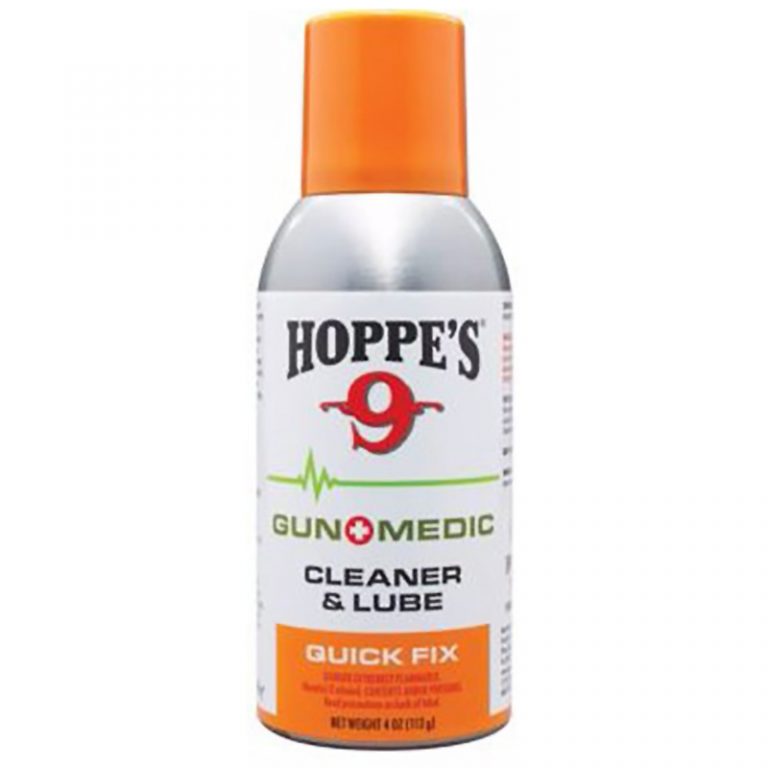
Hoppe’s Gun Medic
My shotgun gets beat up. I originally bought Hoppe’s Gun Medic because the name seemed appropriate for the state of my abused primary carry gun. And the iconic Hoppe’s name is synonymous with quality gun cleaning products. Gun Medic doesn’t disappoint. It’s not gonna fix everything that is wrong with my shotgun, but it sprays…
-
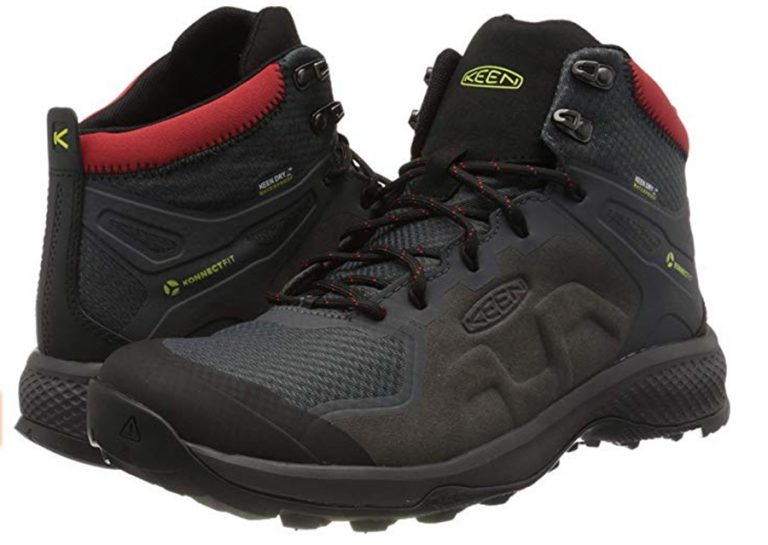
Keen Explore Waterproof
Initially I got the Keen Explore to wear around camp and on restocking trips to town between hunts. But they proved too light and comfortable to limit. These wear like running shoes but perform like hiking boots and that combination is the sweet spot for upland pursuit. Breathable, waterproof, low, mid, men’s, women’s — whatever…
-
The Difference Between Shooting and Hunting
Around the age of 12 I went on my first bird shoot in the state of Ohio. One snowy, winter morning my dad and a few family friends drove to a local shooting preserve. I had just gotten my first shotgun for Christmas, a single-barrel break-action 410. We rode to fields of manicured milo separated in…
-
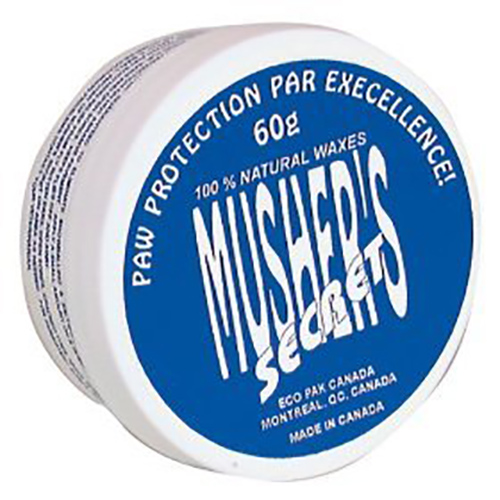
Musher’s Secret
Our dogs work hard for us (no matter how terrible the hunting conditions may be) and its our job to take care of them! Our dogs’ paws have been cut up running through snow that the wind has blown over into ice. Musher’s Secret helps keep them protected and conditioned during hunting season. It is…
-
2015 Women’s Outdoor & Shooting Industry Dinner
It was just 3 years ago when Britney Starr, founder of the Women’s Outdoor & Shooting Industry Dinner, attended her first SHOT Show. While there she ran into friends representing different hunting and shooting sports from all over the country. She immediately recognized the need for a coordinated event in which the growing number of…
-
Throwing the Shotgun
The problem with having a primary gun you carry to the field is over time other shotguns just don’t feel quite right. But I worry dedication to a single shooting stick leaves me vulnerable to being gunless. I throw my gun. It’s something I can count on at least once or twice a season. For…