Tennessee Bird Hunting
Season Spans September 1 – February 28, 2027

State Drought Monitor – Upland hunting conditions are often highly dependent upon moisture for both habitat production and bird survival.
Tennessee Upland Game Bird Hunting Overview
State DNR & Licensing Information
Upland game bird hunting in Tennessee is administered by the Tennessee Wildlife Resources Agency (TWRA).
License Requirements & Fees
- Resident Annual Hunting/Fishing Combination License: $33
- Nonresident 7-Day Small Game/Waterfowl License: $61
- Nonresident Annual Small Game/Waterfowl License: $110
- Migratory Bird Permit (HIP): $1
- WMA Small Game Permit: $20 annual or $12 for 1 day
- Youth Hunt/Fish/Trap License (ages 13–15): $9
- Residents and nonresidents under 12 are license-exempt, subject to applicable regulations. (Tennessee Government)
Season Dates & Bag Limits — 2026–2027
Northern Bobwhite Quail
- Season: November 7, 2026 – February 28, 2027
- Daily Limit: 6
- Possession Limit: 18 (Tennessee Comptroller)
Ruffed Grouse
- Season: October 10, 2026 – February 28, 2027
- Daily Limit: 3
- Possession Limit: 9 (Tennessee Comptroller)
American Woodcock
- First Segment: November 14 – December 6, 2026
- Second Segment: January 10–31, 2027
- Daily Limit: 3
- Possession Limit: 9
- Migratory Bird Permit: Required (Tennessee Comptroller)
Mourning Dove
- First Segment: September 1–28, 2026 — opens at noon
- Second Segment: October 10 – November 1, 2026
- Third Segment: December 8, 2026 – January 15, 2027
- Daily Limit: 15
- Possession Limit: 45
- Migratory Bird Permit: Required (Tennessee Comptroller)
Weather Assessment & Bird Hunting Outlook
Survey Methodology
Tennessee does not have the depth of statewide quail population monitoring found in states such as South Carolina. Consequently, I would place considerably less weight on a generalized TWRA “outlook.”
The assessment here emphasizes:
- Available TWRA harvest, quota-hunt and management information.
- Long-term habitat and species-status information.
- NOAA/NCEI temperature and precipitation records.
- U.S. Drought Monitor and NIDIS drought history.
- Winter severity and overwinter survival.
- Spring nesting conditions.
- Summer rainfall, heat and insect/vegetative conditions.
- Fall weather and migration timing for woodcock and snipe.
There is an important limitation: I could not find a current statewide TWRA quail brood-count dataset comparable to South Carolina’s or a current statewide grouse survey that would justify a precise population estimate. That lowers forecast confidence.
Weather Impact & Habitat Conditions
Winter 2025–26 — FAVORABLE FOR SURVIVAL:
The winter was not characterized by the kind of prolonged, severe cold or snow cover that typically creates major mortality concerns for Tennessee’s resident upland birds. That gives bobwhite and grouse a reasonable adult carryover entering the 2026 breeding season.
More broadly, the winter was part of an exceptionally warm national period; the preceding 12-month period through April was the warmest on record for the CONUS. (NCEI)
Spring 2026 — VERY NEGATIVE:
This is the largest weather concern in Tennessee’s 2026 outlook.
By April, Tennessee had experienced the ninth-driest September–March period on record, while 93.65% of the state was classified as being in drought. Parts of Tennessee had deteriorated three drought categories in only four weeks. (Drought.gov)
That is important for bobwhite because the effects of drought aren’t limited to nest failure. Dry conditions can reduce insect abundance and degrade the vegetation structure that chicks need immediately after hatching.
April was also extraordinarily warm: Tennessee recorded its warmest April on record, according to NOAA. (NCEI)
The combination of extreme warmth + prolonged moisture deficit is considerably less favorable than a simple “mild winter” assessment would suggest.
May–July 2026 — MIXED, WITH SIGNIFICANT RECOVERY:
May brought a major improvement in the Southeast’s moisture situation. However, Tennessee again received below-normal rainfall during much of June. Drought.gov specifically identified Tennessee as one of the areas where drought impacts could intensify entering July. (Drought.gov)
July was more favorable. NOAA reports that drought contracted or decreased in intensity across portions of the Tennessee Valley and much of the Southeast, while portions of the Tennessee and lower Ohio valleys received above-normal precipitation. (NCEI)
That recovery matters. It prevents me from treating Tennessee’s spring drought as an automatic failed hatch.
But it also came relatively late in the nesting/brood-rearing cycle. The timing of the rainfall matters more than the annual total.
2026–27 Population Outlook
- Northern Bobwhite — FAIR–POOR:Tennessee remains one of the more important bobwhite states in the eastern U.S., but the species has undergone the same broad decline seen throughout the Southeast because of loss of early-successional habitat, intensive agriculture and forest maturation.The most important piece of current evidence is not a rosy population estimate—it is the existence of targeted quail management. TWRA has continued a specific bobwhite quota hunt at Bridgestone Firestone WMA, where fall bird-count surveys are used to determine the number of hunters permitted. (Tennessee Comptroller)That is useful evidence that localized populations can be substantial, but it should not be interpreted as a statewide population indicator.Weather is the problem this year. Excellent adult overwinter survival was followed by an exceptionally dry September–March period and a record-warm April. The later rainfall recovery probably helped some broods, but I would not expect uniformly strong recruitment statewide.Forecast: FAIR–POOR statewide; FAIR in intensively managed habitat.The best opportunities should remain in the Mid-South and central Tennessee agricultural/early-successional landscapes, rather than heavily forested portions of eastern Tennessee.
- Ruffed Grouse — POOR:Tennessee’s grouse population is concentrated in the Appalachian/Cumberland mountain country and is strongly dependent on appropriate young-forest habitat.TWRA continues to recognize ruffed grouse as a Tennessee forest bird, but I found no current statewide survey that would support calling 2026 a population recovery year. (Tennessee Government)The mild winter is favorable for adult survival, but the severe spring drought and exceptionally warm April are not favorable indicators for recruitment.Forecast: POOR, with the best odds in mountain landscapes containing recent disturbance and regenerating forest.
- American Woodcock — FAIR:Woodcock are Tennessee’s most interesting migratory upland bird.The summer drought is less decisive for this species because Tennessee’s fall population depends heavily on breeding production farther north and migration weather. Local habitat quality still matters, particularly moist young forest, alder and bottomland cover.The key variable will be November–January weather. Cold fronts and precipitation can concentrate migrants and make otherwise mediocre habitat suddenly productive.Forecast: FAIR, with potential for short periods of GOOD hunting during migration pushes.
- Wilson’s Snipe — FAIR:Tennessee is a significant wintering and migration area for snipe. TWRA describes the species as a fairly common migrant and winter resident throughout the state, with birds occurring from Reelfoot Lake to Hiwassee WMA. (Tennessee Government)The spring drought is not particularly relevant to the fall migration, but the dry conditions reduced the availability of shallow wet soils and muddy margins during parts of 2026.Permanent wetlands should be substantially better than temporary wet areas.Forecast: FAIR, highly dependent on fall and winter precipitation.
- Mourning Dove — GOOD–FAIR:Tennessee has a large dove-hunting community, with TWRA estimating more than 20,000 hunters harvest roughly 300,000 doves annually. (Tennessee Government)Doves are resilient, and the species is much less sensitive to the spring drought than bobwhite. Agricultural food production and local rainfall will matter more than statewide population trends.Forecast: GOOD–FAIR.
Overall Tennessee Outlook: FAIR–POOR for resident upland birds; FAIR for migratory birds.
Tennessee is an excellent example of why I don’t want to simply reproduce a state’s hunting forecast.
The weather story is complicated:
Winter: favorable
September 2025–March 2026: extremely unfavorable
April: record warmth and continued drought
May: significant rainfall improvement
June: dry again in much of Tennessee
July: meaningful drought improvement and some above-normal rainfall
The April combination is particularly concerning. Tennessee experienced its warmest April on record while the broader Southeast was experiencing its most extensive drought in the U.S. Drought Monitor record. (NCEI)
However, I would not call Tennessee a failed quail year. The July moisture improvement is important, and localized areas that received timely rainfall could have produced considerably better broods than the statewide climate numbers imply. NOAA reports that drought contracted across portions of the Tennessee Valley by early August. (NCEI)
The bigger issue is that Tennessee doesn’t currently provide enough statewide biological data to confidently override the weather signal. Unlike South Carolina, I don’t have a current statewide brood survey showing that the population actually responded positively.
Best 2026 Bets
Bobwhite: Intensively managed private land and high-quality early-successional habitat in Middle and West Tennessee; targeted WMAs such as Bridgestone Firestone deserve attention because TWRA actually conducts bird counts there before setting hunting opportunity. (Tennessee Comptroller)
Ruffed Grouse: Cumberland Plateau and eastern mountain country with young forest, particularly recent cuts and regenerating stands.
Woodcock: Moist young forest, alder and creek-bottom cover; concentrate effort around November migration fronts.
Snipe: Reelfoot Lake region, Hiwassee and other permanent wetlands, especially after periods of fall rain. (Tennessee Government)
Dove: Agricultural fields with strong seed production and reliable nearby water.
Forecast confidence: Moderate for weather; Low–Moderate for statewide quail and grouse populations.
Bottom line: Tennessee does not currently have the biological evidence to justify a bullish statewide quail forecast. The mild winter helped adult survival, but the record-warm April and exceptionally dry preceding seven months were substantial recruitment risks. Later rainfall improved the situation, so I would expect a highly localized season—good birds where habitat and timely summer rain came together, but not a statewide quail boom. Woodcock and snipe may actually provide the more dependable wild-bird opportunities as the season progresses.(Drought.gov)
-
Connecting with Bobwhite
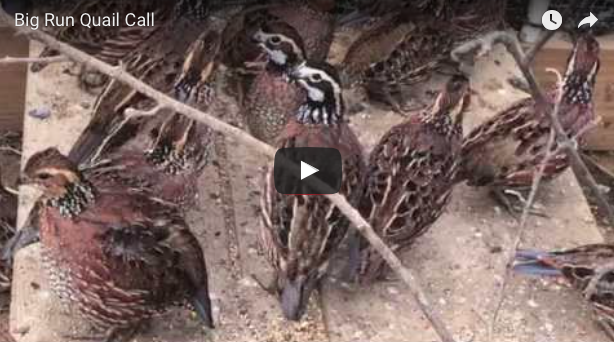
The number of Ohio residents who recognize the distinctive call of Bobwhite is dwindling. The old-timers, a few farmers, the occasional birder can still whistle the tune that was once a fixture of the buckeye landscape prior to the blizzard of ’78. Just a handful of counties in the southwest corner of the state are…
-
Walls 3Lb Hoodie
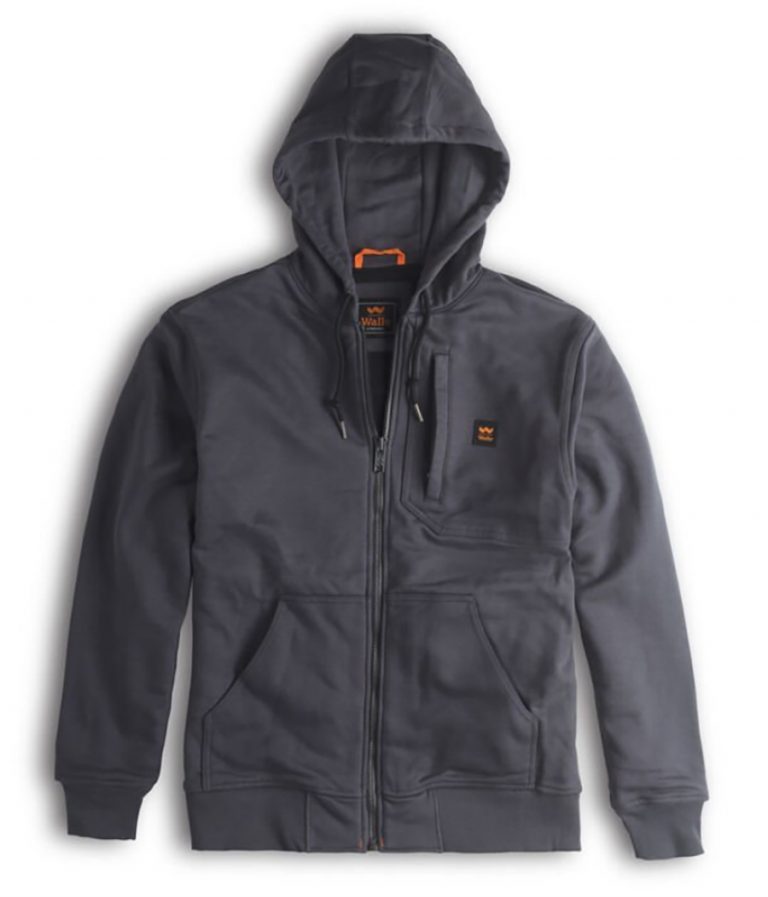
This hoodie is for real. The thirteen-ounce cotton/poly material feels like a layer of armor against the elements. Deep pockets and a deep hood let you tuck in and bull through any weather. I wear it everywhere and have yet to wash it once because it doesn’t mind the dirt. Triple stitching and a beefy zipper make…
-
The Baseline Hike
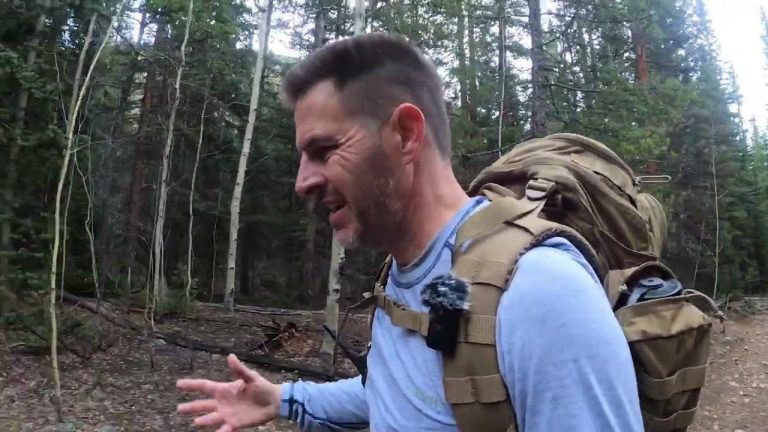
Climbing mountains, the only way to really know how bad climbing mountains with heavy packs is gonna be. And getting the young Setter, Hawk, more familiar with the grind.
-
Peltor Sport SecureFit 400 Glasses, 3 Pack
Eye protection has become a part of all my bird hunts in recent years – it just makes sense to avoid the risk of lost vision for future hunts. Peltor found a way to make it easy on the pocket book as well. The Sport SecureFit 400 come in a multipack with lens colors for…
-
Embrace the Hunting Curve
I kicked off this season hunting the entire month of September without ever pulling the trigger—for birds, not for big game, not for a once-in-a-lifetime tag draw. I never even came close. True, the Himalayan Snowcock might be the most challenging hunt in the country. This was my second attempt at those demons and I…
-
Inroads
We’ve been coming to this area of the grain belt for over 20 years. It took the locals at least seven of those to warm beyond a passing nod or the requisite finger waive to oncoming trucks. We now know many by name though most likely still recognize us only as familiar faces. Every year…