Maryland Bird Hunting
Seasons Span October 3 – February 28, 2027

State Drought Monitor – Upland hunting conditions are often highly dependent upon moisture for both habitat production and bird survival.
Maryland Upland Game Bird Hunting Overview
State DNR & Licensing Information
Upland and migratory game bird hunting in Maryland is administered by the Maryland Department of Natural Resources (MDNR), Wildlife and Heritage Service. (Maryland Department of Natural Resources)
License Requirements & Fees
- Resident Hunting License: Required for most resident hunters.
- Nonresident Hunting License: Required for nonresident hunters.
- Maryland Migratory Game Bird Stamp: Required for applicable migratory bird hunting.
- Federal Migratory Bird Hunting & Conservation Stamp: Required where applicable.
- HIP Certification: Required for migratory game birds.
- Maryland hunting licenses go on sale August 1 and are valid through July 31. (Maryland Department of Natural Resources)
Season Dates & Bag Limits — 2026–2027
Ruffed Grouse
- Season: October 3, 2026–January 30, 2027
- Daily Limit: 2
- Possession Limit: 4
Bobwhite Quail
- Season: November 7, 2026–January 15, 2027
- Daily Limit: 6
- Possession Limit: 12
- Important: Closed on DNR-owned or managed lands east of the Susquehanna River and in Garrett and Allegany counties. (Maryland Department of Natural Resources)
Ring-Necked Pheasant
- Season: November 7, 2026–February 28, 2027
- Daily Limit: 2
- Possession Limit: 4
- Stocked Hunt: Special lottery hunts will be held November 21–22, 2026 for eligible youth, apprentice, first-time and lapsed hunters. (Maryland Department of Natural Resources)
American Woodcock
- First Segment: October 24–November 27, 2026
- Second Segment: January 11–27, 2027
- Daily Limit: 3
- Possession Limit: 9 (Maryland Department of Natural Resources)
Mourning Dove
- Season: September 1, 2026–January 9, 2027, divided into segments
- Daily Limit: 15
- Possession Limit: 45
Weather Assessment & Bird Hunting Outlook
Survey Methodology
MDNR uses:
- Ruffed Grouse Cooperator Surveys: Hunters report flushes, locations and hunting effort.
- Migratory Bird Surveys: DNR monitors abundance, distribution, harvest and mortality.
- Woodcock Population Surveys: Maryland participates in the long-term federal Singing Ground Survey and Wing-collection Survey. (Maryland Department of Natural Resources)
The latest federal woodcock report estimated approximately 400 Maryland woodcock harvested by about 400 hunters in 2024–25, illustrating that Maryland is primarily a secondary wintering/migration destination rather than a major woodcock-harvest state. (Maryland Department of Natural Resources)
Weather Impact & Habitat Conditions
- Grouse: Spring weather affects nesting and brood survival, but young forest habitat is the dominant long-term factor.
- Quail: Warm, moderately wet nesting and brood-rearing conditions are favorable; habitat availability remains the major constraint.
- Woodcock: Fall rainfall and cold fronts are particularly important because they affect migration timing and soil conditions for feeding.
- Dove: Crop maturity, agricultural field management and early-season weather fronts largely determine local concentrations.
- Snipe/Rails: Wetland and soil moisture conditions are critical.
Maryland is entering the 2026 season following a nationally exceptional summer for heat, with July 2026 becoming the hottest month on record nationally. For Maryland, the more important forecast variable heading into fall will be local rainfall and the timing of early cold fronts, rather than summer temperature alone. (AP News)
2026–27 Statewide Population Outlook
- Ruffed Grouse — FAIR: Western Maryland remains the state’s best grouse country, but habitat succession and limited young forest constrain populations.
- Bobwhite Quail — POOR–FAIR: Opportunities are highly localized, with agricultural and early-successional habitat providing the best prospects. LeCompte WMA on the Eastern Shore is specifically managed for quail and woodcock. (Maryland Department of Natural Resources)
- American Woodcock — FAIR: Maryland provides migration and winter habitat, but current harvest numbers are modest. The best opportunities should follow favorable rainfall and migration fronts.
- Mourning Dove — GOOD: The state’s broad agricultural landscape and managed dove fields provide the strongest overall upland opportunity.
- Ring-Necked Pheasant — GOOD, LOCALIZED: Strongest opportunity is through MDNR’s stocked hunts and regulated shooting areas rather than wild birds. (Maryland Department of Natural Resources)
- Wilson’s Snipe & Rails — FAIR: Highly dependent on localized wetland conditions.
Overall Maryland Outlook: FAIR–GOOD. Maryland is not a destination state for abundant wild quail or grouse, but its combination of western Appalachian grouse habitat, Eastern Shore quail/woodcock habitat, agricultural dove hunting and stocked pheasant opportunities gives it a respectable variety of upland hunting.
For further details, visit the Maryland DNR website or contact them at 410-260-8540.
-
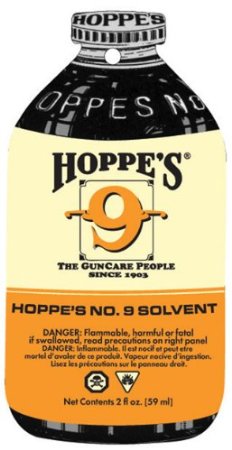
Hoppes 9 Wipes and Air Freshener
I hate when I go to clean the shotgun while traveling and find the bottle of solvent has leaked and is empty. These Hoppes 9 Wipes ($9) put an end to that. And to make sure the truck still has that new gun aroma, I’ve added the Hoppes 9 Air Freshener. SHOP THE STORY
-
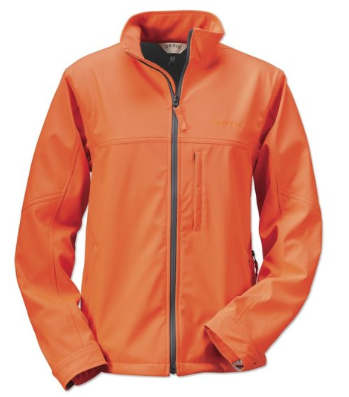
Orvis Upland Shell
Besides doing their part to support public access, Orvis is also making some great improvements to their upland gear. When the leaves have yet to drop and shooting windows are minute, the ruffed grouse leave no time for thinking or for fumbling with the mount of the shotgun. The thing I like most about the Orvis Upland Shell ($198)…
-
2015 Women’s Outdoor & Shooting Industry Dinner
It was just 3 years ago when Britney Starr, founder of the Women’s Outdoor & Shooting Industry Dinner, attended her first SHOT Show. While there she ran into friends representing different hunting and shooting sports from all over the country. She immediately recognized the need for a coordinated event in which the growing number of…
-
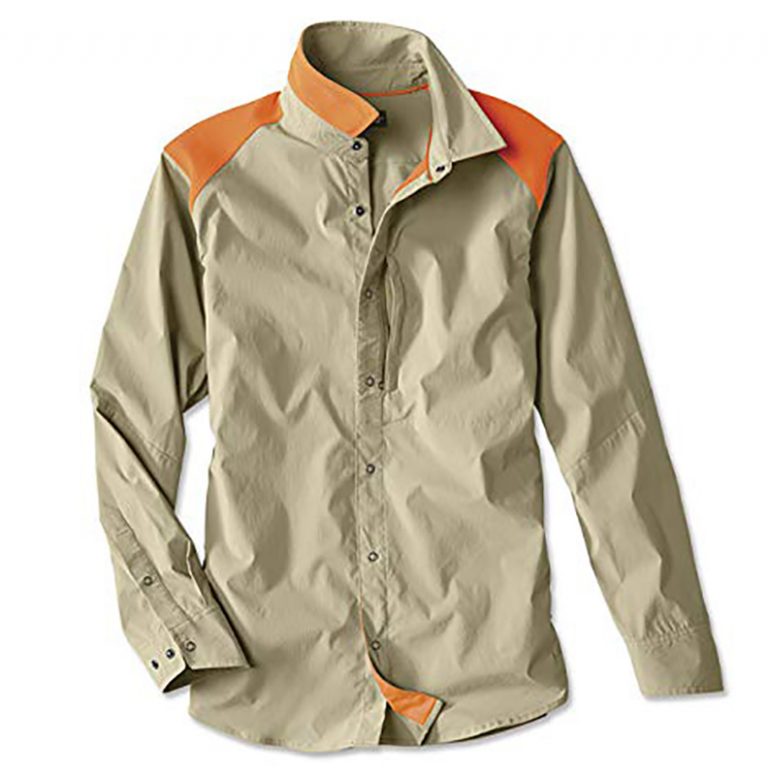
Orvis Pro LT Hunting Shirt
Details. This shirt, along with most of the latest Orvis upland apparel, is all about the details. Stretch fabric, articulated elbows, fast drying with Polygiene treatment for odor control let you wear it on hot, multi-day treks, look great and not smell like garbage. Everything is low-profile, from snaps to pockets, so there is nothing…
-
-
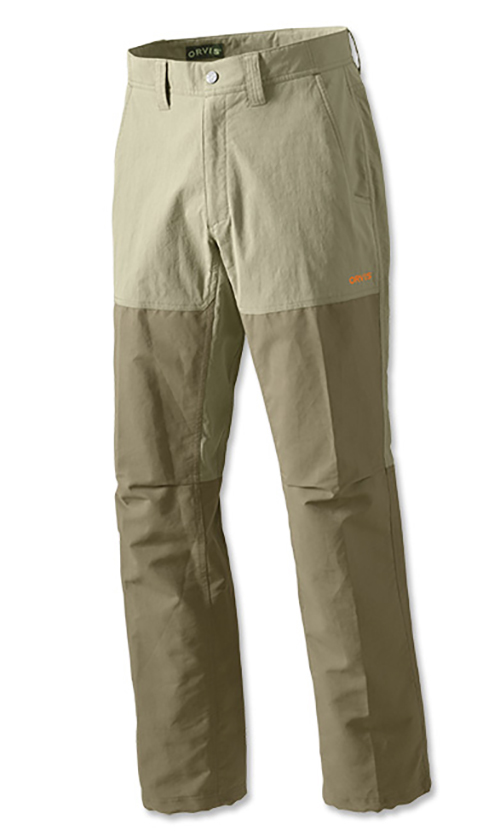
Apparel | Orvis | Upland Pants
Orvis PRO LT Hunting Pants
Early season upland hunting can be rewarding and memorable, providing the opportunity for close dog work, high bird counts, and some beautiful scenery. But, in most cases, it also means hunting in warmer temperatures. Orvis has created a new line, the PRO LT, composed of lightweight, durable, and brush-resistant gear for those dogs days of…