South Carolina Bird Hunting
Seasons Span November 23 – March 1, 2027

State Drought Monitor – Upland hunting conditions are often highly dependent upon moisture for both habitat production and bird survival.
South Carolina Upland Game Bird Hunting Overview
State DNR & Licensing Information
Upland game bird hunting in South Carolina is administered by the South Carolina Department of Natural Resources (SCDNR).
License Requirements & Fees
- Resident Annual Hunting License: $25
- Nonresident Annual Hunting License: $125
- Youth under 16: No hunting license required.
- Migratory Bird Permit: Required for woodcock, dove, snipe and other migratory birds; HIP registration is incorporated into the permit process.
- WMA Permit: Required to hunt most SCDNR Wildlife Management Areas.
SCDNR states that the 2026–27 regulation guide is still being finalized as of August 10, 2026. The small-game framework is established in state law, so the 2026–27 dates below are calculated from the statutory calendar rather than relying on third-party hunting sites. (SCDNR)
Season Dates & Bag Limits — 2026–2027
Northern Bobwhite Quail
- Private Land: November 23, 2026 – March 1, 2027
- Dogs-only: March 2 – November 22, 2026
- WMA: November 23, 2026 – February 28, 2027
- Daily Limit: 12
- Youth Hunt: November 21, 2026
The statutory season is the Monday before Thanksgiving through March 1; the 12-bird limit is established in the SCDNR regulations. (South Carolina Legislature Online)
Ruffed Grouse
- Game Zone 1 only: November 26, 2026 – March 1, 2027
- Daily Limit: 3
Ruffed grouse are restricted to the mountainous northwest portion of the state. (South Carolina Legislature Online)
American Woodcock
- Season: December 18, 2026 – January 31, 2027*
- Daily Limit: 3
- Possession Limit: 9
- HIP/Migratory Bird Permit: Required
*The 2026–27 migratory-bird season guide has not yet been published by SCDNR as of August 10, so these dates are carried forward from the most recently approved season structure and should be verified when SCDNR releases the final 2026–27 guide. (SCDNR)
Mourning Dove
- First Segment: September 1 – October 4, 2026*
- Second Segment: November 14 – November 28, 2026*
- Third Segment: December 21, 2026 – January 31, 2027*
- Daily Limit: 15
- Possession Limit: 45
*Final 2026–27 migratory-bird dates remain pending SCDNR publication. (SCDNR)
Weather Assessment & Bird Hunting Outlook
Survey Methodology
South Carolina has one of the better long-running quail datasets in the Southeast. SCDNR conducts:
- Whistling Cock Census: 47 consecutive years of roadside listening surveys.
- Summer Brood Survey: 32 consecutive years.
- Fall Covey Counts: Conducted on intensively managed WMAs and focal areas.
- Quail Hunter Survey: 38 consecutive seasons, including coveys flushed/hour, harvest, covey size and wing-based age ratios. (SCDNR)
For the weather assessment, I am weighting those biological indicators against NOAA/NCEI, National Weather Service and U.S. Drought Monitor data, rather than simply adopting SCDNR’s hunting outlook.
Weather Impact & Habitat Conditions
Winter 2025–26 — NEGATIVE:
South Carolina had an exceptionally dry winter. December 2025–February 2026 was below normal for precipitation, and southeastern portions of the state entered spring with substantial accumulated deficits. (National Weather Service)
The cold periods were not severe enough to suggest catastrophic adult mortality. The bigger concern was lack of moisture and declining habitat quality entering nesting season.
Spring 2026 — STRONGLY NEGATIVE:
This is one of the most significant weather concerns in the entire South Carolina forecast.
NOAA reported that South Carolina experienced record-dry September 2025–March 2026 conditions, with deficits across the Southeast dating back to July 2025. By April, 96.8% of the Southeast was in drought and South Carolina was among the states experiencing record dryness. (Drought.gov)
That matters considerably for bobwhite because nesting and early brood production depend on adequate cover and insect availability.
May–July 2026 — MIXED, THEN VERY NEGATIVE:
May provided meaningful relief, with portions of South Carolina receiving more than 175% of normal precipitation. That likely helped vegetation and insect production during an important portion of the brood-rearing period. (Drought.gov)
But the recovery did not last.
By late July, 85.9% of South Carolina remained in moderate drought or worse, including 28.6% in severe drought and 24.5% in extreme drought. June was the 14th-driest June on record, while January–June was the fourth-driest such period since 1895. (Drought.gov)
That is a serious negative signal for late broods, insect availability and summer cover.
2026–27 Population Outlook
- Northern Bobwhite — FAIR–POOR: This requires some nuance.The most recent hunter survey actually showed a major improvement during 2025–26. Covey encounters increased from 0.27 to 0.49 coveys/hour, quail bagged/hour increased from 0.14 to 0.24, and average covey size increased from 9.66 to 10.89 birds. The Northern Coastal Plain produced the strongest regional results at 0.96 coveys/hour, followed by the Midlands at 0.58. (SCDNR)But the underlying recruitment data are troubling. Only 43.75% of sampled harvested birds were juveniles, producing an age ratio of just 0.8 juveniles per adult. SCDNR notes that good recruitment is normally around 5–6 juveniles per adult. (SCDNR)The 2025 brood survey tells the same story: statewide brood observations produced only 1.5 juveniles per adult, down from 2.0 in 2024, while average brood size fell from 9.7 to 8.2. (SCDNR)The 2026 weather pattern adds another concern. The wet May probably helped some early broods, but the prolonged drought before and after it is unfavorable for sustained recruitment.Forecast: FAIR–POOR statewide, FAIR in intensively managed habitat.Best region: Northern Coastal Plain, particularly the Darlington/Lee County area and high-quality private quail properties. The 2025–26 hunter survey recorded 1.21 coveys/hour in Darlington County, the best county-level result in the state. (SCDNR)
- Ruffed Grouse — POOR: South Carolina’s grouse population is highly localized to the mountains, particularly the Jocassee Gorges/Blue Ridge environment.The species faces the broader Appalachian problem of long-term population decline and habitat limitations. SCDNR’s conservation assessment identifies the regional decline as a longstanding concern. (SCDNR)The 2026 drought is an additional negative, particularly for summer brood habitat, although higher-elevation mountain forests should be buffered somewhat from the worst lowland drought conditions.Forecast: POOR, with very limited localized opportunity in Game Zone 1.
- American Woodcock — FAIR: Woodcock are a different proposition because South Carolina is primarily a wintering/migration destination.The severe summer drought is not necessarily disastrous for the species because the important fall habitat conditions will depend heavily on rainfall in October–December and on migration conditions farther north.SCDNR maintains an annual woodcock hunter survey, and its management work recognizes the importance of wet, young-forest habitat. (SCDNR)Forecast: FAIR, with the potential for short-lived GOOD conditions following strong migration fronts and rainfall.
- Wilson’s Snipe — FAIR–POOR: The drought is a more direct problem for snipe than for woodcock.Shallow wetlands, saturated agricultural fields and muddy margins are likely to be less widespread than normal. Permanent wetlands and areas receiving localized summer/fall rainfall should be substantially better.Forecast: FAIR–POOR.
- Mourning Dove — FAIR: Doves are relatively resilient, and their fall abundance will depend heavily on agricultural food production, sunflower/grain fields and migration.The drought could reduce natural seed production, but cultivated fields can compensate.Forecast: FAIR.
Overall South Carolina Outlook: FAIR–POOR.
This is a state where the 2025 biological data and 2026 weather data are telling somewhat different stories.
The 2025–26 hunting season looked substantially better than the previous several years. Covey encounters nearly doubled from 0.27 to 0.49/hour, and the Northern Coastal Plain reached 0.96/hour. (SCDNR)
But the recruitment data were nowhere near what I would want to see before calling 2026 a quail boom. The statewide juvenile/adult ratio was only 0.8:1, versus a stated good benchmark of 5–6:1. (SCDNR)
And then 2026 brought an exceptionally difficult weather sequence: record-dry fall/winter conditions, severe spring drought, a wet May, followed by renewed summer dryness. South Carolina is currently experiencing its fourth-driest January–June period in 131 years. (Drought.gov)
So I would not extrapolate the 2025–26 improvement directly into a 2026–27 forecast.
Best 2026 Bets
Bobwhite: Northern Coastal Plain first; particularly intensively managed private properties around Darlington, Lee and neighboring counties. The Midlands are the second-best broad region.
Ruffed Grouse: Mountain Game Zone 1, especially higher-quality mature/young-forest mosaics around the Blue Ridge.
Woodcock: Wet bottomland, alder and young-forest habitat. Watch rainfall and cold fronts beginning in December.
Snipe: Permanent wetlands, wet agricultural ground and areas that receive substantial fall rainfall.
Dove: Agricultural fields with strong grain or sunflower production.
Forecast confidence: Moderate–High. South Carolina has unusually extensive long-term quail monitoring, and the 2025–26 hunter data are useful. The principal uncertainty is what the 2026 summer brood survey will show after this year’s unusual drought/wet/drought sequence. SCDNR plans to continue the fall covey-count program in 2026. (SCDNR)
Bottom line: South Carolina had a genuine quail improvement in 2025–26, but I would be cautious about calling 2026–27 another good year. The underlying recruitment numbers were weak, and the extreme 2026 drought is a significant headwind. The Northern Coastal Plain remains the state’s best wild-quail bet, while woodcock may actually offer the more dependable migratory opportunity this winter. (SCDNR)
This summary provides a general guide for upland bird hunting in South Carolina for the 2025-26 season. For precise dates, limits, and license requirements, consult the SCDNR or the Go Outdoors South Carolina app before hunting.
-
-
Sitka Gear Vapor SD Jacket
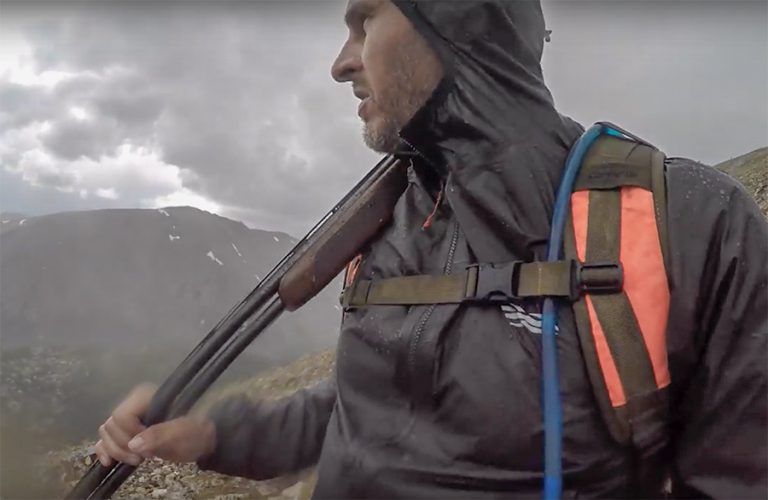
Heading into the backcountry, weight and packability are always top concerns for gear. Sitka’s Vapor SD Jacket compresses small and weighs so little it’s easy to forget tucked in the corner of the bird vest. But weather in the mountains can be unpredictable and unforgiving and when the skies open up and the sleet starts…
-
The Streak
Rio the setter is holding just below a lip of pitted volcanic stone a few paces up this 60 degree slope. We’ve climbed for over two hours to get to this point. The entire trek from the bottom the dogs have been trailing and repositioning. I can tell by Rio’s stature that she has trapped…
-
Mud River Luggage
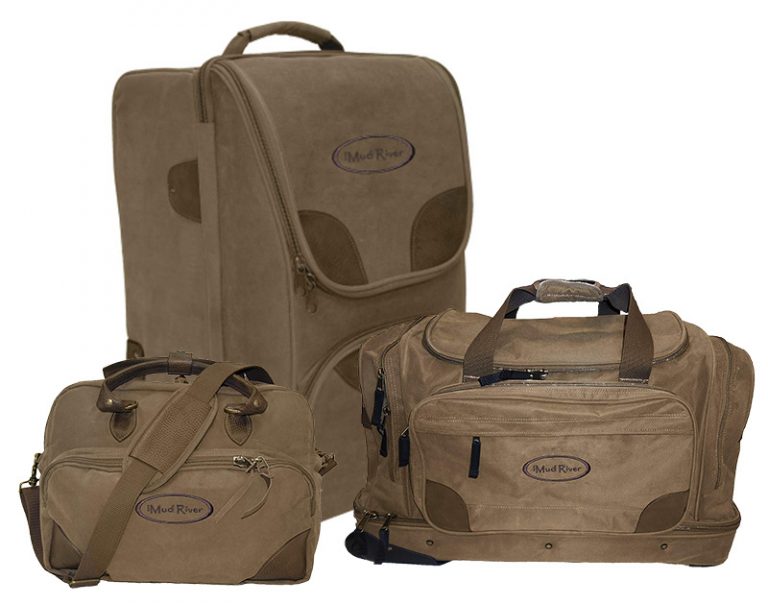
Aside from this luggage looking upland-ey (i.e. cool,) it’s extremely well made and durable. I’ve flown with the Rolling Duffel ($219) on hunting trips around the US and Africa, and it’s held up beautifully. It has every feature a duffel bag needs, heavy-duty nylon zipper, leather accents, wheels, extending handle, end zippered pockets, and a…
-
Grilled White-tailed Ptarmigan Beurre Blanc
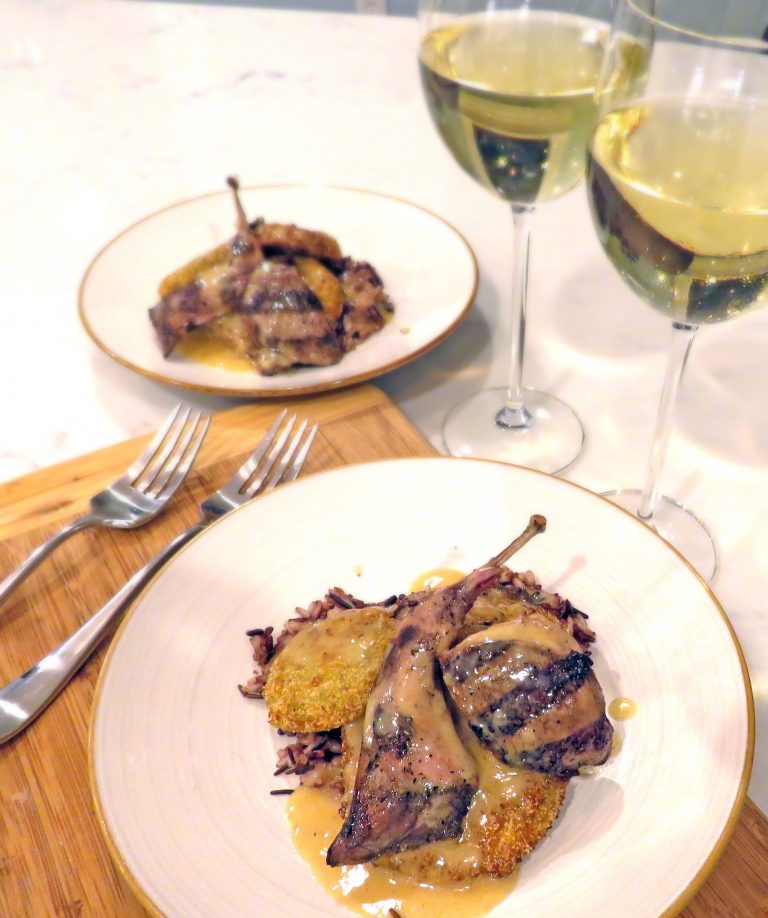
One of the side benefits of seemingly endless hours of asphalt we trade to get to wild places is the opportunity to plot preparation for anything we’re fortunate enough to add to the cooler. Since it’s the early season and the garden is not yet frozen, green tomatoes seemed like a great compliment for game…
-
The Art of Posing with Dead Birds
Post-hunt photos can reveal a lot about a bird hunter. Now that everyone carries smartphones with cameras and are posting picts in real-time from the field, I thought it would be a great opportunity to give uplanders a few tips to appear more competent in front of the lens. First off you’ve shot the bird,…