Chesapeake Bay Retriever
The Chesapeake Bay Retriever, often called the “Chessie,” emerged in the early 19th century along the rugged shores of the Chesapeake Bay in Maryland, United States. Its origin story begins with a shipwreck in 1807, when two Newfoundland-type dogs, a male named Sailor and a female named Canton, were rescued from a British ship off the Maryland coast. These dogs, noted for their swimming ability and thick coats, were bred with local retrievers, hounds, and possibly spaniels, creating a hardy breed suited to the harsh conditions of the Chesapeake Bay region. By the mid-19th century, the breed was refined for its retrieving prowess, particularly for waterfowl hunting in icy, turbulent waters. Recognized by the American Kennel Club (AKC) in 1878, the Chesapeake Bay Retriever became a distinct breed valued for its work ethic and loyalty.
Breed Standards
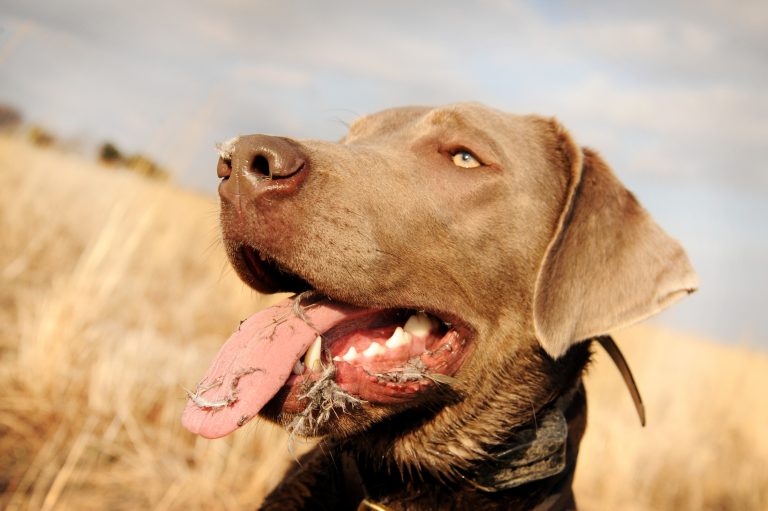
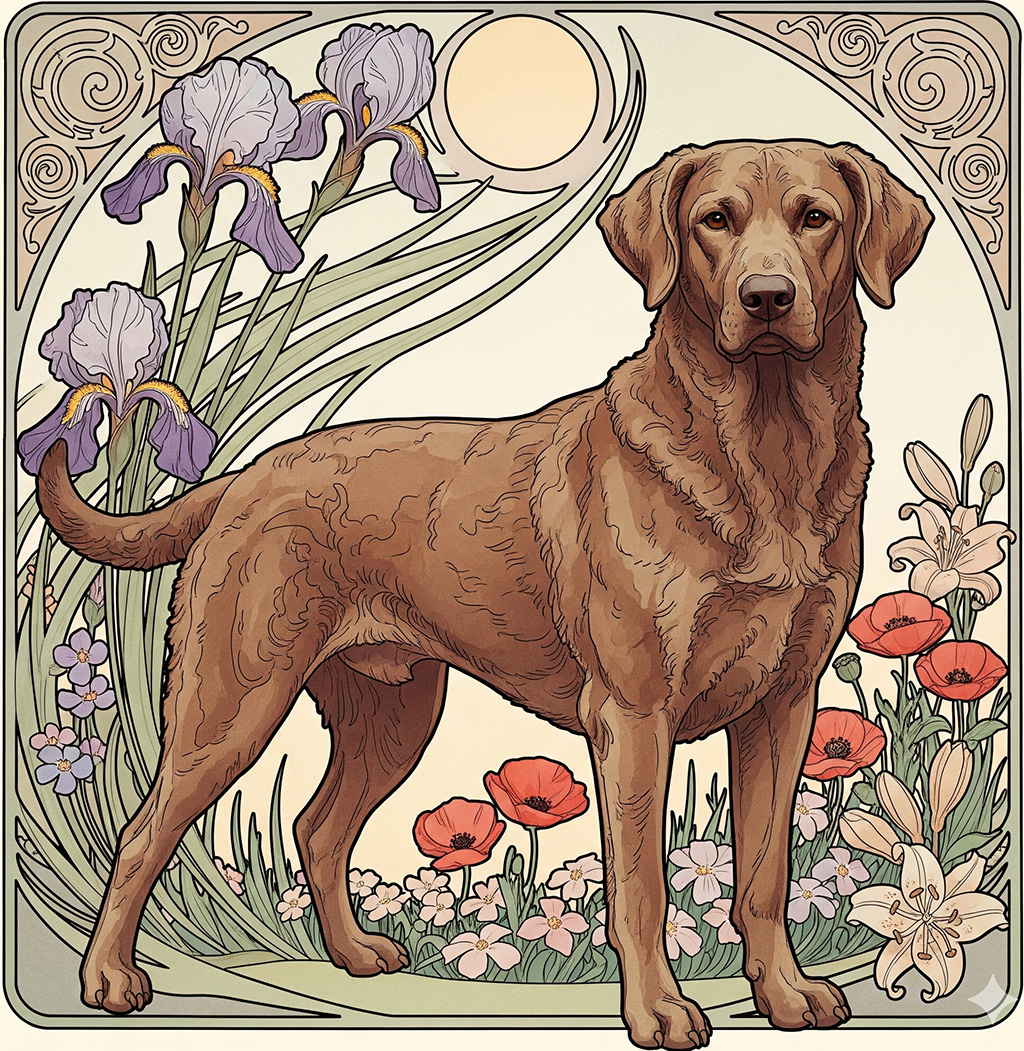
According to the AKC breed standard, the Chesapeake Bay Retriever is a medium-to-large working dog, standing 21–26 inches at the shoulder and weighing 55–80 pounds. Its hallmark is a dense, water-repellent double coat, with a wavy, oily outer layer and a woolly undercoat, ideal for cold-water environments. Coat colors range from solid brown, sedge (a reddish-brown), or deadgrass (a straw-like tan), blending seamlessly with marshy hunting grounds. The Chessie’s muscular build, slightly longer than tall, supports its powerful swimming and retrieving capabilities. Its head is broad with a medium-length muzzle, and its eyes are yellowish or amber, giving an intelligent, determined expression. The breed standard emphasizes a balanced, athletic dog with a strong work drive, courage, and alertness.
Hunting History in the United States
The Chesapeake Bay Retriever’s hunting legacy is deeply tied to the Chesapeake Bay’s waterfowl industry in the 19th and early 20th centuries. Market hunters relied on Chessies to retrieve hundreds of ducks and geese daily from frigid, choppy waters, often under brutal conditions. Their thick coats protected them from icy temperatures, while their tenacity and stamina enabled them to navigate strong currents and dense marshes. Unlike other retrievers, Chessies were bred to break ice and endure long hours in the water, making them indispensable for retrieving game in challenging environments. Their intelligence and independent nature allowed them to work closely with hunters, often taking initiative in difficult retrieves. Today, while commercial hunting has declined, Chessies remain prized in field trials and hunting circles for their grit, versatility, and unwavering dedication.
Conclusion
The Chesapeake Bay Retriever embodies a unique blend of resilience, adaptability, and loyalty, forged by its origins in the Chesapeake Bay’s demanding environment. Its breed standards reflect a purpose-built working dog, while its hunting history underscores its vital role in America’s waterfowl tradition. The Chessie remains a testament to the enduring partnership between humans and dogs in the pursuit of survival and sport.
-
Pavlov Didn’t Have Bird Dogs
I’m forced to sneak about my own property like a burglar, held captive by bird dogs trying to secure their place in the truck. Regardless whether the destination is a wild place or the tame grocery, they are not willing to wager their spot. A few short weeks ago I could announce my exit to…
-
Why We Hunt With Dogs
This morning I took my lab Wyatt out for a weekend stomp on public ground. Yesterday while in the field at first light I saw several other trucks with hunters trying to hunt the same field which we beat them to that day. Needless to say, the public options close to population centers here in…
-
Picking THE Puppy, or are we just kidding ourselves
Last time I chose a puppy I was fresh out of school, only a dim view of the years ahead and a bank account teetering on empty. At the time it seemed like a great idea, introduce a young dog into chaos and hope for the best. I knew little about training, obedience, nutrition, genetics,…
-
The Lab Knows
Wyatt knows he’s black. He also knows this is the color of night. He’s been able to surmise that humans have terrible night vision. During daylight hours when we take breaks from hunting, he plots. He knows most mischief will not fly in the light of day. Raiding other camps, gnawing a nearby rotting deer…
-
Meet Ida
I’ve always found the haphazard naming of dogs intriguing. I’ve wondered if a puppy grows into the name, filling the shape of some predetermined vessel? I like original names, probably because I have irrational hopes for my bird dogs to be uniquely exceptional. But then names different for different’s sake grind on me. People names…
-
A Labs First Day Afield
“No, I don’t think you understand, he has NO prior hunting experience…only obedience training.” I wrote to Brian, my new upland hunting buddy. The early morning email asking for my young lab and me to attend an upland hunt had caught me by surprise, putting a nice end to a long workweek. “Kali, it doesn’t…