Nevada Bird Hunting
Seasons Span September 1 – February 7, 2027

State Drought Monitor – Upland hunting conditions are often highly dependent upon moisture for both habitat production and bird survival.
Nevada Upland Game Bird Hunting Overvie
State DNR & Licensing Information
Upland game bird hunting in Nevada is administered by the Nevada Department of Wildlife (NDOW).
License Requirements & Fees
- Resident Hunting License: Required for hunters 12 and older.
- Nonresident Hunting License: Required for nonresidents.
- Himalayan Snowcock: A free-use snowcock permit is required in addition to a hunting license.
- Sage Grouse: Special permit required.
- HIP: Required for applicable migratory birds.
- Most upland species can be hunted with a standard hunting license; certain species require additional permits or tags. (NDOW)
Season Dates & Bag Limits — 2026–2027
Chukar & Hungarian Partridge
- Season: Second Saturday in October 2026 – first Sunday in February 2027
- Daily Limit: 6, singly or in aggregate
- Possession Limit: 18
California, Gambel’s & Mountain Quail
- Season: Dates vary by species and hunt area under the annual regulations.
- Daily/possession limits: Vary by species and area.
Himalayan Snowcock
- Open Counties: Elko and White Pine
- Season: September 1 – November 30
- Daily Limit: 2
- Possession Limit: 2
- Shooting Hours: Sunrise to sunset
- Special Requirement: Free-use snowcock permit required before hunting. (NDOW)
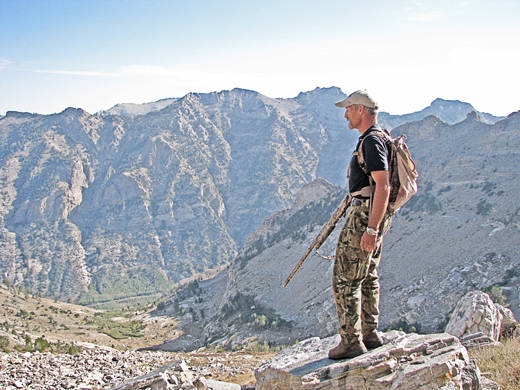
The snowcock is an exceptionally specialized Nevada hunt. NDOW identifies the Ruby Mountains and East Humboldt Range near Elko as the species’ Nevada stronghold. (NDOW)
Sage Grouse
- Season: September, in designated open units
- Daily Limit: 2
- Possession Limit: 2
- Special Requirement: Sage-grouse permit required.
- Nonresident restrictions: Apply in designated areas.
Dusky, Sooty & Ruffed Grouse
- Season: September 1 – December 31
- Daily Limit: 3, singly or in aggregate
- Possession Limit: 9
Mourning Dove
- Season: September–October, according to annual migratory-bird regulations
- Daily Limit: 15
- Possession Limit: 45
Weather Assessment & Bird Hunting Outlook
Survey Methodology
Nevada is unusual because NDOW maintains a species-specific chukar brood survey, providing one of the better direct measures of annual upland production in the Great Basin.
For the broader forecast, I am weighting:
- NDOW brood and population surveys;
- historical harvest and population information;
- NOAA/NWS temperature and precipitation;
- U.S. Drought Monitor/Drought.gov;
- snowpack and spring runoff;
- summer precipitation and vegetation conditions;
- elevation and habitat differences between species.
This is particularly important in Nevada because conditions in an alpine snowcock range can be dramatically different from those in the desert chukar country below it.
Weather Impact & Habitat Conditions
- Chukar: Highly sensitive to summer precipitation, insect production and availability of green vegetation. Reliable water developments become increasingly important during drought.
- Himalayan Snowcock: A very different ecological situation. Snowcock occupy high-elevation alpine and subalpine terrain, particularly the Ruby Mountains and East Humboldt Range. Summer drought at lower elevations is therefore not an automatic proxy for snowcock productivity.
- Quail: Desert quail depend heavily on localized water and vegetation. Drought can concentrate birds around reliable water sources while reducing overall recruitment.
- Sage Grouse: Spring precipitation and forb/insect production are important for brood survival. Persistent drought is a significant negative.
- Mountain Grouse: Higher elevations provide some climatic refuge from the worst desert conditions, although drought, wildfire and vegetation changes remain concerns.
The independent climate picture remains troubling. Drought.gov reported nearly 77% of Nevada in drought (D1–D4) as of late April, following a dry and warm March that caused rapid, early snowmelt. (Drought.gov) NOAA’s drought outlook subsequently indicated that drought conditions were expected to persist in portions of the West. (Drought.gov)
But that statewide statistic needs an important qualification for snowcock: Nevada’s drought signal is much more relevant to chukar, quail and sage grouse than it is to the highest alpine snowcock habitat.
2026–27 Statewide Population Outlook
- Chukar — POOR–FAIR: This remains Nevada’s biggest statewide concern. The most recent completed NDOW brood survey showed extremely poor recruitment, with only 1.1 chicks per adult compared with 4.8 in 2024. Continued drought provides little basis for assuming a rapid statewide recovery. (NDOW)
- Himalayan Snowcock — FAIR–GOOD: This should be treated separately from Nevada’s desert upland birds. Snowcock occupy high alpine habitat in the Ruby Mountains and East Humboldt Range, where elevation provides some insulation from the state’s broader drought conditions. However, 2026 snowpack and summer moisture still matter for alpine vegetation and insect availability. This is a highly localized hunt, and the statewide drought percentage should not be used as a direct snowcock population proxy. NDOW confirms the species’ Nevada range is concentrated in the Ruby Mountains and East Humboldt Range. (NDOW)
- California/Gambel’s Quail — FAIR: Localized water and habitat will be decisive. Expect major differences between individual mountain ranges and drainages.
- Mountain Quail — FAIR: Higher-elevation habitat provides some protection from desert drought, but wildfire and summer moisture remain important.
- Sage Grouse — POOR–FAIR: Persistent drought is a significant negative factor for brood-rearing habitat and forage.
- Hungarian Partridge — POOR–FAIR: Dry agricultural and grassland conditions remain a concern.
- Dusky/Sooty/Ruffed Grouse — FAIR: Higher-elevation forest habitat provides some drought refuge, although conditions vary considerably.
Overall Nevada Outlook: FAIR–POOR for the state’s broad upland game-bird picture, but FAIR–GOOD for Himalayan snowcock specifically.
Nevada is actually a fascinating case where one statewide rating is misleading. The drought strongly argues against an optimistic forecast for chukar, quail and sage grouse, while the Ruby Mountains/East Humboldt snowcock hunt deserves a substantially more favorable assessment because its habitat is fundamentally different. NDOW’s own species information places Nevada’s snowcock population in those high-elevation mountain systems. (NDOW)
The snowcock also deserves special prominence in this project because Nevada is one of the very few places in North America where hunters can pursue this introduced Himalayan species in a true alpine environment. It is a legitimate destination hunt, not merely another species on the small-game list.
-
Getting Over the Snowcock Curve
There is definitely a learning curve anytime you try and hunt a new species in a new area. No amount of research or reading can truly prepare you the same as having boots on the ground. Of course all the ground in the Rubys points uphill. With Snowcock you hear tales of hunters rounding a…
-
Getting to Know the Rubys a Foot at a Time
Going from barely above sea level to over 8,000 feet in the span of a few days is challenging. So I’ve elected to start this hunt just focusing on the next step. Sure I’m here to bird hunt. But right now we just have to get legs and lungs acclimated to this new environment. I…
-
-
There Are No Indifferent Snowcock Hunters
Between the years of 1963 to 1979 Himalayan Snowcock imported from Pakistan and Afghanistan were released in the Ruby Mountains of Nevada. Today it’s the only place in the Western Hemisphere these birds can be found. One can only guess why exactly the Nevada Department of Wildlife went to such lengths to establish a non-native…
-
Climbing for the Birds
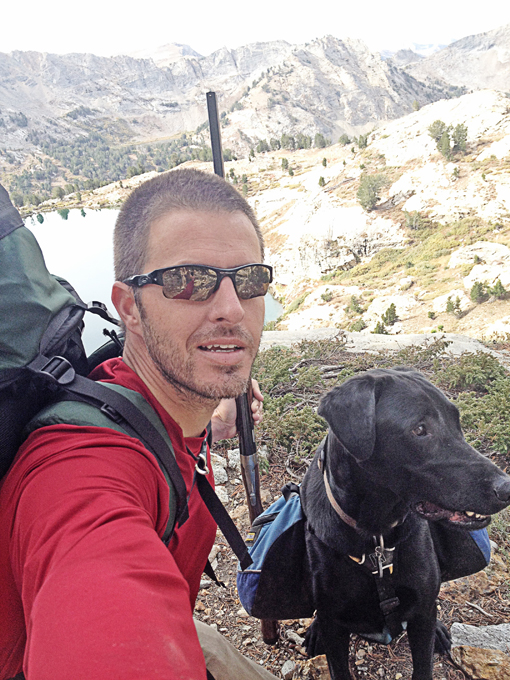
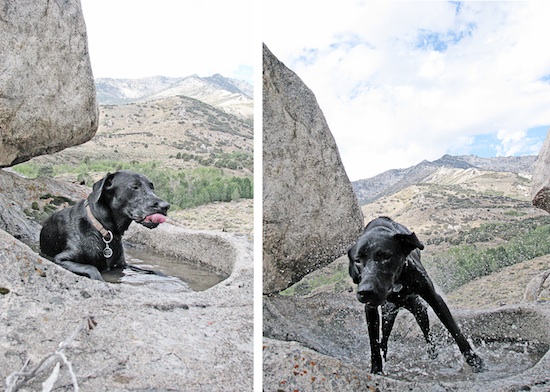
Maurice and I punched through the ridge line at 10,500 feet mid-morning with Wyatt the black lab in tow. The massive boulder fields and talus slopes are tough terrain for a bird dog. We climbed over a small crease and arrived at a rare sight, a piece of flat ground extending 50 yards to the…