Louisiana Bird Hunting
Seasons Span September 5 – February 28, 2027

State Drought Monitor – Upland hunting conditions are often highly dependent upon moisture for both habitat production and bird survival.
Louisiana Upland Game Bird Hunting Overview
State DNR & Licensing Information
Upland and migratory game bird hunting in Louisiana is administered by the Louisiana Department of Wildlife and Fisheries (LDWF).
License Requirements & Fees
- Resident Basic Hunting License: $20
- Nonresident Basic Hunting License: $200
- Nonresident 5-Day Hunting License: $65
- Nonresident Native 10-Day Hunting License: $20
- HIP Certification: Free; required for migratory game birds including dove, woodcock, rails and snipe.
- WMA Access Permit: $20 annual / $5 for five days. (Louisiana Wildlife and Fisheries)
Season Dates & Bag Limits — 2026–2027
Northern Bobwhite Quail
- Season: November 21, 2026–February 28, 2027
- Daily Limit: 10
- Possession Limit: 30 (Louisiana Wildlife and Fisheries)
Mourning & White-Winged Doves
North Zone:
- September 5–27
- October 10–November 15
- December 19–January 17
South Zone:
- September 5–20
- October 17–November 29
- December 12–January 10
- Daily Limit: 15 aggregate
- Possession Limit: 45 aggregate (Louisiana Wildlife and Fisheries)
American Woodcock
- Season: December 18–January 31
- Daily Limit: 3
- Possession Limit: 9 (Louisiana Wildlife and Fisheries)
Weather Assessment & Bird Hunting Outlook
Survey Methodology
LDWF monitors small-game populations through annual surveys and hunter harvest surveys.
- Quail: LDWF conducts late-October/early-November covey surveys and annual hunter harvest surveys.
- Dove: LDWF uses banding data to help estimate population size and establish hunting regulations.
- Harvest Data: LDWF’s 2024–25 survey estimated approximately 500 hunters pursued wild quail, with no reported wild-quail harvest, while about 25,300 pen-raised quail were harvested. (Louisiana Wildlife and Fisheries)
Weather Impact & Habitat Conditions
- Quail: Habitat is the dominant limiting factor. LDWF identifies agricultural changes and intensive pine management as major causes of long-term decline.
- Dove: Agricultural conditions, crop maturity, field management and weather fronts are the major short-term factors.
- Woodcock: Winter rainfall, soil moisture and cold fronts influence migration and concentration in suitable cover.
- Snipe/Rails: Local wetland and soil-moisture conditions strongly influence availability.
Louisiana entered summer 2026 after an unusually wet May, when the state received more than 160% of normal precipitation. June also brought above-average precipitation across portions of the South and Gulf Coast, while Louisiana recorded its second-warmest June minimum temperatures on record. (NCEI)
2026–27 Statewide Population Outlook
- Northern Bobwhite Quail — POOR: Louisiana’s long-term quail decline remains severe, with LDWF reporting approximately a 75% decline since 1966. Remaining opportunities are highly localized in quality grassland and early-successional habitat. (Louisiana Wildlife and Fisheries)
- Mourning Dove — GOOD: Louisiana supports a substantial dove harvest, with approximately 478,100 mourning doves harvested by 30,600 hunters in 2024–25. Managed agricultural fields should provide the best opportunities. (Louisiana Wildlife and Fisheries)
- American Woodcock — FAIR–GOOD: Louisiana is an important wintering area, and the combination of moist conditions and suitable bottomland/young-forest habitat can produce good localized hunting.
- Wilson’s Snipe — FAIR: Approximately 29,400 were harvested in 2024–25; prospects will depend heavily on wet-soil conditions during the winter season. (Louisiana Wildlife and Fisheries)
- Rails & Gallinules — FAIR: More specialized wetland opportunities, with localized concentrations dependent on water and vegetation conditions.
Overall Louisiana Outlook: FAIR. For a traditional upland hunter, dove is by far the strongest opportunity, while wild quail hunting is now a specialized pursuit. Woodcock and snipe provide additional winter opportunities where suitable wetland and bottomland habitat is available.
This summary covers the key upland bird species (quail and woodcock) as specified. For other migratory birds like doves or snipe, additional details are available in the LDWF regulations.
-
Way Upland Season IV Episode 2
Battling unseasonably high temperature approaching 80º while trying to get everyone accustomed to low oxygen at high altitude. The bird dogs are managing, even with packs full of gear.
-
Bellville Elementary is Public Lands Proud
The halls and classrooms of Bellville Elementary flirted with the wild side with a visit from the latest addition to the Ultimate Upland Team, Ida. The nine-week-old chocolate lab puppy attended school to share the importance of socialization and enriched environments for brain development. Brian Koch, founder of Ultimate Upland, also had the opportunity to…
-
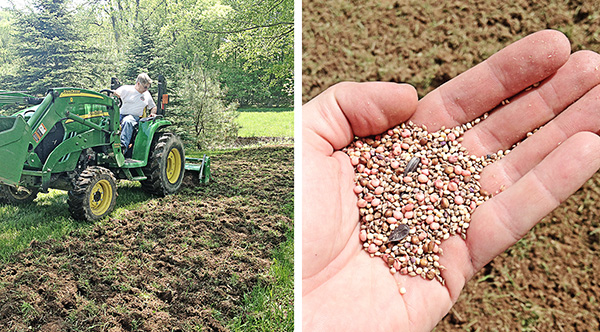
Backyard Bobwhite: Part 1
Is the key to restoring quail right out your back door? I grew up in small farming community in rural Northeast Ohio. It’s not considered an upland bird hot spot. But I still remember seeing wild quail when I was a kid. And I’ve verified this with others from the area. Bobwhite used to inhabit…
-
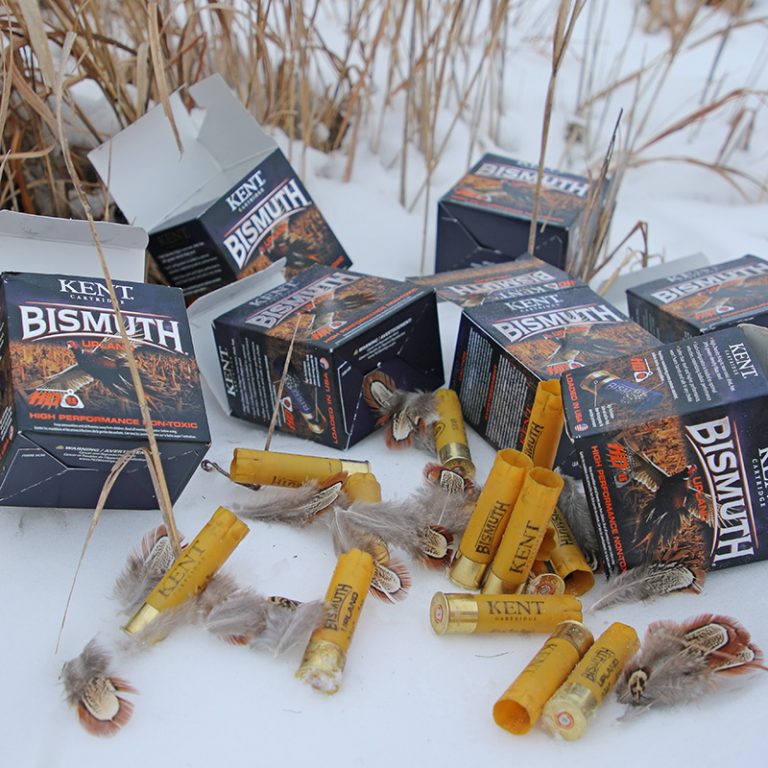
Kent Bismuth
In 1991 the use of lead shot was banned for all waterfowl hunting after a federal study showed that between 1.6 and 2.4 million waterfowl died annually from ingesting lead. Since then steel and other non-toxic shot has been the rule for duck hunters. Like it or not, that rule is coming to upland hunting,…
-
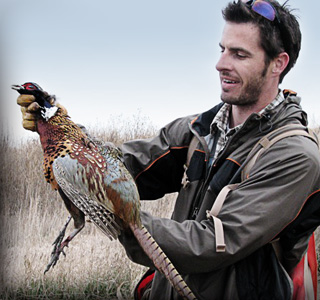
The Top 3 Wild Pheasant Hunting Tips
There are tons of variables involved when pheasant hunting: weather, dogs, number of hunters, blockers, terrain, time of day….. the list is almost endless. But regardless of these elements, there are 3 things you can always use that will improve your success against the wily wild rooster. The bird hunters’ opening day is also most…
-
The Fountain of Youth
The old boy doesn’t leap into the truck like he once could, but he still manages to lurch up the running boards and cross the center console. Instead of stowing him in the back for this road trip, I break the rules and let him ride shotgun. He acknowledges the exemption and quickly curls into…