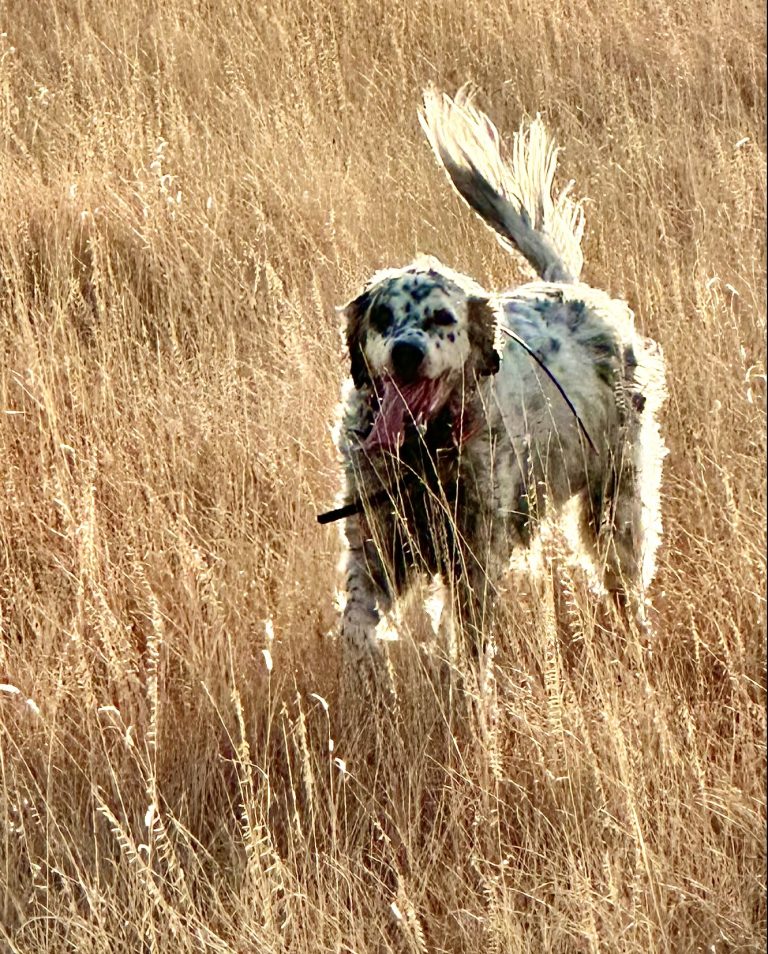

Irish Setter
The Irish Setter, known for its elegant appearance and vibrant red coat, originated in Ireland during the 18th century. This breed likely emerged from a mix of spaniels, setters, and pointers, with the goal of creating a skilled hunting dog. By the early 19th century, selective breeding refined the Irish Setter’s distinctive traits, emphasizing its athletic build and keen hunting instincts. The breed’s characteristic mahogany or rich chestnut coat became a hallmark, distinguishing it from other setters like the English and Gordon Setters. Recognized for its beauty and utility, the Irish Setter gained popularity in Europe and was exported to the United States by the mid-1800s.
Breed Standards
According to the American Kennel Club (AKC), the Irish Setter is a medium-to-large breed, standing 25–27 inches tall at the shoulder and weighing 60–70 pounds. The breed standard emphasizes a balanced, elegant frame with a refined head, long neck, and deep chest, suited for endurance in the field. The coat is moderately long, silky, and flat, with feathering on the legs, chest, and tail, always in shades of red or red-gold. The Irish Setter’s movement is described as free-flowing and graceful, reflecting its agility. Temperamentally, the breed is outgoing, affectionate, and energetic, requiring regular exercise and mental stimulation. The AKC stresses that any deviation from these physical and behavioral traits, such as excessive shyness or aggression, is considered a fault in show competitions.
History of Hunting in the United States
In the United States, the Irish Setter quickly became a favored hunting companion after its introduction in the 19th century. Valued for its ability to locate and point game birds, particularly quail and pheasant, the breed excelled in open fields due to its speed and keen sense of smell. By the late 1800s, Irish Setters were prominent in field trials, showcasing their hunting prowess. However, by the early 20th century, a divergence emerged between field-bred and show-bred lines. Field-bred Irish Setters, often leaner and more agile, remained focused on hunting, while show-bred lines prioritized conformation and coat quality, sometimes at the expense of working ability. Despite this split, field-bred Irish Setters continue to be used in the U.S. for upland bird hunting, maintaining their reputation as tireless and stylish workers. Today, organizations like the Irish Setter Club of America promote both the breed’s hunting heritage and its role as a beloved companion.
Conclusion
The Irish Setter’s journey from 18th-century Ireland to modern America reflects its enduring appeal as both a skilled hunter and a charismatic companion. Its breed standards highlight a balance of beauty and functionality, while its hunting history in the U.S. underscores its versatility in the field. Whether in the show ring or the field, the Irish Setter remains a vibrant symbol of elegance and enthusiasm.
-
The Fountain of Youth
The old boy doesn’t leap into the truck like he once could, but he still manages to lurch up the running boards and cross the center console. Instead of stowing him in the back for this road trip, I break the rules and let him ride shotgun. He acknowledges the exemption and quickly curls into…
-
The First Month with the New Puppy
Selective memory is a close ally to puppies. Recollection of puppy breath and cuddles gloss over the challenges of house training and toothy destruction. Adorable naps and puppy eyes erase the boundless energy and predawn bawling. It’s been six years since the last puppy, which has been plenty of time for revisionist history to mask…
-
A Labs First Day Afield
“No, I don’t think you understand, he has NO prior hunting experience…only obedience training.” I wrote to Brian, my new upland hunting buddy. The early morning email asking for my young lab and me to attend an upland hunt had caught me by surprise, putting a nice end to a long workweek. “Kali, it doesn’t…
-
The Lab Knows
Wyatt knows he’s black. He also knows this is the color of night. He’s been able to surmise that humans have terrible night vision. During daylight hours when we take breaks from hunting, he plots. He knows most mischief will not fly in the light of day. Raiding other camps, gnawing a nearby rotting deer…
-
Rio Flufferbunny
It was fall when she came to us on a plane from New Mexico, all legs and ears and sharp puppy teeth. She pointed from the womb — butterflies, song birds, turtles, tufts of grass stirred by a breeze — nothing was safe from her glare. As our first setter, I was unsure of the…
-
Meet Ida
I’ve always found the haphazard naming of dogs intriguing. I’ve wondered if a puppy grows into the name, filling the shape of some predetermined vessel? I like original names, probably because I have irrational hopes for my bird dogs to be uniquely exceptional. But then names different for different’s sake grind on me. People names…