Irish Red and White Setter
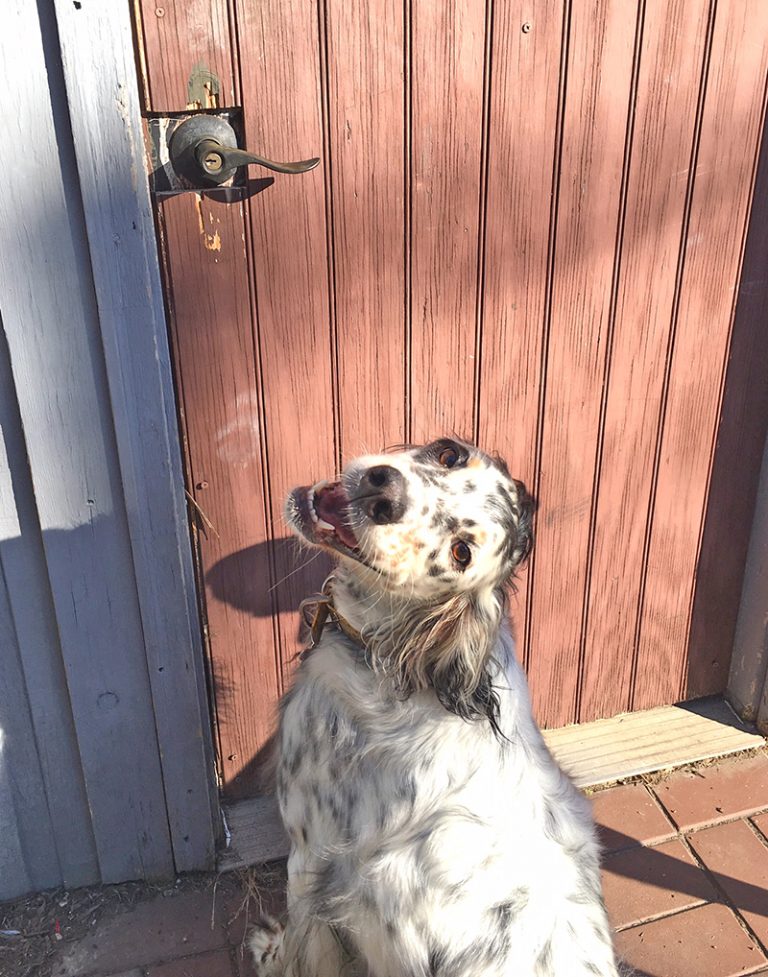
The Irish Red and White Setter (IRWS), a spirited and elegant gundog, boasts a history that stretches back to at least the 17th century in Ireland, predating its more famous cousin, the solid red Irish Setter. Originating as a hunting companion, the IRWS was prized for its ability to locate gamebirds such as partridge, grouse, and snipe using its keen sense of smell, then “set” or crouch to indicate their position, allowing hunters to capture prey with nets or, later, firearms. The breed’s distinctive red and white coat, with solid red patches on a white base, made it easily visible in the field, a practical trait for hunters navigating Ireland’s rugged terrain. Historical records, including 17th-century artwork and writings, confirm the presence of red and white setting dogs, likely descended from spaniels, with selective breeding refining their hunting prowess over centuries.
By the late 19th century, the IRWS faced near extinction as the solid red Irish Setter gained popularity, particularly among American tourists who drove demand for the red-coated variant. The Red Setter Club, formed in 1882, formalized a breed standard favoring the solid red coat, marginalizing the red and white setters. However, dedicated breeders, such as the Rossmore family in County Monaghan, preserved the IRWS through the 18th and 19th centuries. Efforts to revive the breed intensified in the 1920s, with the Irish Red and White Setter Society established in 1944 by William and Maureen Cuddy, leading to official recognition by the Irish Kennel Club in the late 1970s, the UK Kennel Club in 1984, and the American Kennel Club (AKC) in 2009.
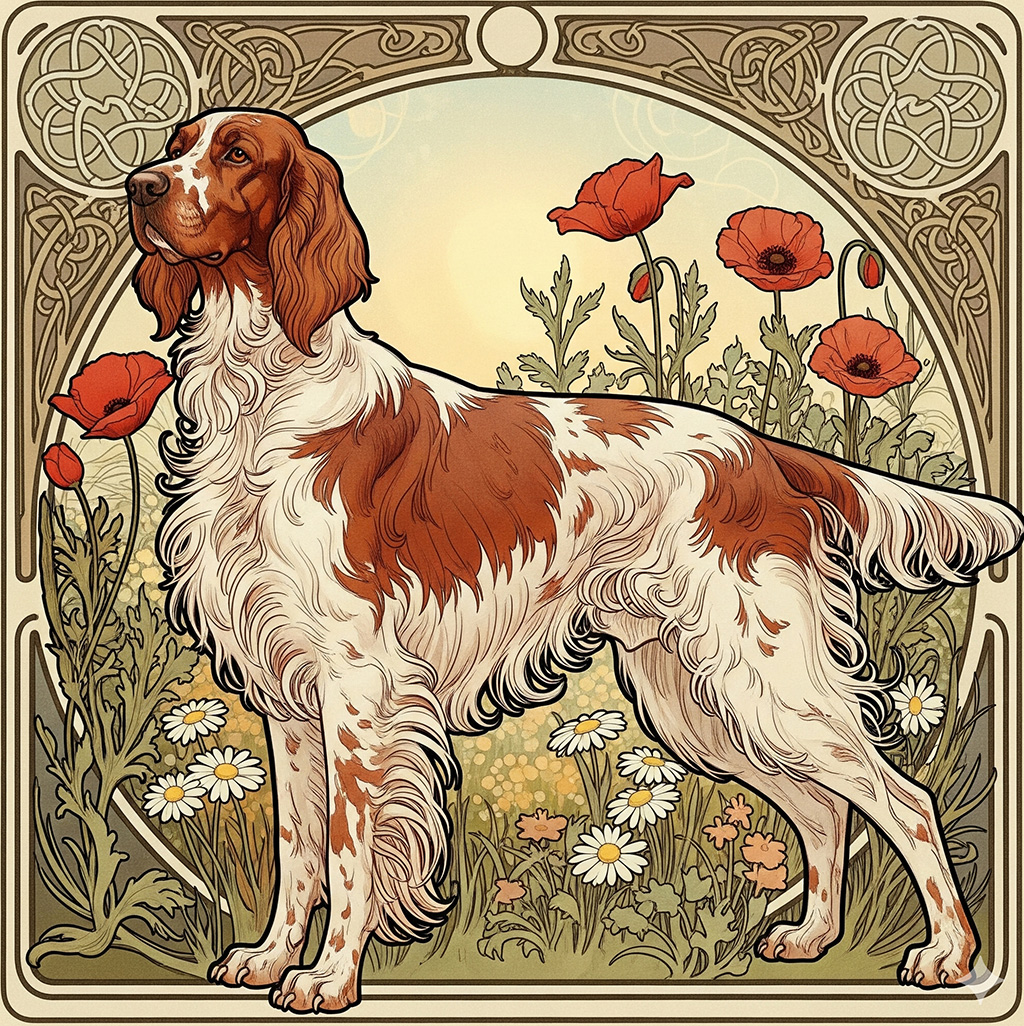
The AKC breed standard describes the IRWS as a medium-sized, athletic dog, with males standing 24.5–26 inches and females 22.5–24 inches at the withers, weighing approximately 50–70 pounds. The coat is medium-length, silky, with feathering on the ears, legs, and tail, and must feature a white base with solid red patches, though light flecking is permitted on the face and legs. The standard emphasizes a strong, well-muscled build suited for endurance and agility in the field, with a kind, intelligent expression reflecting the breed’s affectionate and trainable nature. The IRWS is expected to be a “gentleman’s hunting dog,” working closely with its handler and responding well to positive reinforcement, though it may require patient training due to its high energy and occasional stubbornness.
In the United States, the IRWS arrived in the 1960s, with a popularity spike in the 1980s, though it remains rare, with only about 500 dogs registered by 2017. As a hunting dog, the IRWS excels in upland bird hunting, using a methodical “quartering” technique to cover ground thoroughly, scenting gamebirds and adopting a characteristic frozen stance to signal their location. Unlike the Irish Setter, which diverged into show and field lines, the IRWS has largely retained its working roots, with a stockier build and less feathering suited for rugged terrain. The breed’s versatility extends to retrieving both on land and water, making it a favorite among hunters for its stamina and adaptability. The United Kennel Club recognized the IRWS in 1995, and its success in field trials demonstrates its enduring hunting ability, with breeders in California and elsewhere working to maintain these traits.
Today, the IRWS remains a niche breed, valued for its hunting prowess and lively, affectionate personality. Its history reflects a resilient journey from near obscurity to recognition as a distinct and capable gundog, thriving in active American households and fields where its natural instincts shine.
-
Bird Dog Dealing with Lar Par
I’m not sure I can say “Laryngeal Paralysis” once correctly, let alone three times quickly — it’s a tongue twister. It has also been a vet stumper for a number of years. Until three weeks ago I had never heard of it. Let me break this diagnosis down in bird hunter terms which I’m certain…
-
Pavlov Didn’t Have Bird Dogs
I’m forced to sneak about my own property like a burglar, held captive by bird dogs trying to secure their place in the truck. Regardless whether the destination is a wild place or the tame grocery, they are not willing to wager their spot. A few short weeks ago I could announce my exit to…
-
The Lab Knows
Wyatt knows he’s black. He also knows this is the color of night. He’s been able to surmise that humans have terrible night vision. During daylight hours when we take breaks from hunting, he plots. He knows most mischief will not fly in the light of day. Raiding other camps, gnawing a nearby rotting deer…
-
Nowhere to Look
Dropped Wyatt off at the vet this morning for an exploratory procedure. I am now trying to do anything, accomplish something, will myself to the positive. I’m over-caffeinated and staged nearby awaiting the vet’s call. I can talk about the details, the minutia of his afflictions. I’ve gnashed over the could be and mights, in…
-
The Fountain of Youth
The old boy doesn’t leap into the truck like he once could, but he still manages to lurch up the running boards and cross the center console. Instead of stowing him in the back for this road trip, I break the rules and let him ride shotgun. He acknowledges the exemption and quickly curls into…
-
A Labs First Day Afield
“No, I don’t think you understand, he has NO prior hunting experience…only obedience training.” I wrote to Brian, my new upland hunting buddy. The early morning email asking for my young lab and me to attend an upland hunt had caught me by surprise, putting a nice end to a long workweek. “Kali, it doesn’t…