German Wirehaired Pointer
The German Wirehaired Pointer (GWP) emerged in Germany during the late 19th century, developed to meet the demands of hunters seeking a versatile, all-purpose gundog. Breeders aimed to create a rugged, medium-sized dog capable of working in varied terrains, from dense forests to open fields, and in harsh weather conditions. The GWP was crafted through selective crossbreeding of the German Shorthaired Pointer, Wirehaired Pointing Griffon, Poodle, and possibly other breeds like the Deutsch Stichelhaar. The goal was a dog with a distinctive wire coat for protection against rough environments, combined with exceptional hunting instincts for pointing, retrieving, and tracking. By the early 20th century, the breed was standardized in Germany, with the first breed club, the Verein Deutsch-Drahthaar, established in 1902 to preserve its qualities. The GWP gained international recognition for its versatility, intelligence, and resilience, spreading to other countries, including the United States, by the mid-20th century.
Breed Standards
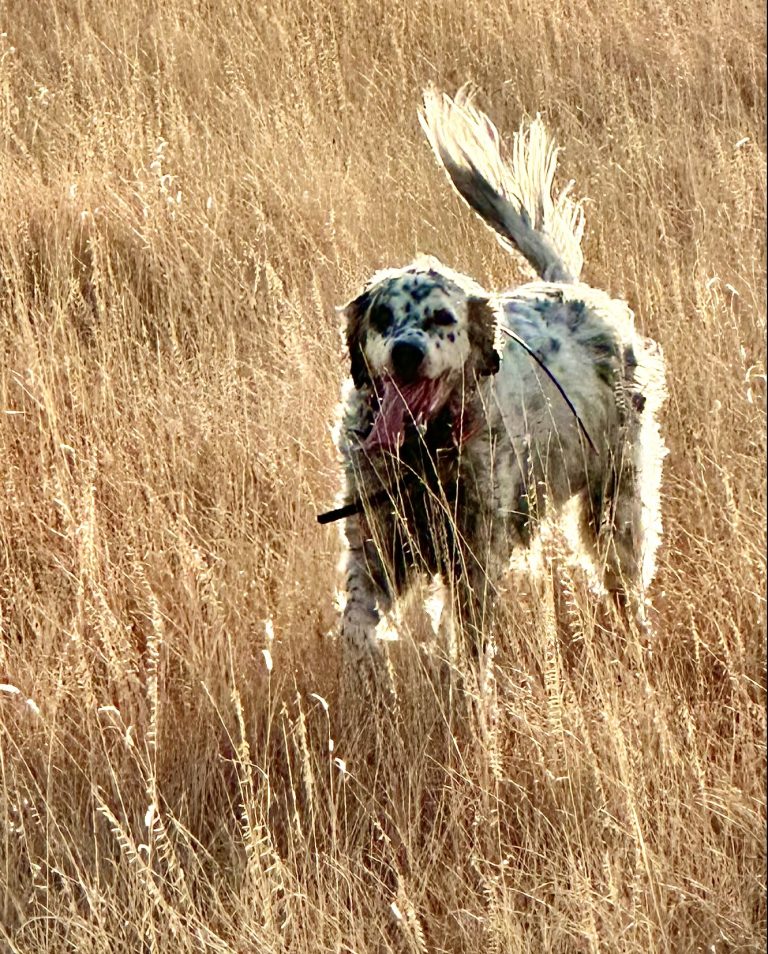
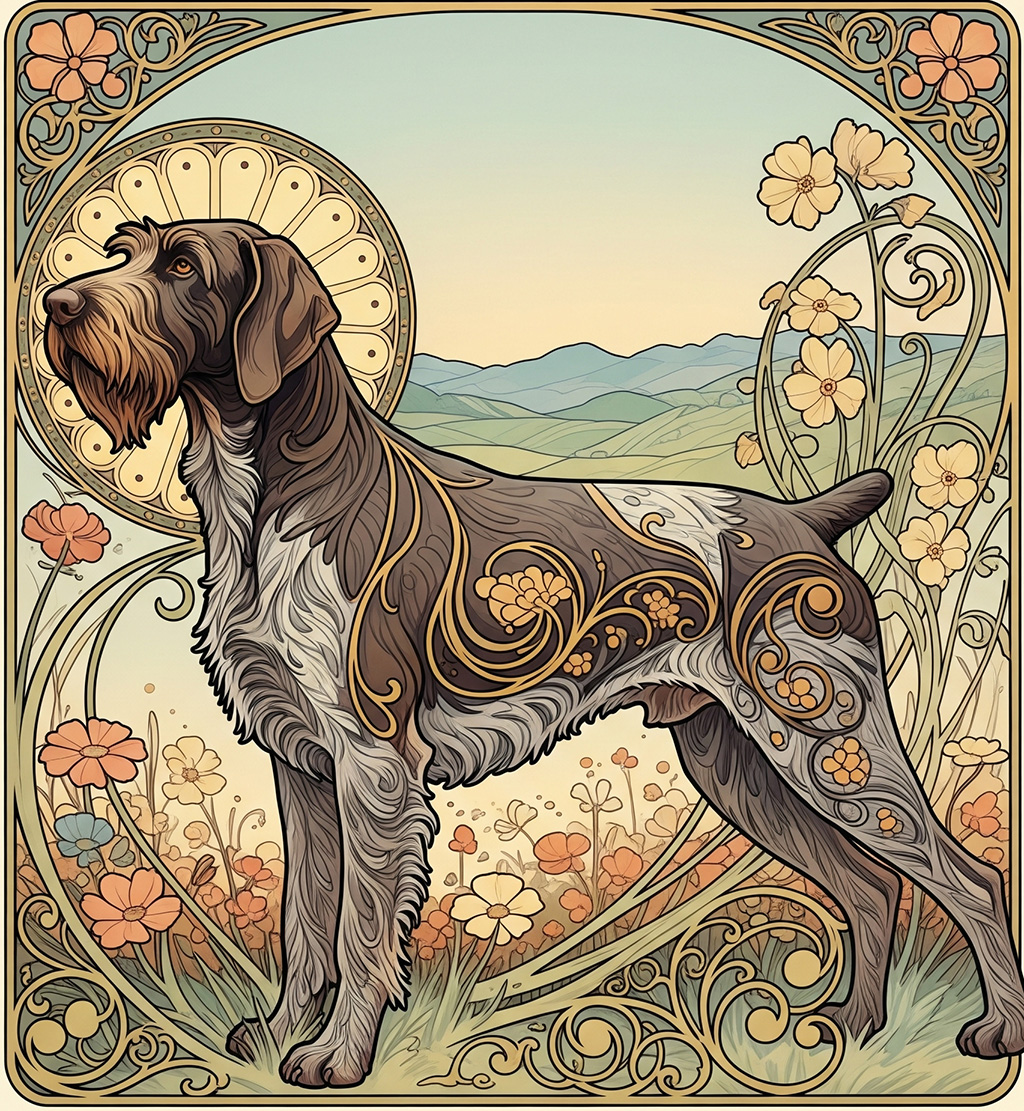
According to the American Kennel Club (AKC), the German Wirehaired Pointer is a medium-to-large breed, typically standing 22–26 inches tall at the shoulder, with males slightly larger than females. The breed’s hallmark is its harsh, wiry coat, which is weather-resistant and provides protection from thorns and brush. The coat is medium-length, with a dense undercoat, and features distinctive facial furnishings, including a beard and eyebrows, giving the GWP a rugged, expressive appearance. Acceptable colors include liver and white, solid liver, or roan patterns, often with ticking or spotting.
The AKC breed standard emphasizes a well-muscled, athletic build, reflecting the GWP’s purpose as a working dog. The head is broad with a slightly rounded skull, and the muzzle is strong, designed for retrieving game. The eyes are medium-sized, dark, and alert, conveying intelligence and determination. The tail is typically docked to a functional length for hunting, though undocked tails are seen in some regions. Movement is a key aspect of the standard, with GWPs expected to exhibit a smooth, powerful gait, covering ground efficiently. Temperamentally, the breed is described as loyal, affectionate, and intelligent, with a strong work ethic and a natural drive to hunt, requiring owners who can provide ample exercise and mental stimulation.
Hunting History in the United States
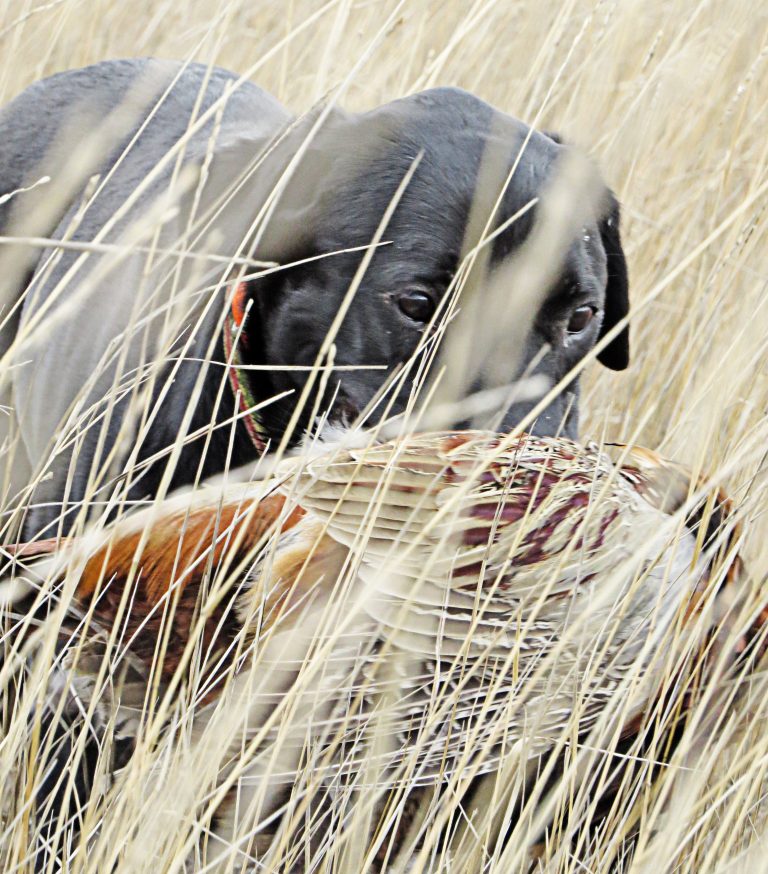
The German Wirehaired Pointer arrived in the United States in the 1920s, introduced by sportsmen who valued its versatility in hunting upland game and waterfowl. The breed quickly gained popularity among American hunters for its ability to point, retrieve, and track in diverse environments, from the prairies of the Midwest to the wetlands of the South. Unlike some specialized breeds, the GWP’s adaptability made it ideal for hunting a range of game, including pheasant, quail, grouse, and even larger animals like deer when used for tracking.
The breed’s rise in the U.S. was supported by the formation of the German Wirehaired Pointer Club of America in 1959, which promoted the breed’s working qualities and adherence to standards. Field trials and hunt tests became common venues for showcasing the GWP’s skills, with the breed excelling in events organized by the AKC and the North American Versatile Hunting Dog Association (NAVHDA). American hunters prized the GWP’s tenacity, keen nose, and ability to work in adverse conditions, such as cold, wet marshes or thorny coverts. Its protective coat and strong drive allowed it to outperform many other breeds in rugged terrains.
Today, the German Wirehaired Pointer remains a favorite among hunters and field trial enthusiasts in the U.S., valued for its dual role as a reliable working dog and a devoted family companion. Its history reflects a legacy of purposeful breeding for functionality, resulting in a breed that embodies both resilience and versatility in the field.
-
Rio Flufferbunny
It was fall when she came to us on a plane from New Mexico, all legs and ears and sharp puppy teeth. She pointed from the womb — butterflies, song birds, turtles, tufts of grass stirred by a breeze — nothing was safe from her glare. As our first setter, I was unsure of the…
-
Meet Ida
I’ve always found the haphazard naming of dogs intriguing. I’ve wondered if a puppy grows into the name, filling the shape of some predetermined vessel? I like original names, probably because I have irrational hopes for my bird dogs to be uniquely exceptional. But then names different for different’s sake grind on me. People names…
-
Picking THE Puppy, or are we just kidding ourselves
Last time I chose a puppy I was fresh out of school, only a dim view of the years ahead and a bank account teetering on empty. At the time it seemed like a great idea, introduce a young dog into chaos and hope for the best. I knew little about training, obedience, nutrition, genetics,…
-
The First Month with the New Puppy
Selective memory is a close ally to puppies. Recollection of puppy breath and cuddles gloss over the challenges of house training and toothy destruction. Adorable naps and puppy eyes erase the boundless energy and predawn bawling. It’s been six years since the last puppy, which has been plenty of time for revisionist history to mask…
-
A Labs First Day Afield
“No, I don’t think you understand, he has NO prior hunting experience…only obedience training.” I wrote to Brian, my new upland hunting buddy. The early morning email asking for my young lab and me to attend an upland hunt had caught me by surprise, putting a nice end to a long workweek. “Kali, it doesn’t…
-
The Lab Knows
Wyatt knows he’s black. He also knows this is the color of night. He’s been able to surmise that humans have terrible night vision. During daylight hours when we take breaks from hunting, he plots. He knows most mischief will not fly in the light of day. Raiding other camps, gnawing a nearby rotting deer…