English Springer Spaniel
The English Springer Spaniel: Breed History, Standards, and Hunting in the United States
The English Springer Spaniel is a versatile and energetic gun dog renowned for its flushing abilities and affectionate nature. Originating from ancient spaniel lines in Britain, this breed has evolved over centuries into a beloved companion and working dog, with a significant presence in American hunting culture.
The breed’s history traces back to the British Isles, where spaniels were mentioned as early as 300 A.D. in ancient Welsh laws, possibly introduced by Roman legions from Spain. By the 16th and 17th centuries, dogs resembling modern English Springer Spaniels appeared in artwork, used to flush game for capture with nets, hawks, bows, or hounds. The advent of firearms in the 17th century solidified their role as enthusiastic gundogs. Around 1800, a pure line was developed in Shropshire, England, where larger littermates were dubbed “springers” for springing game, distinguishing them from smaller “cockers” used for woodcock hunting. In the 1870s, they were exhibited at British dog shows, and by 1902, The Kennel Club recognized the English Springer Spaniel as a distinct breed. The breed arrived in North America in the early 20th century, with the first traceable import to Canada in 1913 and the American Kennel Club (AKC) registering its initial specimen in 1910.
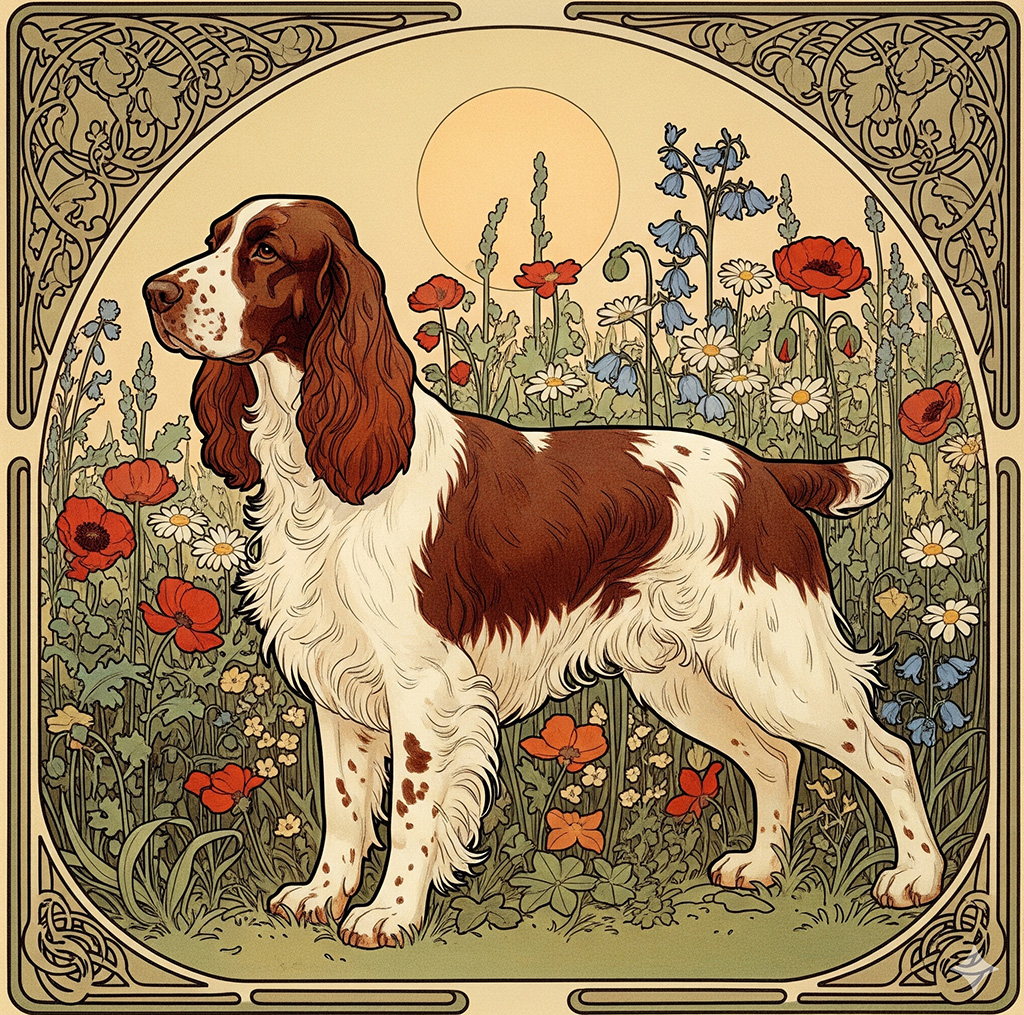
Breed standards, as outlined by the AKC since 1927 (revised in 1932), emphasize the English Springer Spaniel’s functionality as a hunting dog while promoting balance and symmetry. Males typically stand 20 inches at the shoulder, females 19 inches, with weights ranging from 40 to 50 pounds, creating a muscular, compact build suited for endurance in the field. The coat is of moderate length, weather-resistant, and features feathering on the ears, chest, legs, and tail, coming in colors like liver and white, black and white, tri-color, or roan. Tails may be docked, with variations between show (bench) and field lines—shorter for bench dogs and longer for field ones—though undocked tails are now equally accepted in U.S. shows. Temperamentally, they are intelligent, biddable, and eager to please, with a characteristic pacing stride at slower gaits. These standards prioritize natural hunting instincts, ensuring the breed remains capable of flushing and retrieving without exaggeration that could hinder performance.
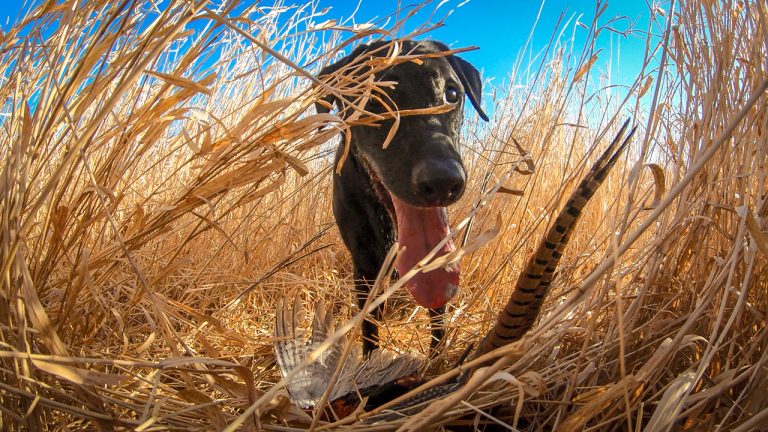
In the United States, the English Springer Spaniel’s hunting history gained momentum in the early 1900s, aligning with the breed’s import and the formation of the English Springer Spaniel Field Trial Association (ESSFTA) in 1924, which hosted its inaugural field trial on Fishers Island that year. This emphasized their dual role in conformation shows and fieldwork, though by the mid-20th century, lines diverged into bench (show-focused) and field (hunting-focused) types, with the last dual champion crowned in 1938. As flushing spaniels, they excel at quartering within gun range, using a strong nose to boldly enter cover and spring game like pheasant, grouse, and woodcock, followed by reliable retrieves on land or water. Their popularity in U.S. field trials and hunt tests persists, with over 4,500 AKC registrations annually in recent years, reflecting their enduring appeal among hunters for their athleticism and trainability.
Today, the English Springer Spaniel embodies a rich heritage of utility and companionship, thriving in American hunting traditions while adapting to modern roles beyond the field.
-
Keeping Weight on Your Bird Dog
When we’re not in the field, my dogs get fed premium dog food twice a day. Normally I don’t even need a clock in the house because they start getting antsy when meal times near. I think this is why it’s so confounding that when we go hunting their interest in food is trumped…
-
The First Month with the New Puppy
Selective memory is a close ally to puppies. Recollection of puppy breath and cuddles gloss over the challenges of house training and toothy destruction. Adorable naps and puppy eyes erase the boundless energy and predawn bawling. It’s been six years since the last puppy, which has been plenty of time for revisionist history to mask…
-
Why We Hunt With Dogs
This morning I took my lab Wyatt out for a weekend stomp on public ground. Yesterday while in the field at first light I saw several other trucks with hunters trying to hunt the same field which we beat them to that day. Needless to say, the public options close to population centers here in…
-
Nowhere to Look
Dropped Wyatt off at the vet this morning for an exploratory procedure. I am now trying to do anything, accomplish something, will myself to the positive. I’m over-caffeinated and staged nearby awaiting the vet’s call. I can talk about the details, the minutia of his afflictions. I’ve gnashed over the could be and mights, in…
-
The Fountain of Youth
The old boy doesn’t leap into the truck like he once could, but he still manages to lurch up the running boards and cross the center console. Instead of stowing him in the back for this road trip, I break the rules and let him ride shotgun. He acknowledges the exemption and quickly curls into…
-
Meet Ida
I’ve always found the haphazard naming of dogs intriguing. I’ve wondered if a puppy grows into the name, filling the shape of some predetermined vessel? I like original names, probably because I have irrational hopes for my bird dogs to be uniquely exceptional. But then names different for different’s sake grind on me. People names…