Portuguese Pointer
The Portuguese Pointer, known as the Perdigueiro Português, is a medium-sized gun dog with a rich history tracing back to the Iberian Peninsula in the 12th century. Believed to descend from ancient Iberian hunting dogs, this breed was initially developed to assist falconers in Portugal, particularly in hunting small game birds like the red-legged partridge, from which it derives its name (perdiz meaning “partridge” in Portuguese). By the 16th century, new hunting laws in Portugal made it illegal to hunt with pointing dogs, leading to a decline in the breed’s population. However, in the 18th century, English families in Portugal’s wine region of Porto rediscovered the Portuguese Pointer and brought it to England, where it influenced the development of the English Pointer. In the 1920s, facing near extinction due to social hardships, dedicated Portuguese breeders revived the breed by locating surviving dogs in northern Portugal. The Portuguese Pedigree Book was established in 1932, followed by the first breed standard in 1938, and the breed was recognized by the Fédération Cynologique Internationale in 1955.
The Portuguese Pointer was introduced to the United States in the late 20th century, with the first pair registered with the United Kennel Club (UKC) in 1995 by John Antunes. The breed gained further recognition when the American Kennel Club (AKC) admitted it to the Foundation Stock Service in 2005, allowing participation in performance events by 2008. A notable milestone was achieved in 2012 when a Portuguese Pointer named Betinho do Choupal, owned by Luis Neves, became the first of the breed to earn the AKC Master Hunter title, showcasing its prowess as a bird dog. Despite its rarity, with only about 200 Portuguese Pointers in the U.S., the breed has carved a niche among upland hunters for its close-working style and versatility in various terrains.
Breed Standards
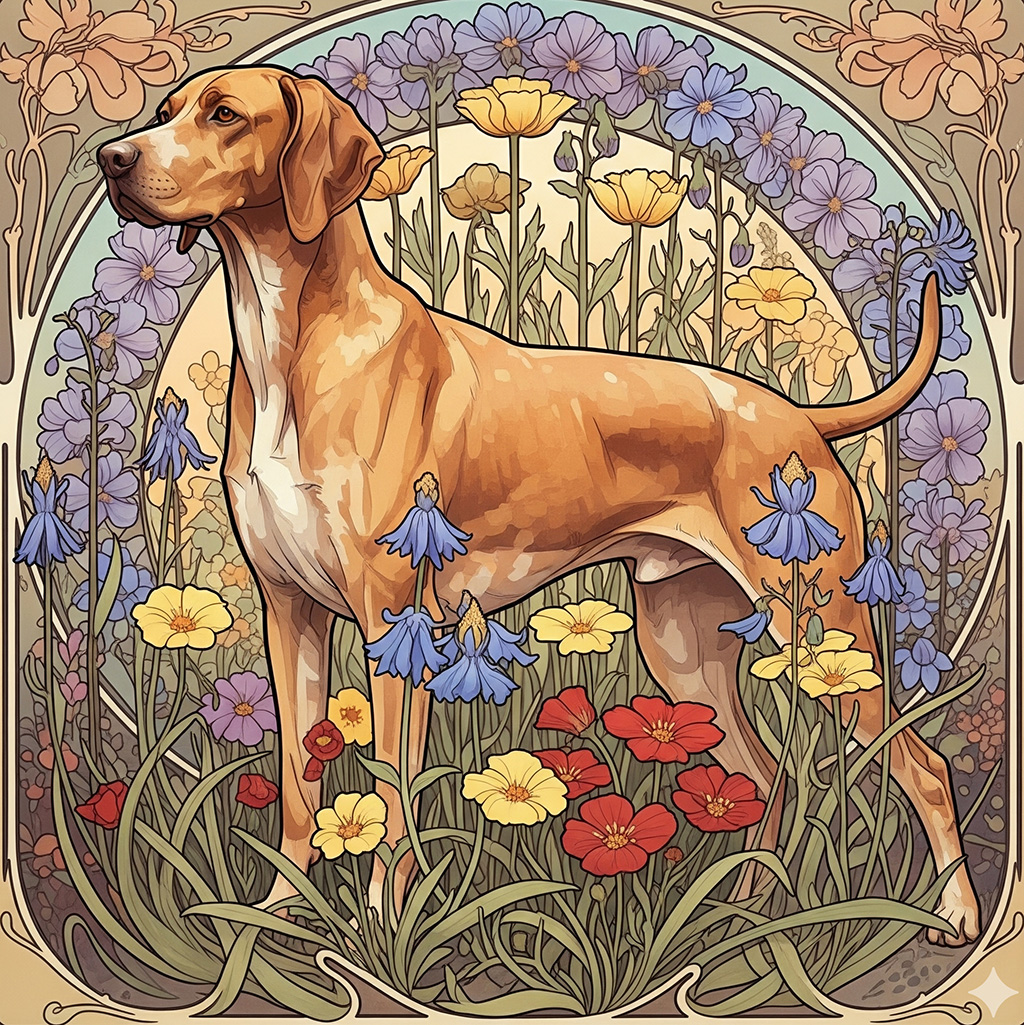
According to the UKC and the Kennel Club, the Portuguese Pointer is a medium-sized, well-balanced dog with a distinctive “square” face, almost square body, and a short, dense coat that is coarse on the back but soft and velvety on the head and ears. The coat comes in shades of light yellow, yellow, or red-yellow, often with white markings. Males typically stand 21–24 inches at the withers and weigh 44–60 pounds, while females are slightly smaller at 20–22 inches and 35–49 pounds. The breed’s drop ears are triangular, medium-length (no more than six inches), and set high, with large, oval, brown eyes that convey a bright, intelligent expression. The tail, often docked by one-third, is carried pendant when relaxed and level or slightly above the back when moving, never vertically or curled. Disqualifications include overshot or undershot bites, unpigmented noses, wall eyes, or a complete lack of tail. The breed is evaluated as a working gun dog, with faults penalized based on their impact on hunting ability, emphasizing its role as a hunt-point-retrieve (HPR) breed that works closely with its handler.
Hunting in the United States
In the U.S., the Portuguese Pointer is valued for its versatility and close-range hunting style, making it ideal for flushing game birds like pheasants and partridges. Unlike the English Pointer, which is bred for speed and wide-ranging style, the Portuguese Pointer excels in close collaboration with its handler, displaying a tenacious work ethic across diverse terrains and climates. Its strong hunting instincts and keen sense of smell allow it to detect and point game with precision, often freezing in a distinctive stance to indicate the location of birds. The breed’s affectionate and eager-to-please nature enhances its effectiveness in the field, as it delights in sharing the hunt with its owner. Portuguese Pointers have participated in AKC hunt tests, with successes like Betinho’s Master Hunter title highlighting their capability. Their rarity in the U.S. limits their presence in field trials, but their growing recognition in performance events and among hunters underscores their potential as a devoted and skilled hunting companion.
In conclusion, the Portuguese Pointer’s journey from 12th-century Portugal to modern-day America reflects its resilience and adaptability. Its well-defined breed standards emphasize functionality, while its hunting prowess and loyal temperament make it a cherished companion for hunters and families alike. As the breed continues to gain recognition, its legacy as a versatile and affectionate gun dog endures.
-
A Labs First Day Afield
“No, I don’t think you understand, he has NO prior hunting experience…only obedience training.” I wrote to Brian, my new upland hunting buddy. The early morning email asking for my young lab and me to attend an upland hunt had caught me by surprise, putting a nice end to a long workweek. “Kali, it doesn’t…
-
The Lab Knows
Wyatt knows he’s black. He also knows this is the color of night. He’s been able to surmise that humans have terrible night vision. During daylight hours when we take breaks from hunting, he plots. He knows most mischief will not fly in the light of day. Raiding other camps, gnawing a nearby rotting deer…
-
Nowhere to Look
Dropped Wyatt off at the vet this morning for an exploratory procedure. I am now trying to do anything, accomplish something, will myself to the positive. I’m over-caffeinated and staged nearby awaiting the vet’s call. I can talk about the details, the minutia of his afflictions. I’ve gnashed over the could be and mights, in…
-
Meet Ida
I’ve always found the haphazard naming of dogs intriguing. I’ve wondered if a puppy grows into the name, filling the shape of some predetermined vessel? I like original names, probably because I have irrational hopes for my bird dogs to be uniquely exceptional. But then names different for different’s sake grind on me. People names…
-
Pavlov Didn’t Have Bird Dogs
I’m forced to sneak about my own property like a burglar, held captive by bird dogs trying to secure their place in the truck. Regardless whether the destination is a wild place or the tame grocery, they are not willing to wager their spot. A few short weeks ago I could announce my exit to…
-
Why We Hunt With Dogs
This morning I took my lab Wyatt out for a weekend stomp on public ground. Yesterday while in the field at first light I saw several other trucks with hunters trying to hunt the same field which we beat them to that day. Needless to say, the public options close to population centers here in…