White-Tailed Ptarmigan
Also Goes By: Snow Partridge

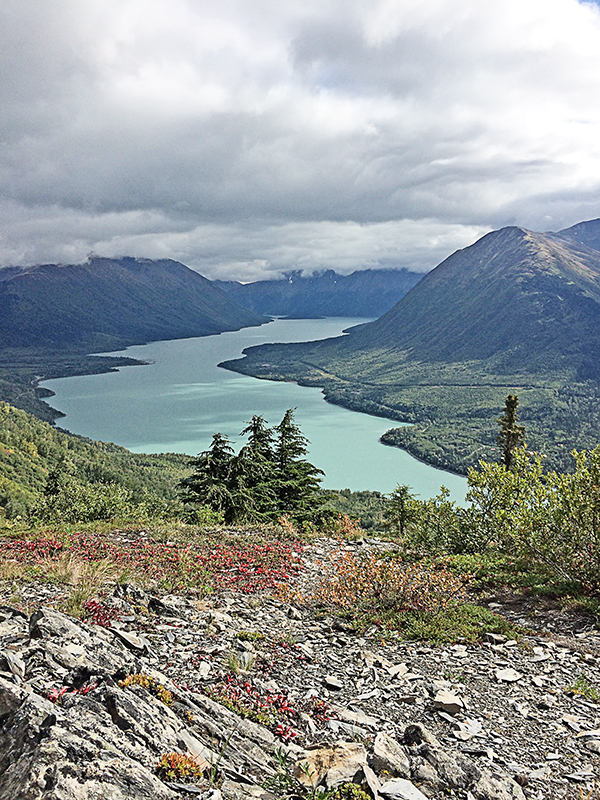
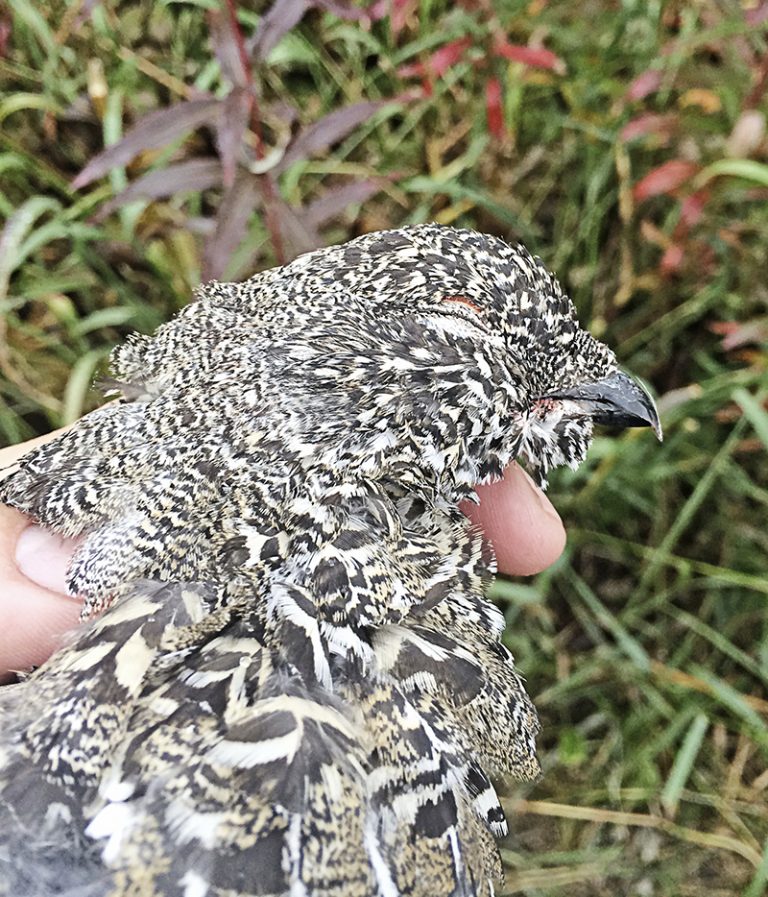
As the smallest grouse in North America, the White-tailed Ptarmigan is about 12 inches in length and weighs between 11 to 17 ounces. This bird molts for a seasonal color variation, having a white body in the winter and a brown mottled body with white wings, tail and belly in the summer months. This bird’s name is derived from the fact that it is the only Ptarmigan that does not have a black tail. It can be found in a wide range of alpine forests in Alaska and a few high elevations in the lower 48.
The White-tailed Ptarmigan subsists mainly on willow buds during the winter months. Although its diet will become more variable in the warmer months with the addition of insects, knotweed forb flowers and leaves, the willow remains a dietary staple year round. As a result they can usually be found in moist areas above the timberline.
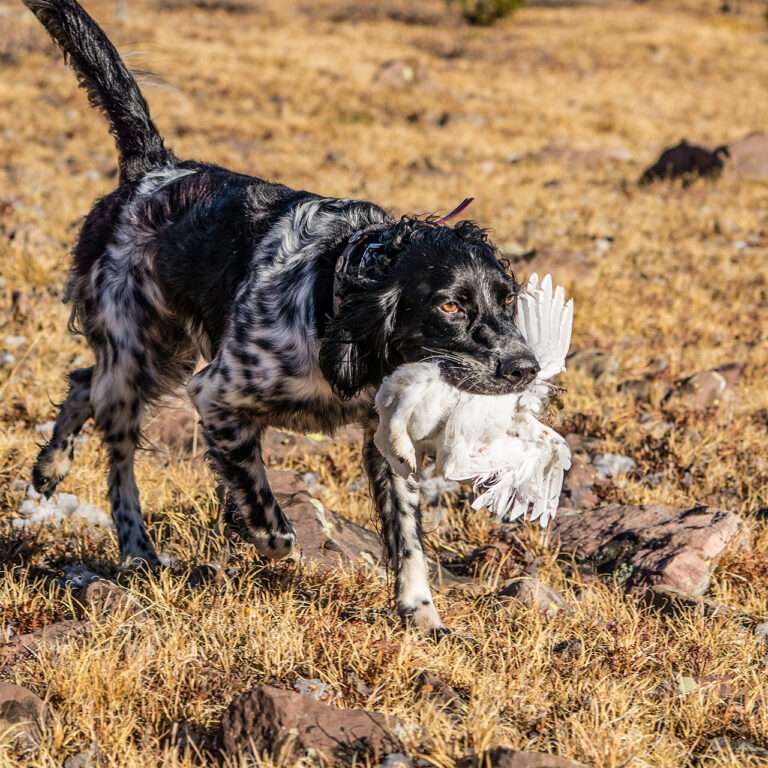
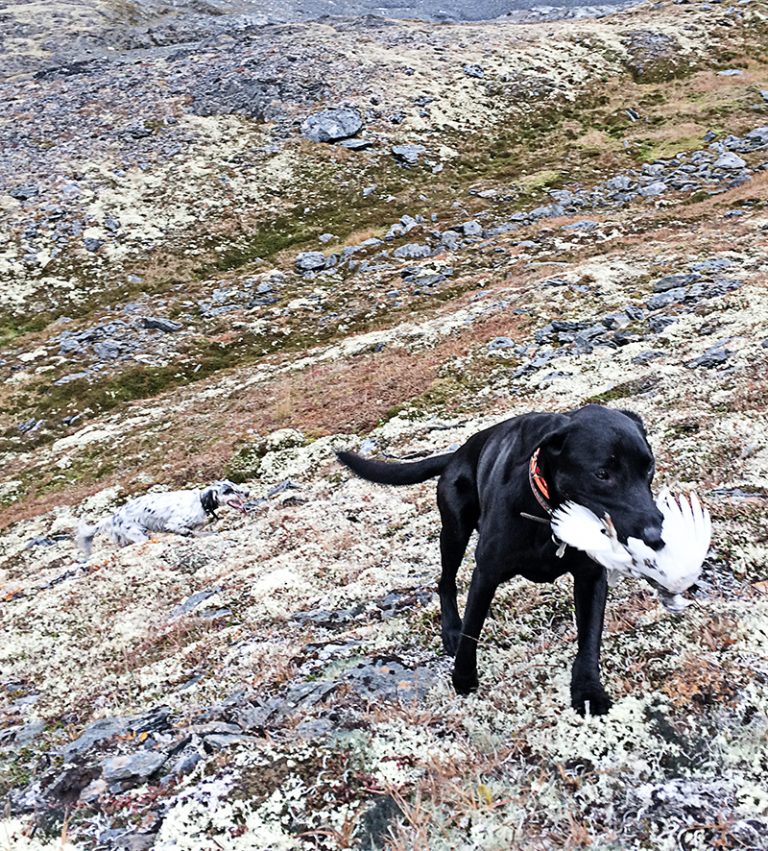
These birds are wonderful to hunt with a canine companion and a 20 gauge shotgun should help a hunter fill their limit.
Photo Courtesy of John Hill.
-
Life Lists
Jon and I have been here before—heavy legs and burning lungs. We’ve circled this peak, crossing boulder field after boulder field. It’s taken nearly four hours to complete the circuit around this 12,000-foot Uinta peak. I’m drained. Ida’s standard Lab trot has surrendered to a nearby amble. But then I see it—for most, it would…
-
Way Upland
It’s the second day of the upland season and I am in a pre-dawn traffic jam. I’m following a string of crimson taillights up a dusty grade and poor excuse for a road. I’m unsure exactly how long the line extends at this point, but we are all crawling toward a pin on a map…
-
The Alaska Standoff
Alaska and I are at odds. I’m here to take her birds. She’s not giving them up easily. I’m to earn them one vertical foot at a time until she has determined that sufficient toll has been collected. She’s happy to show amazing places, jaw-dropping beauty, an abundance of nature viewing unrivaled anywhere else in…
-
Climbing Mountains for Elusive Birds
The wind is gusting at my back collapsing my empty game bag. It’s a chilly reminder, as if I needed one. In the distance I can still pickup Steve and the deft setter Winchester, navigating their way uphill beside the creek that tumbles the opposite direction in this cut. We’ve got them on elevation. The…
-
Finding Answers
Spike camp was two miles from base — as the raven flies not really that far in this expansive National Forest. But as flatlanders taking on the thin air of elevated places, two miles is a decent gap to begin separating yourself from those less prepared to depart known trails and the easy-breathing comfort of…
-
White-tailed Demons
Something is wrong with me. Any other sane bird hunter would have packed up and moved to the interior where the bird numbers and density are greater. But I’m entrenched in the Kenai and I can’t get away from it. I’ve shot a White-tailed Ptarmigan already. I’ve seen where they live. I know their confounding…