North Dakota Bird Hunting
Seasons Span September 12 – January 3, 2027

State Drought Monitor – Upland hunting conditions are often highly dependent upon moisture for both habitat production and bird survival.
North Dakota Upland Game Bird Hunting Overview
State DNR & Licensing Information
Upland game bird hunting in North Dakota is administered by the North Dakota Game and Fish Department (NDGFD).
License Requirements & Fees
- Resident Small Game License: $20
- Nonresident Small Game License: $150 for either a 14-consecutive-day period or two 7-consecutive-day periods.
- Fishing, Hunting and Furbearer Certificate: $2 resident / $5 nonresident
- General Game & Habitat License: $20
- HIP Registration: Required for migratory birds including woodcock, snipe and doves.
- Additional stamps or permits may apply to waterfowl and sandhill crane hunting. (North Dakota Game and Fish Department)
Season Dates & Bag Limits — 2026–2027
North Dakota’s 2026–27 proclamation is being finalized. The dates below are the current NDGFD tentative dates and should be treated as such until the final proclamation is signed. (North Dakota Game and Fish Department)
Ring-Necked Pheasant
- Youth Season: October 3–4, 2026
- Regular Season: October 10, 2026 – January 3, 2027
- Daily Limit: 3 roosters
- Possession Limit: 12
- Area: Statewide
- Nonresident restriction: Nonresidents cannot hunt on NDGFD WMAs or Conservation PLOTS during the first seven days of the regular season. (North Dakota Game and Fish Department)
Sharp-Tailed Grouse
- Season: September 12, 2026 – January 3, 2027
- Daily Limit: 3
- Possession Limit: 12
- Area: Statewide, with listed exceptions.
- Greater prairie-chickens are not legal to hunt. (North Dakota Game and Fish Department)
Hungarian Partridge
- Season: September 12, 2026 – January 3, 2027
- Daily Limit: 3
- Possession Limit: 12
- Area: Statewide. (North Dakota Game and Fish Department)
Ruffed Grouse
- Season: September 12, 2026 – January 3, 2027
- Area: Restricted portions of the state
- Daily Limit: 3
- Possession Limit: 12
Ruffed grouse are a much smaller component of North Dakota’s upland hunting than pheasant, sharptail or Hungarian partridge. (North Dakota Game and Fish Department)
Weather Assessment & Bird Hunting Outlook
Survey Methodology
North Dakota has one of the better long-term upland datasets in the country. NDGFD uses:
- Late-July/August roadside brood surveys for pheasants, sharp-tailed grouse and Hungarian partridge.
- Spring crowing/lek surveys to measure breeding populations.
- Wing surveys that provide age ratios, sex ratios, hatch timing and recruitment information.
- Hunter harvest and effort information.
The 2026 spring grouse surveys are particularly useful because they give us an actual biological measurement entering this breeding season rather than relying solely on weather models. (North Dakota Game and Fish Department)
Weather Impact & Habitat Conditions
Winter 2025–26 — FAVORABLE:
The winter was again relatively mild. NDGFD specifically attributes the unexpectedly stable 2026 spring sharp-tailed grouse population partly to minimal winter mortality resulting from the mild winter. That is important because it means the state entered the breeding season with a better adult population than the poor 2025 reproduction alone would have suggested. (North Dakota Game and Fish Department)
This is a recurring theme in North Dakota: a mild winter can preserve a large adult breeding population, but it does notguarantee strong chick production.
Spring 2026 — MIXED:
The critical question for 2026 is whether nesting and brood-rearing conditions improved from 2025.
In 2025, NDGFD reported that cool, wet conditions during nesting reduced chick production, despite good adult survival. That produced relatively large adult populations but weaker recruitment. (North Dakota Game and Fish Department)
The 2026 spring surveys showed sharp-tailed grouse counts unchanged from 2025, despite expectations for a decline following the poor 2025 reproduction. NDGFD believes mild winter survival helped offset that weakness. (North Dakota Game and Fish Department)
Summer 2026 — CONCERNING:
This is where the independent weather data deserve particular weight.
North Dakota entered summer with a substantial moisture deficit. Through June, the state had received only 7.03 inches of precipitation from January through June, 1.79 inches below normal, ranking the period as the 22nd-driest January–June period since 1895. June itself was close to normal, but that did not erase the accumulated deficit. (Drought.gov)
Drought subsequently worsened across the Northern Plains during July as extreme heat and dryness affected North Dakota, South Dakota and Minnesota. (Drought.gov)
This matters considerably for 2026 reproduction. Good adult survival coming out of winter can only partially compensate if nesting cover, insects and brood-rearing vegetation deteriorate during June and July.
2026–27 Population Outlook
- Ring-Necked Pheasant — GOOD: North Dakota entered 2026 with a strong adult pheasant population. The 2025 roadside survey recorded 91.6 pheasants per 100 miles, 48% above the 10-year average, even though broods were slightly down. NDGFD also reported that good winter survival left adult densities high. (North Dakota Game and Fish Department)The problem is 2026 recruitment. The state’s accumulated January–June moisture deficit and July drought are significant negatives for chick survival. Until the 2026 roadside brood survey is released, I would rate pheasant GOOD rather than VERY GOOD.Best regions: southwestern and western North Dakota. In 2025, southwest North Dakota produced 14.8 broods and 125 pheasants per 100 miles, while the northwest had declined substantially. (North Dakota Game and Fish Department)
- Sharp-Tailed Grouse — FAIR: This is a more difficult year to call. The 2025 roadside survey was poor: sharptails were down 38% statewide to 12 birds per 100 miles, 30% below the 10-year average. (North Dakota Game and Fish Department)However, the spring 2026 lek survey was unchanged from 2025, rather than falling as expected. NDGFD attributes that resilience largely to the mild winter. (North Dakota Game and Fish Department)The major question now is 2026 chick production. The dry January–June period and subsequent July drought are unfavorable. FAIR, with localized good opportunities where native grassland retained adequate cover.
- Hungarian Partridge — FAIR–POOR: Partridge were already down 26% in the 2025 roadside survey, with only 1.8 broods per 100 miles. (North Dakota Game and Fish Department)Their ability to use agricultural landscapes provides some resilience, but they are vulnerable to poor nesting and brood-rearing conditions. The mild winter was favorable, while the 2026 moisture deficit is a significant negative.I would expect localized pockets of good birds around agricultural areas with adequate cover, but not a strong statewide year.
- Ruffed Grouse — FAIR: North Dakota’s ruffed grouse are concentrated in suitable aspen habitat, primarily in the northeast. The mild winter should have aided survival, but the broader dry conditions are less favorable for reproduction. Because this is a relatively small and localized North Dakota resource, regional habitat conditions matter much more than the statewide drought number. (North Dakota Game and Fish Department)
- Greater Prairie-Chicken — CLOSED: North Dakota does not currently allow hunting of greater prairie-chickens. (North Dakota Game and Fish Department)
- Sage Grouse — CLOSED: Sage grouse are present in western North Dakota but are not currently an open upland hunting opportunity.
Overall North Dakota Outlook: GOOD–FAIR.
North Dakota is a much better pheasant state than the statewide drought statistics initially suggest, but I would not call 2026 a banner year yet.
The strongest piece of evidence is the large adult pheasant population entering the 2026 season. The 2025 survey was still 48% above the 10-year average, and mild winter conditions again appear to have protected adult birds. (North Dakota Game and Fish Department)
The caution is recruitment. North Dakota’s January–June precipitation was the 22nd-driest on record, and drought intensified again during July. (Drought.gov)
That creates a classic North Dakota scenario: lots of adult birds, but uncertain numbers of young birds. For hunters, that can still produce an excellent season because adult roosters can make up a substantial portion of the population.
Best 2026 Bets
Pheasant: Southwest and west-central North Dakota, particularly agricultural country with good grass/CRP cover.
Sharp-tailed grouse: Native prairie and mixed-grass landscapes, with the best prospects in areas that avoided the worst summer dryness.
Hungarian partridge: Agricultural landscapes with residual nesting cover and nearby grasslands.
Ruffed grouse: Northeastern North Dakota in suitable aspen habitat.
Forecast confidence: Moderate. The adult-population data are unusually good, but the key missing piece is the 2026 late-summer brood survey. NDGFD’s 2026 spring grouse survey gives us confidence about adult survival, while independent drought and precipitation data raise legitimate concerns about this year’s recruitment. (North Dakota Game and Fish Department)
Bottom line: North Dakota remains one of the better pheasant destinations for 2026, but I would favor the western and southwestern portions of the state and would not assume that the strong adult numbers automatically mean a strong brood year.
For the most up-to-date information, consult the North Dakota Game and Fish Department’s 2025-26 Hunting and Trapping Guide (gf.nd.gov) or vendor locations by late August 2025. Always verify regulations and license requirements before hunting.
-
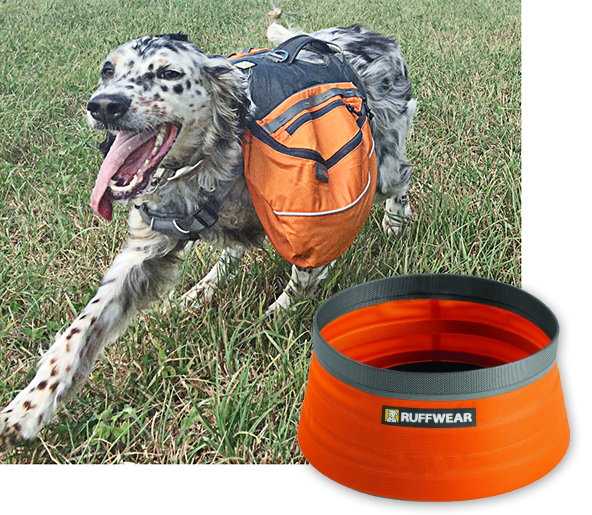
Ruffwear Approach Dog Backpack, Bivy Bowl
Having dogs share the load can save a lot of leg on a pack-in to upland camp. Ruffwear builds hard core active-dog gear. The Ruffwear Approach Dog Backpack ($60) has all the right adjustment points, fits close to the dog’s body and distributes loads evenly. It took a little time for Rio the setter to learn her new dimensions while…
-
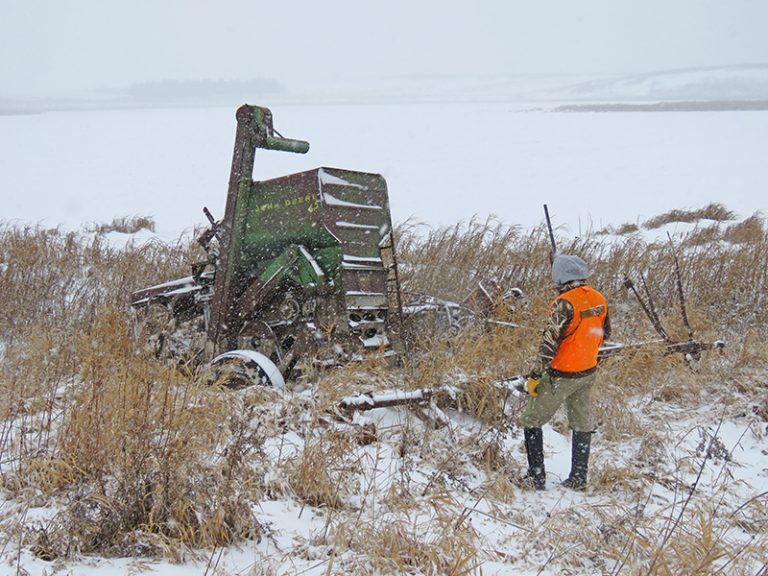
Depths of Cold
There seems no bottom to the depths of cold. It’s one of the few solace for hunting in frigid condition: could be colder, windier, at least it’s not…more miserable. I’m assured by medical science that freezing does have a lower limit in terms of the human body. Paradoxical undressing: the point at which humans experiencing…
-
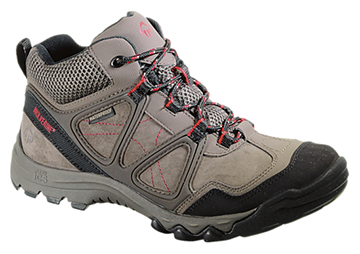
Wolverine Terrain II
Every one of our miles afield this season the Wolverine Terrain II Mid-Cut Waterproof Trail Hiker ($142) have been on our feet. Aggressive soles, waterproof and rugged — you really can’t ask for much more from a hunting boot. But when you cover as much ground as we do, weight is the primary concern. The Terrain II…
-
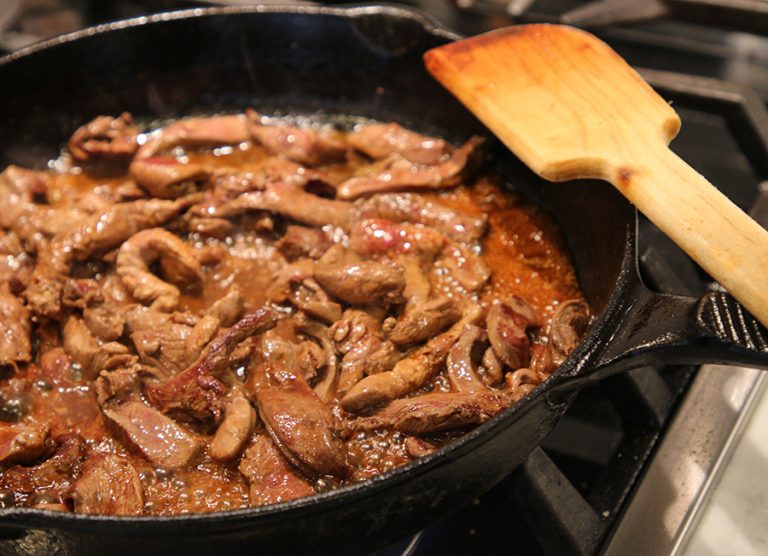
Two-Track Tacos
Came up with this recipe in Colorado early in the season and it quickly become a staple both in camp and at home. Originally we used Columbian Sharp-tailed and still believe that Sharps are the best version. But in a pinch this recipe works well with venison, beef or pork. The first time I made…
-
L.L. Bean Technical Upland Vest Pack
An uplanders’ gear vest is one of the most crucial items in his/her arsenal, and can make or break a hunt. Luckily the L.L. Bean Technical Upland Vest fits the bill for any serious upland hunter. Constructed of lightweight, rip-resistant material backed with polyurethane to keep moisture out, the pack is great for both warm…
-
3000 Miles for One Bird
The sun is dipping into the horizon and the thermometer reads 19° when the dogs and I return to the truck after hunting the final day of upland season in Kansas. A quick check of the fitness band reveals I’ve hiked over 12 miles in eight inches of new snowfall. The dogs never stopped hunting…