North Carolina Bird Hunting
Seasons Span October 12 – February 28, 2027

State Drought Monitor – Upland hunting conditions are often highly dependent upon moisture for both habitat production and bird survival.
North Carolina Upland Game Bird Hunting Overview
State DNR & Licensing Information
Upland game bird hunting in North Carolina is administered by the North Carolina Wildlife Resources Commission (NCWRC).
License Requirements & Fees
- Resident State Hunting License: $30
- Nonresident Annual Hunting License: $119
- Nonresident 10-Day Hunting License: $95
- Game Lands Privilege: $19 when required for hunting on designated Game Lands.
- HIP Certification: Free and required for migratory birds, including woodcock and snipe.
- State Waterfowl Privilege: Not required for woodcock, but is required for waterfowl. (NC Wildlife)
NCWRC has proposed increasing these fees to $32 resident, $124 nonresident annual, $99 nonresident 10-day and $20 Game Lands, but I am using the currently established fees rather than treating the proposed increase as law. (NC Wildlife)
Season Dates & Bag Limits — 2026–2027
Northern Bobwhite Quail
- Season: November 21, 2026 – February 28, 2027
- Daily Limit: 6
- Possession Limit: 12
- Season Limit: None
- Open: Statewide, subject to Game Land-specific restrictions. (eRegulations)
Ruffed Grouse
- Season: October 12, 2026 – February 28, 2027
- Daily Limit: 3
- Possession Limit: 6
- Season Limit: 30
- Primary Range: Western North Carolina and portions of the northern Piedmont. (eRegulations)
Ring-Necked Pheasant
- Barrier Islands of Carteret, Dare & Hyde Counties: November 21, 2026 – February 28, 2027
- Daily Limit: 3 male pheasants
- Possession Limit: 6
- Season Limit: 30
- Remainder of state: September 5, 2026 – February 28, 2027
- Pheasants of either sex may be taken with no daily, possession or season limit under the statewide controlled/preserve-bird provisions. (eRegulations)
American Woodcock
- Season: December 10, 2026 – January 30, 2027
- Daily Limit: 3
- Possession Limit: 9
- HIP Certification: Required. (NC Wildlife)
North Carolina’s woodcock season is notably later than the traditional October–November woodcock season in much of the Northeast. The December–January season is designed around the birds’ winter distribution in the Southeast. (NC Wildlife)
Weather Assessment & Bird Hunting Outlook
Survey Methodology
North Carolina has useful long-term biological information, particularly for bobwhite and ruffed grouse.
NCWRC’s upland program uses:
- Avid Quail Hunter Survey: Operating since 1984, with hunters recording hunting effort, coveys, flushes and harvest across eight management regions.
- Ruffed Grouse Drumming Survey: Annual spring counts of displaying males.
- Avid Grouse Hunter Survey: Hunter observations and flush rates.
- Harvest surveys and long-term population trends.
- Regional habitat monitoring and management projects. (NC Wildlife)
For the weather forecast, I’m adding the biological variables that matter most:
Winter survival → spring nesting → summer brood-rearing → current moisture/vegetation → fall/winter conditions.
That sequence is particularly important in North Carolina because bobwhite populations can respond rapidly to good or bad reproductive years, while grouse are more constrained by long-term habitat conditions.
Weather Impact & Habitat Conditions
Winter 2025–26 — NEGATIVE:
North Carolina experienced an unusually dry winter. Statewide precipitation was only 6.96 inches, 4.47 inches below normal, making it the 8th-driest winter since 1895 and the driest since 2000–01. The Mountains were particularly dry. (North Carolina State Climate Office)
There was also a significant cold/snow event in late January, followed by another cold period in early February. That produced meaningful short-term stress, although North Carolina’s winter was not long enough or consistently severe enough to suggest catastrophic adult mortality. (North Carolina State Climate Office)
For bobwhite, the more important problem is that the winter dryness was part of a much longer moisture deficit.
Spring 2026 — STRONGLY NEGATIVE:
This was the biggest concern in the forecast.
March was unusually warm and dry, followed by an exceptionally hot and dry April. By late April, more than 40% of North Carolina was in Extreme Drought (D3), with precipitation deficits exceeding 12 inches across much of the state since the previous August. (North Carolina State Climate Office)
NOAA subsequently ranked North Carolina’s spring 2026 as the third-driest spring on record. (NCEI)
For bobwhite, this is significant because spring is when nesting begins and vegetation/insect production starts building. Poor spring moisture can reduce nesting success and leave broods entering summer with less suitable cover and food.
Early Summer — NEGATIVE:
June remained dry and hot. Statewide precipitation was 3.05 inches, 1.52 inches below normal, ranking as the 19th-driest June since 1895. Some areas of the northern Piedmont reached Exceptional Drought (D4). (North Carolina State Climate Office)
This is particularly important because June is a major brood-rearing period.
Late July — SIGNIFICANT RELIEF:
This is where the forecast changes.
July 22–25 brought the state’s wettest widespread rain event in more than a year, with many locations receiving 3–6 inches and portions of the central Coastal Plain receiving 7–9 inches. Soil moisture improved dramatically in affected areas, with some locations moving from severe dryness to near-normal or wet conditions. (North Carolina State Climate Office)
But this rainfall does not erase the reproductive damage potentially caused by the dry spring and early summer. NC State’s climate office notes that most of the state still has long-term precipitation deficits exceeding seven inches. (North Carolina State Climate Office)
That distinction is critical: July rain can improve late brood survival and habitat going into fall, but it cannot retroactively fix failed nests from April or May.
2026–27 Population Outlook
- Northern Bobwhite — POOR–FAIR: This is the species most affected by the 2026 weather sequence. North Carolina entered the nesting season after an exceptionally dry winter, followed by the third-driest spring on record and a dry June. That is a substantial negative for nesting and brood production. (NCEI)The late-July rainfall is encouraging for surviving broods and late-season habitat, particularly in the Piedmont and Coastal Plain. But I would not upgrade the statewide forecast to GOOD simply because July finally turned wet.The long-term problem compounds the weather issue: NCWRC identifies habitat loss, fragmentation, forest succession and incompatible farming/forestry practices as the principal threats to bobwhite. (NC Wildlife)Best prospects: intensively managed early-successional habitat, prescribed-burn landscapes, agricultural edges and private properties participating in upland habitat programs.
- Ruffed Grouse — POOR: The weather story is mixed, but the population data are unequivocally concerning. NCWRC’s 2025 drumming survey recorded only 0.06 drumming males per station across the Nantahala-Pisgah National Forest routes, slightly below 2024 and continuing a decline that has persisted for roughly two decades. (NC Wildlife)State-owned Game Lands performed somewhat better at 0.15 grouse per station, but the confidence intervals are wide. Private-land routes were extraordinarily low at just 0.005 grouse per station. (NC Wildlife)The 2025–26 dry winter and spring do not help, but habitat succession is the much larger problem. NCWRC specifically identifies young forests, regenerating timber and forest openings as important grouse habitat. (NC Wildlife)
- Ring-Necked Pheasant — POOR–FAIR: North Carolina’s pheasant population is a remnant population rather than a major statewide wild-pheasant resource. NCWRC reports continued decline on the Outer Banks, where larger populations historically existed. (NC Wildlife)Weather probably matters less than habitat availability and the location of surviving birds. The dry spring is a negative, while the July rainfall provides some late-season habitat improvement.
- American Woodcock — FAIR: Woodcock deserve a different assessment because the December–January hunting season targets migratory/wintering birds, not simply the state’s resident breeding population. The exceptionally dry spring and summer could reduce local breeding productivity, but the late-July rainfall substantially improves soil moisture and habitat going into fall. (NC Wildlife)More importantly, the decisive factor will be fall migration and winter weather farther north. North Carolina can receive excellent flights even when local production is mediocre if northern breeding populations have a good year and weather pushes birds south.
Overall North Carolina Outlook: POOR–FAIR.
North Carolina is one of the more challenging forecasts in this year’s sequence.
The state went through an unusually long period of dryness beginning in late 2025. The 2025–26 winter was the eighth-driest on record, spring was the third-driest on record, and June was the 19th-driest. That is a three-season moisture problem rather than a simple snapshot of current drought. (North Carolina State Climate Office)
The July rainfall is a genuine positive, but it came late in the reproductive cycle. It should improve cover, insects and water availability for surviving broods and could improve hunting conditions substantially in localized areas. It doesn’t justify ignoring the poor nesting conditions earlier in the season.
Best 2026 Bets
Bobwhite: Piedmont and Coastal Plain properties with aggressive early-successional habitat management and recent July rainfall.
Ruffed grouse: Western mountains, especially productive Game Lands with young forest—but expectations should remain modest given the long-term population decline.
Woodcock: Moist bottomlands, alder and young-forest habitat; watch for December cold fronts and precipitation-driven migration movements.
Pheasant: Localized coastal/barrier-island populations and controlled/preserve opportunities rather than a broad wild-pheasant hunt.
Forecast confidence: Moderate. The weather signal is unusually strong, and the grouse population data are clear. The biggest uncertainty is how much of the July rainfall translated into successful late broods, something that won’t be fully apparent until fall field observations and hunter surveys become available. NCWRC’s 2024–25 quail survey had 59 participating hunters and 751 reported hunting trips, providing a useful long-term framework, but it is not yet a 2026 population estimate. (NC Wildlife)
This summary provides a concise overview of the 2025-26 upland bird hunting season in North Carolina. For precise details, especially on season dates and license costs, consult the NCWRC or eRegulations closer to the season start.
-
Way Upland Season II Episode 6
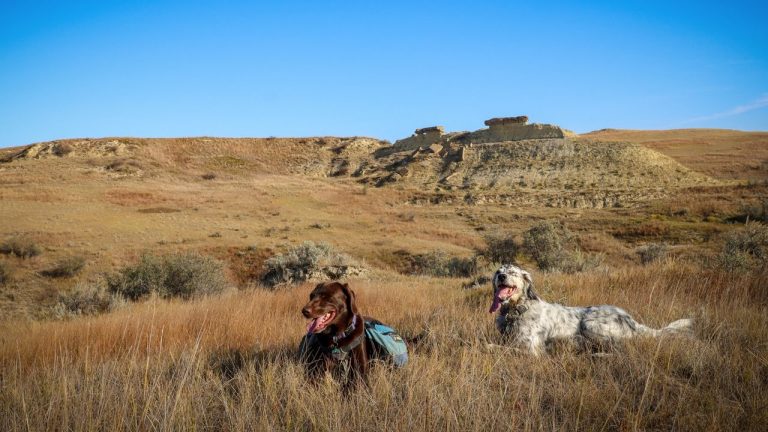
Seems like we’ve made it out of the Missouri River basin and are alone on this stretch of the Buffalo Gap Trail. We’re seeing more Sharptail than other sections and the bike rides are a little less intense out here on top. Great views, great camping….. but why is it so hot? Please subscribe to…
-
HydraPak 3L Bladder / HydraPak Seeker Water Bottle
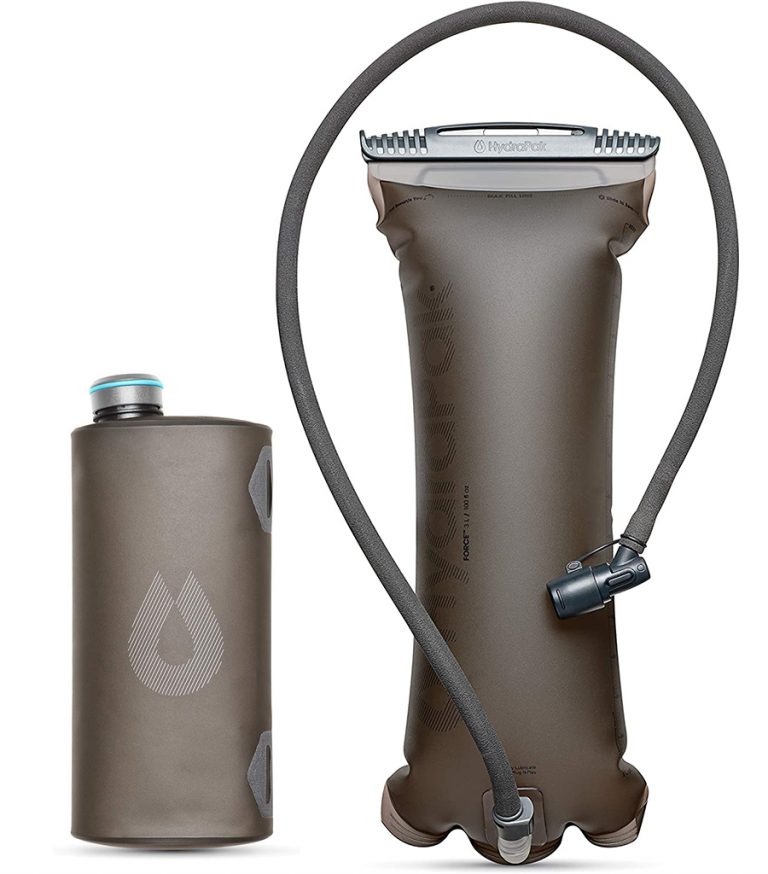
Running bird dogs in country where there is minimal surface water, the only way to extend the hunt is to carry enough water. HydraPak’s 3L Bladder upfitted to my vest lets us keep hunting when the land is parched. The insulated drink tube helps keep the water flowing on chilly mornings. I remove the high-flow…
-
NEMO Equipment Dagger Tent
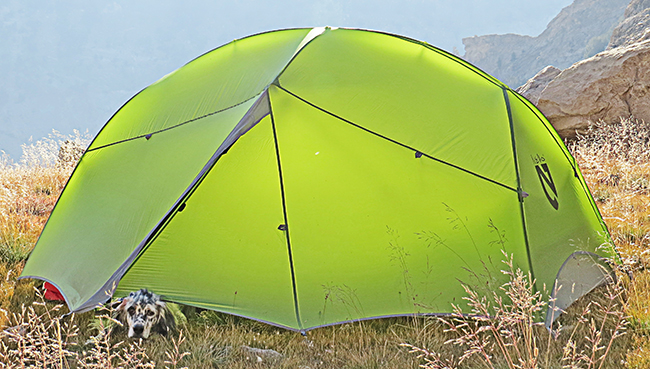
The NEMO Equipment Dagger 2 Person Tent weighed in a full 2 lbs. lighter than my old backpacking tent. That may not sound like much but when you’re talking about hauling a crammed backpack miles up a mountain over 9,000′ above sea level, those couple pounds are fairly pronounced. We’ve become fans of NEMO’s equipment which is well thought…
-
Decibullz – Custom Molded Earplugs
Give your hearing the ultimate protection with custom molded plugs that will fit perfectly. Decibullz are easy to shape and if your first attempt isn’t quite right, they are the only earplugs on the market that you can reheat and re-mold. You’ll get the perfect fit for the exact shape of your ear with plugs…
-
The First Month with the New Puppy
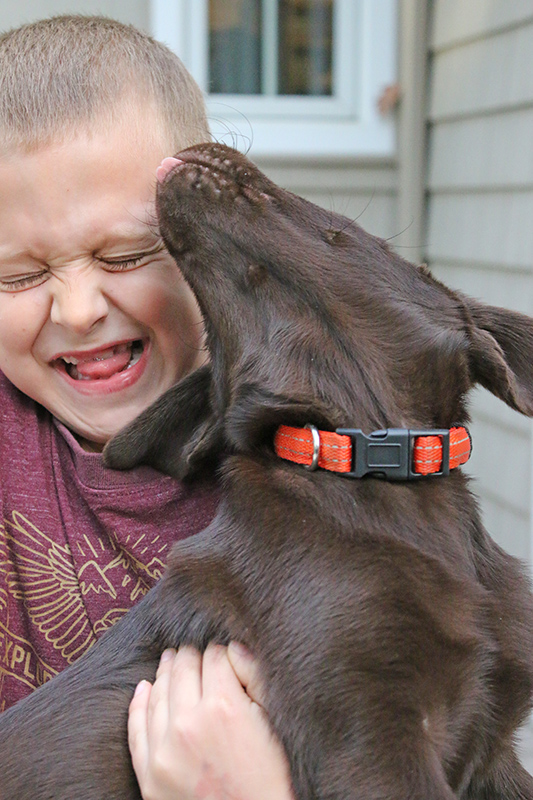
Selective memory is a close ally to puppies. Recollection of puppy breath and cuddles gloss over the challenges of house training and toothy destruction. Adorable naps and puppy eyes erase the boundless energy and predawn bawling. It’s been six years since the last puppy, which has been plenty of time for revisionist history to mask…
-
Tough Old Rooster Cakes
How do you know when you’ve harvested a three-year-old rooster? When you have to chew it until the next season to swallow it. Tough old birds are challenging and fun to chase. But part of that challenge is making them fit for the table. On principle, most hunters will choke down just about anything they shoot —…