Minnesota Bird Hunting
Seasons Span September 13 – January 4, 2026

State Drought Monitor – Upland hunting conditions are often highly dependent upon moisture for both habitat production and bird survival.
Minnesota Upland Game Bird Hunting Overview
State DNR & Licensing Information
Upland game bird hunting in Minnesota is administered by the Minnesota Department of Natural Resources (DNR).
License Requirements & Fees
- Resident Small Game License: $22
- Resident Senior Small Game License: $13.50
- Nonresident Small Game License: $103
- Resident 72-Hour Small Game License: $19
- Pheasant Validation: $7.50 for ages 18–64
- State Waterfowl Stamp: $7.50 where required
- Federal Migratory Bird Hunting Stamp: Required for applicable migratory birds. (Minnesota DNR Files)
Season Dates & Bag Limits — 2026–2027
Ruffed & Spruce Grouse
- Season: September 19, 2026–January 3, 2027
- Daily Limit: 5 combined
- Possession Limit: 10 combined
- Spruce Grouse: Maximum 2 daily / 4 possession
Sharp-tailed Grouse
- Northwest Zone: September 19–November 30, 2026
- East-Central Zone: Closed
- Daily Limit: 3
- Possession Limit: 6
Ring-Necked Pheasant
- Season: October 10, 2026–January 3, 2027
- Daily Limit: 2 roosters
- Possession Limit: 6 roosters
American Woodcock
- Season: September 19–November 2, 2026
- Daily Limit: 3
- Possession Limit: 9
Hungarian Partridge
- Season: September 19, 2026–January 3, 2027
- Daily Limit: 5
- Possession Limit: 10
Mourning Dove
- Season: September 1–November 29, 2026
- Daily Limit: 15
- Possession Limit: 45
Sora & Virginia Rails
- Season: September 1–November 2, 2026
- Daily Limit: 25 combined
- Possession Limit: 75 combined
Greater Prairie Chicken
- Season: September 26–October 4, 2026
- Requirement: Quota permit
- Area: Designated prairie-chicken quota areas. (Minnesota DNR)
Weather Assessment & Bird Hunting Outlook
Survey Methodology
Minnesota has one of the country’s strongest long-term upland-bird monitoring programs:
- Ruffed Grouse Drumming Survey: Conducted for 75 years to track the population cycle.
- Sharp-tailed Grouse Lek Surveys: Monitor breeding populations in the northwest and east-central regions.
- August Roadside Survey: Conducted since 1955 to measure pheasant, partridge and mourning dove abundance.
- Hunter Harvest Surveys: Used to track hunting pressure, harvest and hunter success. (Minnesota DNR)
Weather Impact & Habitat Conditions
- Ruffed Grouse: Minnesota’s grouse population is currently moving into the declining phase of its normal 8–11 year cycle. Heavy June rain can reduce nesting and chick survival.
- Pheasant: Mild winters and favorable spring conditions improve survival and reproduction. Grassland and wetland habitat remains the critical long-term factor.
- Woodcock: Moist soils and young forest are important; fall rainfall and migration fronts will determine concentrations.
- Sharp-tailed Grouse: Large blocks of grassland and brushland are essential, with habitat loss a major concern.
- Dove/Partridge: Agricultural conditions, precipitation and grain availability drive local abundance.
The 2026 summer has included periods of significant heat in central Minnesota, with Minneapolis temperatures reaching 94°F on July 16 and 95°F on July 17. July precipitation has been variable, including below-normal precipitation at times around the Twin Cities. (National Weather Service)
2026–27 Statewide Population Outlook
- Ruffed Grouse — GOOD: The population has entered the declining phase of its cycle, with the 2026 statewide drumming index falling to 1.7 drums per stop from 1.8 in 2025. Despite the decline, Minnesota remains a premier grouse destination, particularly across northern forests. (Minnesota DNR)
- Ring-Necked Pheasant — GOOD–EXCELLENT: The latest DNR roadside survey found pheasant numbers 47% above 2024 and 64% above the 10-year average, with the strongest indices in southwest, south-central and west-central Minnesota. (Minnesota DNR Files)
- American Woodcock — GOOD: Extensive young-forest habitat provides excellent potential, particularly in conjunction with favorable fall migration weather.
- Sharp-tailed Grouse — FAIR: Northwest populations remain relatively stable, averaging 12.4 birds per lek, but the east-central population has declined and remains closed to hunting. (Minnesota DNR)
- Hungarian Partridge — FAIR: Populations remain well below their long-term average, although localized agricultural habitat can still produce birds. (Minnesota DNR Files)
- Mourning Dove — FAIR–GOOD: The 2025 index was slightly below the 10-year average, but substantial localized opportunities remain, particularly in southern and western agricultural regions. (Minnesota DNR Files)
Overall Minnesota Outlook: GOOD–EXCELLENT. Minnesota is one of the nation’s strongest all-around upland destinations, with excellent pheasant prospects in southern/western agricultural country and a still-strong ruffed grouse opportunity across the northern forests, despite the grouse population entering the down phase of its natural cycle.
For the most up-to-date information, check the Minnesota DNR’s hunting regulations booklet or website.
-
Benchmade Steep Country
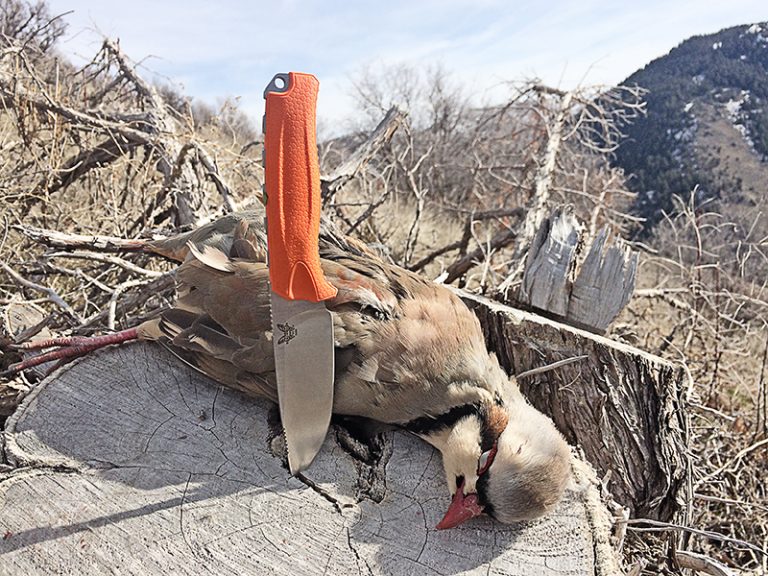
I’ve lost two knives to briars and saplings snagging the pocket clip. Maddening. I decided this season I would teach the pick pocket coverts a lesson and hunt with a sheathed fix blade. To be honest, I still like the feel of a knife in my pocket, probably because most of my brush pants have…
-
Testing the Mossberg Silver Reserve Shotgun
After the unboxing a few weeks back, we finally got the Mossberg Silver Reserve Shotgun to the range for some testing. And it’s a good thing, because these guys haven’t tried breaking clays in a hot minute and it shows. Doug, Dan and Steve all burn some powder to test how this Mossberg comes to…
-
Helio Pressure Shower
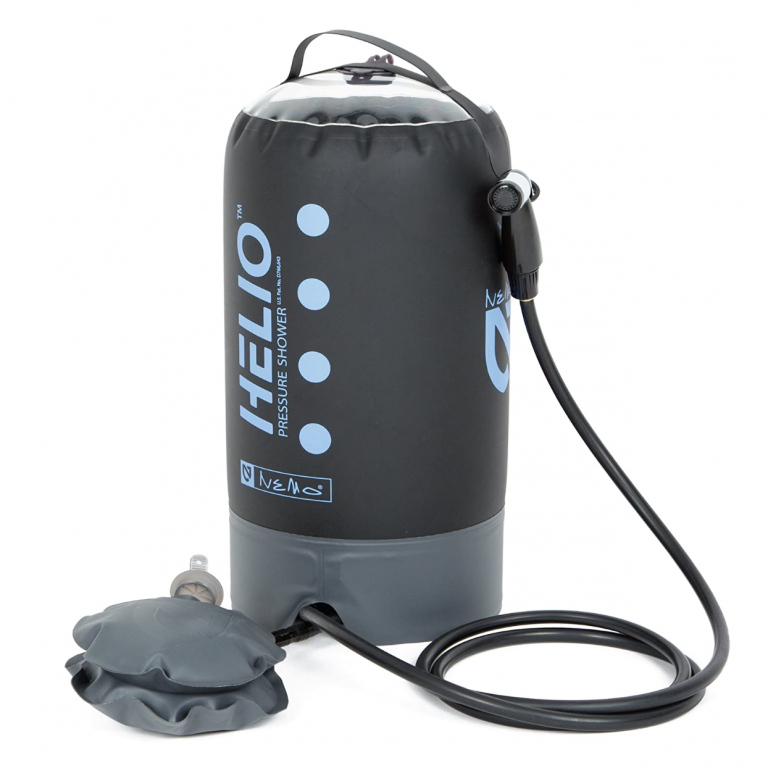
Hunting in Alaska this year I went 20 days without a shower. Never again. NEMO makes the Helio Pressure Shower ($99) specifically for these backcountry adventures. It’s also a great solution for hosing off bird dogs that have rolled in mystery stench. Honestly, in Alaska I may have smelled worse than the dogs. The Helio packs up…
-
Climbing for the Birds
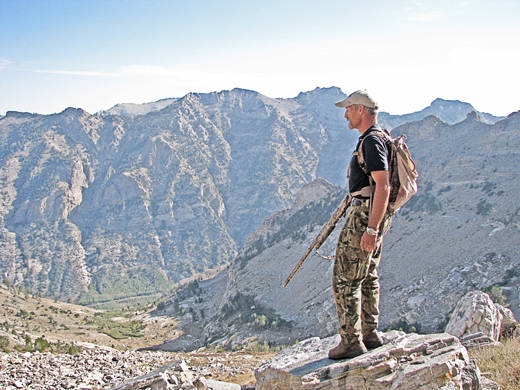
Maurice and I punched through the ridge line at 10,500 feet mid-morning with Wyatt the black lab in tow. The massive boulder fields and talus slopes are tough terrain for a bird dog. We climbed over a small crease and arrived at a rare sight, a piece of flat ground extending 50 yards to the…
-
It’s Time for The Federal Upland Stamp
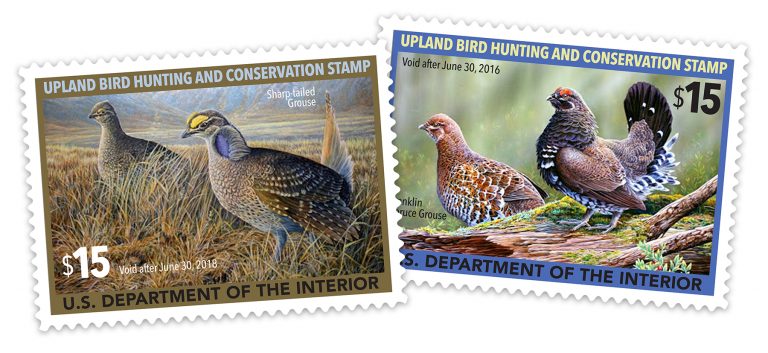
Authors: Christine Cunningham and Brian Koch Prototype Stamp Artist: Shari Erickson American landscapes are forever changing as we face the loss of some of our most iconic game bird species. Grassland birds are among the fastest and most consistently declining bird populations in North America and grassland and prairie habitats are the fastest disappearing habitats in the US. Last…
-
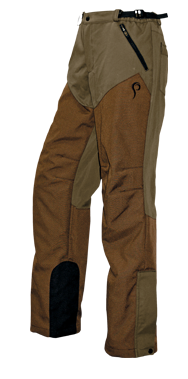
Prois Women’s High Plains Brush Pants
So much for women having to fend for themselves in upland gear. Prois has quickly become the premier maker of hunting gear for the fasting growing segment in the sport. And these upland pants have all the hallmarks of quality that will take a beating and last for years. Better still, they get the seal…