New Hampshire Bird Hunting
Seasons Span October 1 – December 31, 2026

State Drought Monitor – Upland hunting conditions are often highly dependent upon moisture for both habitat production and bird survival.
Yes — that’s an important correction to the methodology. The forecast needs to be a biological weather model, not a drought report. For each state I’ll now explicitly consider the previous winter’s severity, spring nesting conditions, summer brood-rearing weather, current habitat moisture, and—where relevant—fall migration weather.
For New Hampshire, that changes the picture somewhat. The 2025–26 winter was cold and relatively severe, especially through January and February. Manchester averaged 4.6°F below normal for the winter, with January 29 reaching -9°F; Concord also experienced substantial cold. The regional NWS assessment describes much of New England as having a cold, snowy winter, with the harshest period running from mid-January through mid-February. (National Weather Service)
That matters more for adult survival and spring breeding condition than my previous assessment acknowledged. At the same time, New Hampshire’s spring was warm overall and wet across the Northeast, and June was exceptionally wet statewide. (Drought.gov)
Here’s the revised entry.
New Hampshire Upland Game Bird Hunting Overview
State DNR & Licensing Information
Upland game bird hunting in New Hampshire is administered by the New Hampshire Fish and Game Department (NHFGD).
License Requirements & Fees
- Resident Hunting License: $45
- Nonresident Small Game License: $103
- Resident Combination Hunting & Fishing License: $56
- Pheasant License: Required for hunters 16 and older pursuing stocked pheasant.
- HIP Registration: Required for migratory game birds including woodcock.
- Federal Migratory Bird Hunting and Conservation Stamp: Required for woodcock hunters 16 and older.
Season Dates & Bag Limits — 2026–2027
The most recently published NHFGD season framework available is the 2025–26 regulation set. I have not found a finalized 2026–27 digest published by NHFGD, so the recurring dates below should be treated as expected dates pending the state’s final 2026–27 regulations, rather than presented as confirmed dates.
Ruffed Grouse
- Expected Season: October 1 – December 31, 2026
- Daily Limit: 4
- Season Limit: None
- Open: Statewide
American Woodcock
- Expected Season: October 1 – November 14, 2026
- Daily Limit: 3
- Possession Limit: 9
- Open: Statewide
Ring-Necked Pheasant
- Youth Season: Expected late September
- Regular Season: October 1 – December 31, 2026
- Daily Limit: 2
- Season Limit: 10
- Pheasant License: Required for hunters 16 and older.
- Management: Primarily a stocked-bird opportunity; NHFGD stocks approximately 10,000 pheasants at 60+ locations.
Quail, Chukar & Hungarian/European Partridge
- Expected Season: October 1 – December 31, 2026
- Daily Limit: 4
- Season Limit: None
These species are legal small game in New Hampshire but are minor components of the state’s wild upland resourcecompared with ruffed grouse and woodcock. (NHFGD; 2025–26 regulations)
Weather Assessment & Bird Hunting Outlook
Survey Methodology
NHFGD has one of the more useful long-term small-game datasets in New England. Its Small Game Hunter Survey, operating since 1999, tracks observations, effort and regional abundance. The department also uses:
- Spring ruffed-grouse drumming surveys
- Grouse wing and tail collections
- Woodcock singing-ground surveys
- Hunter observations and harvest data
- Regional abundance indices
NHFGD specifically uses these datasets to assess annual changes in abundance resulting from productivity and mortality and to generate hunting-season forecasts. (New Hampshire Fish and Game Department)
Weather Impact & Habitat Conditions
Winter 2025–26:
This is the factor I previously underweighted. New Hampshire experienced a cold winter, with Manchester’s December–February mean 4.6°F below normal. The winter included significant cold and snow through January and February, followed by a much milder late-February/March transition. (National Weather Service)
For ruffed grouse, that likely means some additional overwinter mortality and increased energetic stress, particularly for juveniles and birds entering spring in poor condition. But it was not an uninterrupted extreme winter: the late-winter thaw reduced the duration of severe snow cover.
Spring 2026:
The Northeast experienced its ninth-warmest spring on record, while precipitation was 104% of normal. Warm temperatures should have accelerated breeding and vegetation development, while adequate precipitation supported forage and insect production. (Drought.gov)
Early summer 2026:
June was the 38th-wettest June on record in New Hampshire, with 5.0 inches of precipitation, 1.06 inches above normal. That is generally favorable for vegetation and insect production during the critical brood-rearing period, although excessive rain during nesting can be detrimental. (Drought.gov)
Current conditions:
There is now a developing drought component. Drought.gov reports portions of New Hampshire in drought, with low soil moisture and localized below-normal streamflow. However, this followed a wet June rather than a prolonged statewide moisture failure. (Drought.gov)
2026–27 Statewide Population Outlook
- Ruffed Grouse — FAIR–GOOD: The winter is the principal reason I would not rate this GOOD outright. A cold 2025–26 winter likely imposed some additional mortality, but the favorable spring and early-summer weather provide a counterweight. NHFGD’s 2025 assessment noted that wet spring conditions had suppressed early chick survival, while improved June weather allowed renesting; its survey data consistently show the North Country as the strongest grouse region. (NH Fish and Game Department) The 2026 combination of winter stress followed by favorable growing-season conditions points toward a moderate-to-good fall population, particularly in northern New Hampshire.
- American Woodcock — GOOD: Woodcock are less affected by winter severity in New Hampshire because the majority of the birds occupying the state during hunting season are migrants. The favorable spring/summer moisture regime should support local breeding habitat, while the eventual fall forecast will depend heavily on migration weather. NHFGD’s 2025 singing-ground survey was slightly below the previous year, so I would not call this an exceptional population year yet. (NH Fish and Game Department)
- Ring-Necked Pheasant — GOOD: Weather is secondary because New Hampshire’s pheasant opportunity is principally dependent on the state’s stocking program. Approximately 10,000 pheasants are released at more than 60 locations. (eRegulations)
- Quail — POOR: New Hampshire does not support a significant wild quail population. The season exists, but quail should not be considered a meaningful destination species.
- Chukar — POOR: Similarly, New Hampshire is not a meaningful wild chukar destination.
- Hungarian/European Partridge — POOR: A minor component of the state’s upland bird population with limited destination value.
Overall New Hampshire Outlook: FAIR–GOOD.
The revised forecast is more nuanced than my previous GOOD rating. The winter was a genuine negative factor, particularly for ruffed grouse, but it was followed by a favorable spring and wet early summer. The combination does not point toward a population crash; rather, it suggests some winter mortality offset by good reproductive conditions.
The North Country remains the best bet for ruffed grouse, where habitat quality and young-forest availability are greatest. Woodcock prospects should be good, but the quality of the actual October hunt will ultimately depend on fall migration timing, cold fronts and rainfall, not simply the conditions that produced the birds.
Forecast confidence: Moderate. The biggest limitation remains the lack of a completed 2026 NHFGD population survey publicly available at this point. The 2025 department forecast and long-term survey record give us a useful baseline, while the 2025–26 winter and 2026 spring/summer weather provide the environmental adjustment. (NH Fish and Game Department)
And yes — I’m carrying this methodology forward. For each subsequent state, the weather section will consider:
Previous winter → spring nesting → summer brood survival → current habitat conditions → fall conditions/migration.
Drought is just one variable in that chain.
For the most up-to-date information, consult the New Hampshire Fish and Game Department’s website (www.wildlife.nh.gov) or the 2025-26 NH Hunting and Trapping Digest.
-
Way Upland
It’s the second day of the upland season and I am in a pre-dawn traffic jam. I’m following a string of crimson taillights up a dusty grade and poor excuse for a road. I’m unsure exactly how long the line extends at this point, but we are all crawling toward a pin on a map…
-
The Cure for the Ailing Birdhunt
It took a decade of brush busting, sprinting after wingless phantom pheasants, whiffing on bunny shots, losing keys and warping dogs — but a buddy and I finally discovered the remedy for the bird hunt that has jumped the tracks. Spiced ham. That gelatinous, pulverized, sodium infused and form fitted rectagonal mass packaged in the convenient…
-
Unboxing the CZ Redhead Premier O/U 20 Gauge
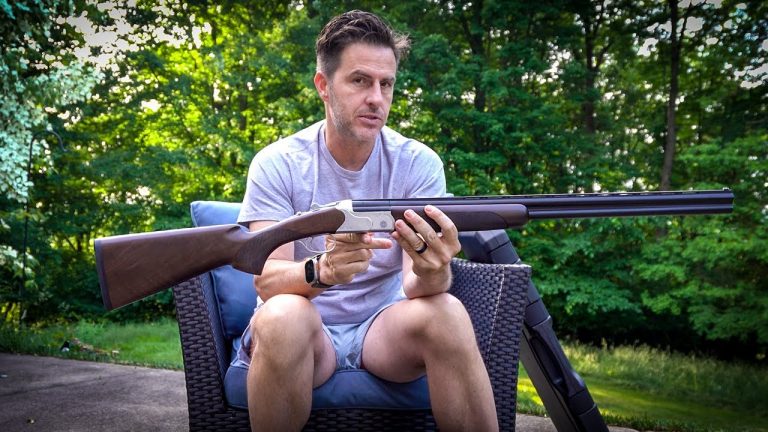
The CZ Redhead Premier is the mid-tier field double from CZ. It offers reliability with a matte silver receiver and jeweled action. More intricate scrollwork engraving than its cousin the CZ Drake. We’ll be testing this shotgun over the next few weeks on the back 40 to see how we like shooting it.
-
Skewering Meathunters: The True Cost of a Pound of Game Bird
I often see bird hunters profess that they hunt for food. But when I think about my days afield, meat is often the last thing that comes to mind. Don’t get me wrong, I love my Sharptail Fajitas and my Pheasant Chowder but eating game birds has always been one of the bonuses of being…
-
Garmin Alpha 10
Garmin took the most popular, most used features from their other tracking and training collars and boiled them down into the smallest, most battery efficient handheld in their lineup. When paired with the TT15 Mini collars, the Garmin Alpha 10 becomes a powerful tool for tracking dogs and keeping them safe afield. I’ve had the…
-
SportDOG Orange Plastic Dummies
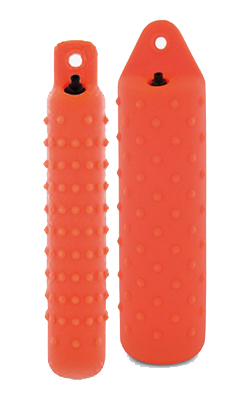
Your bird dog works hard and deserves a present too. Our lab, Wyatt, goes bonkers for these SportDOG Orange Plastic Dummies. They come in both a regular and jumbo size and work great for both water and land retrieving practice. The 3-packs are the way to go ( Reg. $17.94 / Jumbo $24.95).