Kentucky Bird Hunting
Seasons Span September 1 – February 28, 2027

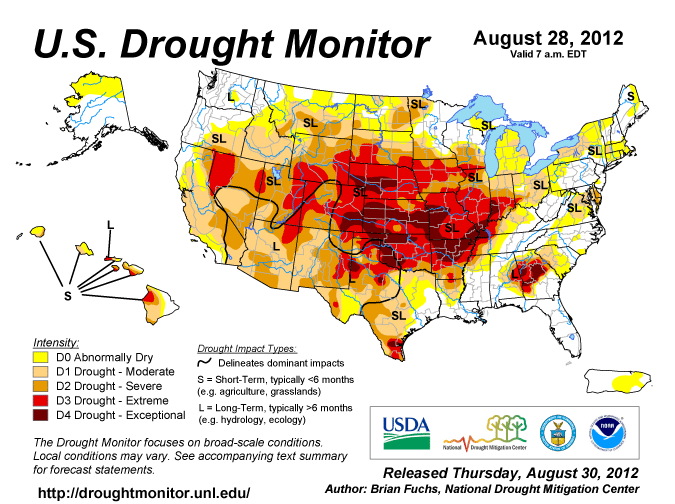
State Drought Monitor – Upland hunting conditions are often highly dependent upon moisture for both habitat production and bird survival.
License Requirements & Fees
- Resident Annual Hunting License: $28.54
- Nonresident Annual Hunting License: $169.12
- Nonresident 1-Day Hunting License: $26.43
- Nonresident 7-Day Hunting License: $68.71
- Resident Sportsman’s License: $100.42
- Kentucky Migratory Bird/Waterfowl Permit: $15.86
- HIP Registration: Required for applicable migratory birds.
Season Dates & Bag Limits — 2026–2027
Northern Bobwhite Quail
- Eastern Zone: November 1–13 & November 16–January 31
- Western Zone: November 16–February 10
- Daily Limit: 8
- Possession Limit: 16
Ruffed Grouse
- Season: November 1–13 & November 16–February 28
- Daily Limit: 4
- Possession Limit: 8
- Zone: Designated eastern Kentucky Grouse Hunting Zone
American Woodcock
- Season: October 24–November 13 & November 16–December 9
- Daily Limit: 3
- Possession Limit: 9
Mourning Dove
- First Segment: September 1–October 26
- Second Segment: November 26–December 6
- Third Segment: December 19–January 10
- Daily Limit: 15
- Possession Limit: 45
Ring-Necked Pheasant
- Green River Lake WMA: November 20–22
- Clay WMA: December 4–6
- Yellowbank WMA: December 4–6
- Requirement: Quota permit
Weather Assessment & Bird Hunting Outlook
Survey Methodology
KDFWR’s long-term monitoring includes:
- Rural Mail Carrier Survey: Tracks quail observations and provides a long-term population index.
- Quail Hunter Cooperator Survey: Tracks coveys flushed, hunting effort and harvest.
- Grouse/Mast Surveys: Monitor grouse habitat conditions, mast production and population indicators.
Where current state population data are unavailable, the forecast will not substitute third-party estimates. Weather conditions will instead be evaluated against available historical state data.
Weather Impact & Habitat Conditions
- Quail: Warm, reasonably wet spring and summer conditions generally benefit nesting, brood survival and insect production. Extended heavy rainfall during nesting can reduce recruitment, while drought can reduce brood-rearing habitat.
- Grouse: Weather affects annual survival, but young forest habitat is the major long-term limiting factor.
- Woodcock: Fall weather is critical. Cold fronts and rainfall can trigger migration and concentrate birds in suitable moist cover.
- Dove: Prospects depend heavily on crop maturity, sunflower/grain availability, water and early-season weather fronts.
- Snipe/Rails: Local rainfall and wetland conditions are major determinants of opportunity.
2026–27 Statewide Population Outlook
- Bobwhite Quail — FAIR: Best opportunities remain localized in western Kentucky, particularly areas with extensive early-successional habitat and reclaimed mine lands such as Peabody WMA.
- Ruffed Grouse — POOR–FAIR: Eastern Kentucky continues to have limited populations, with the best prospects concentrated in young, regenerating forest rather than mature forest.
- American Woodcock — WEATHER DEPENDENT: Potentially good during migration periods following rainfall and strong north-to-south cold fronts.
- Mourning Dove — GOOD: Strong potential where agricultural fields and managed dove fields provide adequate food, although field conditions will vary considerably.
- Wilson’s Snipe & Rails — FAIR: Opportunities will depend heavily on localized wetland and soil-moisture conditions.
- Ring-Necked Pheasant — GOOD DURING QUOTA HUNTS: Opportunities are concentrated on KDFWR’s designated release areas.
Sources: Kentucky Department of Fish & Wildlife Resources and NOAA/National Weather Service data. Third-party hunting publications and forecasts excluded.
This summary provides a concise overview for planning your 2025-26 upland bird hunting in Kentucky. For detailed or species-specific regulations, visit the KDFWR website or contact their office directly.
-
Depths of Cold
There seems no bottom to the depths of cold. It’s one of the few solace for hunting in frigid condition: could be colder, windier, at least it’s not…more miserable. I’m assured by medical science that freezing does have a lower limit in terms of the human body. Paradoxical undressing: the point at which humans experiencing…
-
Grilled Pheasant + Mojo Sauce
This spatchcocked, grilled pheasant is probably one of the more satisfying meals I have made with wild game to date. The crispy skin is full of flavor from a homemade dry rub, the meat is tender and juicy, and the citrus-garlic Mojo sauce is so delicious. Cuban Mojo Sauce This Mojo sauce has it all:…
-
Pheasant Defying Drought….. For Now
There has been a lot of news about the terribly dry conditions across the bulk of the country this year. This news sparked many early negative predictions for the upland populations. If you read much about the lifecycle of upland birds though, most don’t require much water when they are young. So unlike harsh winters…
-
The Top 3 Wild Pheasant Hunting Tips
There are tons of variables involved when pheasant hunting: weather, dogs, number of hunters, blockers, terrain, time of day….. the list is almost endless. But regardless of these elements, there are 3 things you can always use that will improve your success against the wily wild rooster. The bird hunters’ opening day is also most…
-
Hunting in the Shadow of Roosevelt
When I hunt in North Dakota, my thoughts often drift to Teddy Roosevelt’s days at Elkhorn Ranch — He named his Dakota home for a pair of locked elk skulls he found at the site. Today, centrally located within the million acres of the Little Missouri National Grasslands, Elkhorn is a great place to visit…
-
Tough Old Rooster Cakes
How do you know when you’ve harvested a three-year-old rooster? When you have to chew it until the next season to swallow it. Tough old birds are challenging and fun to chase. But part of that challenge is making them fit for the table. On principle, most hunters will choke down just about anything they shoot —…