Gordon Setter
The Gordon Setter, a distinguished member of the setter family, traces its roots to Scotland in the early 17th century. Named after Alexander Gordon, the 4th Duke of Gordon, the breed was refined in the late 1700s at the Duke’s castle in Banffshire. The Duke, an avid sportsman, sought to develop a dog with exceptional hunting instincts, stamina, and elegance. By selectively breeding black-and-tan setters, he created a dog that combined grace with utility, capable of working the rugged Scottish moors. Early records suggest these setters descended from native Scottish dogs crossed with other sporting breeds, possibly including English Setters and pointers, to enhance their scenting and pointing abilities.
By the 19th century, the Gordon Setter gained recognition beyond Scotland. The breed’s striking appearance and hunting prowess made it a favorite among British gentry. In 1878, the Gordon Setter was officially recognized by the Kennel Club in the United Kingdom, solidifying its status. The breed’s journey to the United States began in the mid-1800s, with the first documented imports arriving around 1842. The American Kennel Club (AKC) recognized the Gordon Setter in 1884, and it quickly became a valued companion for American hunters, particularly in the Northeast and Midwest.
Breed Standards
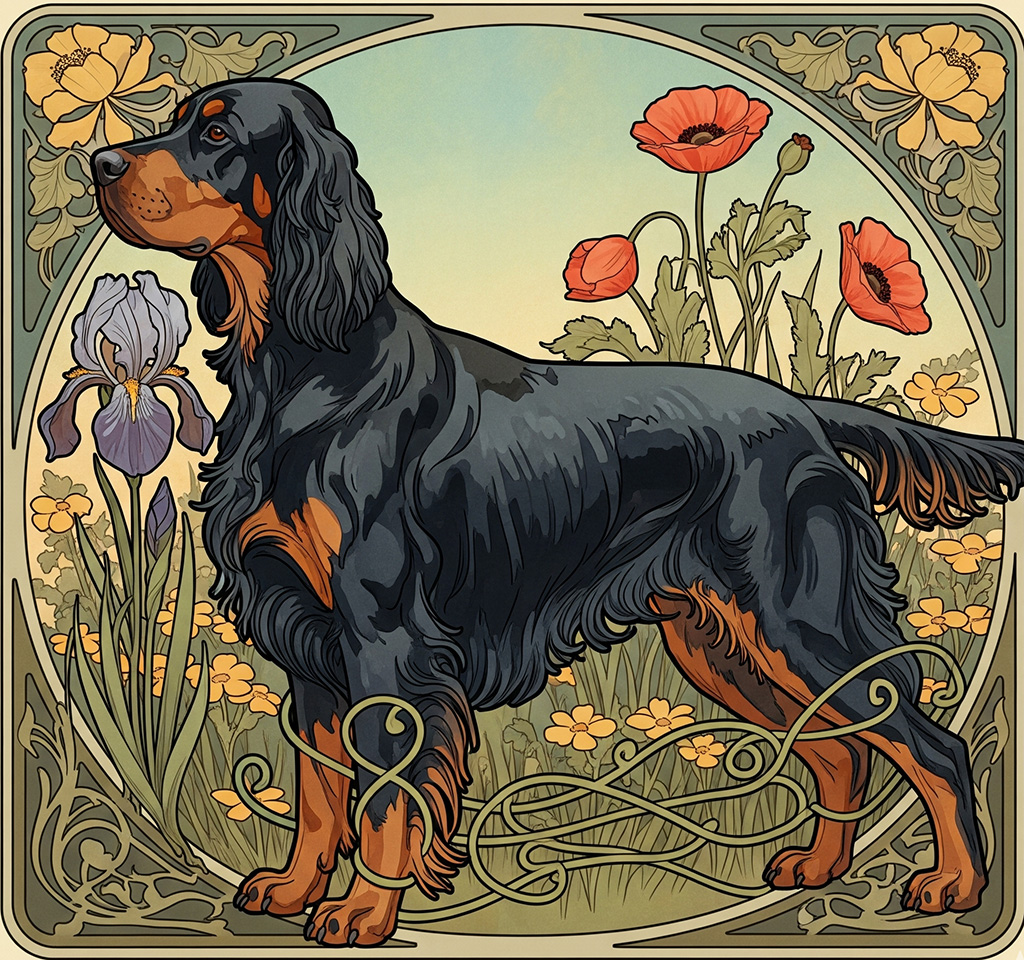
The Gordon Setter is a medium-to-large breed, known for its athletic build and elegant appearance. According to the AKC breed standard, males typically stand 24–27 inches at the shoulder and weigh 55–80 pounds, while females are slightly smaller, standing 23–26 inches and weighing 45–70 pounds. The breed’s hallmark is its glossy, coal-black coat with rich tan markings on the muzzle, legs, and chest, often described as a “black-and-tan tartan.” The coat is medium-length, straight, and silky, with feathering on the legs, tail, and underbelly.
The Gordon Setter’s head is refined, with a broad skull, a well-defined stop, and dark brown eyes that convey intelligence and alertness. The ears are set low and fold close to the head, enhancing the dog’s sleek profile. The body is muscular yet elegant, with a deep chest and a level topline, built for endurance and agility. The tail is thick at the base, tapering to a point, and carried horizontally or slightly below the back.
Temperamentally, Gordon Setters are intelligent, loyal, and energetic, with a strong work ethic. They are affectionate with their families but can be reserved with strangers, making them excellent watchdogs. The breed standard emphasizes their role as a working gundog, requiring a balance of stamina, scenting ability, and a natural instinct to point and retrieve.
Hunting History in the United States
In the United States, the Gordon Setter carved out a niche as a premier upland game bird dog, particularly for hunting quail, pheasant, and grouse. Its deliberate, methodical hunting style—marked by a steady point and a strong nose—made it well-suited for the diverse terrains of American fields and forests. Unlike the faster-paced English Setter, the Gordon Setter’s measured approach and endurance allowed it to excel in dense cover and challenging conditions, earning it a loyal following among hunters in states like Pennsylvania, Wisconsin, and Minnesota.
By the early 20th century, Gordon Setters were a staple in American field trials, competing in events that tested their pointing, retrieving, and obedience. The breed’s versatility shone in both competitive trials and practical hunting scenarios. However, their popularity as hunting dogs waned slightly mid-century as faster breeds like the English Setter and Brittany gained favor. Despite this, dedicated breeders and hunters preserved the Gordon’s working qualities, and the breed remains a respected choice for those who value its stamina and precision.
Today, Gordon Setters are less common in the field than in the past but continue to be cherished by hunters who appreciate their unique blend of elegance and grit. They are also popular in conformation shows and as loyal family companions, with their hunting instincts still evident in their love for outdoor activities. The Gordon Setter’s legacy as a noble, hardworking breed endures, a testament to its rich history and enduring appeal.
-
Nowhere to Look
Dropped Wyatt off at the vet this morning for an exploratory procedure. I am now trying to do anything, accomplish something, will myself to the positive. I’m over-caffeinated and staged nearby awaiting the vet’s call. I can talk about the details, the minutia of his afflictions. I’ve gnashed over the could be and mights, in…
-
Keeping Weight on Your Bird Dog
When we’re not in the field, my dogs get fed premium dog food twice a day. Normally I don’t even need a clock in the house because they start getting antsy when meal times near. I think this is why it’s so confounding that when we go hunting their interest in food is trumped…
-
The First Month with the New Puppy
Selective memory is a close ally to puppies. Recollection of puppy breath and cuddles gloss over the challenges of house training and toothy destruction. Adorable naps and puppy eyes erase the boundless energy and predawn bawling. It’s been six years since the last puppy, which has been plenty of time for revisionist history to mask…
-
Rio Flufferbunny
It was fall when she came to us on a plane from New Mexico, all legs and ears and sharp puppy teeth. She pointed from the womb — butterflies, song birds, turtles, tufts of grass stirred by a breeze — nothing was safe from her glare. As our first setter, I was unsure of the…
-
The Fountain of Youth
The old boy doesn’t leap into the truck like he once could, but he still manages to lurch up the running boards and cross the center console. Instead of stowing him in the back for this road trip, I break the rules and let him ride shotgun. He acknowledges the exemption and quickly curls into…
-
The Lab Knows
Wyatt knows he’s black. He also knows this is the color of night. He’s been able to surmise that humans have terrible night vision. During daylight hours when we take breaks from hunting, he plots. He knows most mischief will not fly in the light of day. Raiding other camps, gnawing a nearby rotting deer…