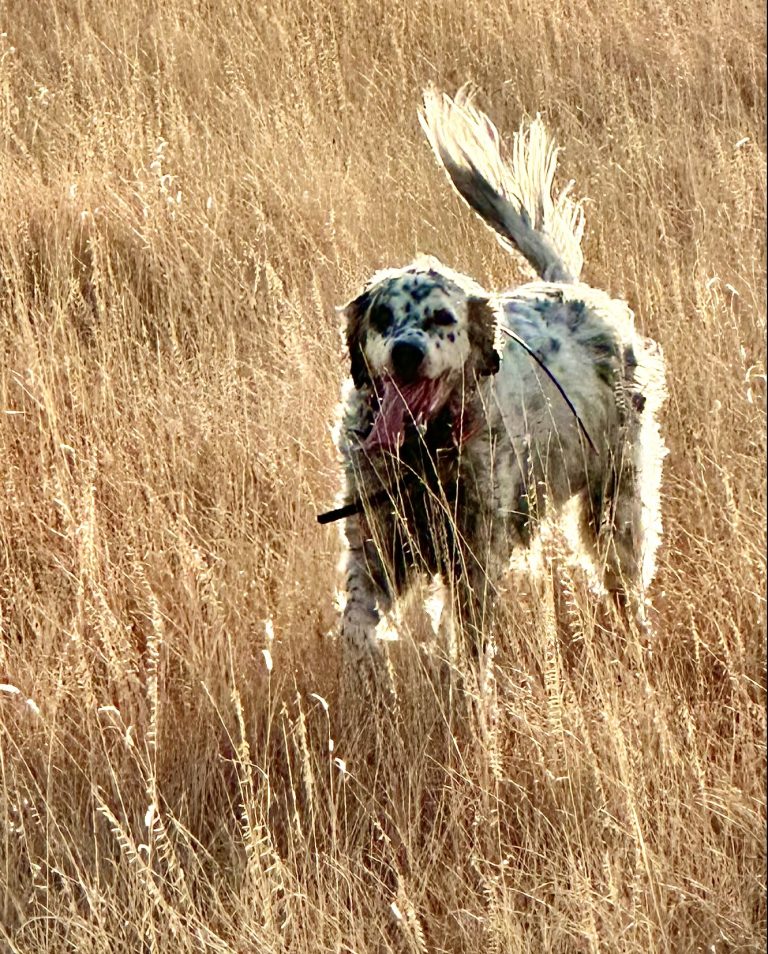

German Shorthair Pointer
The German Shorthaired Pointer (GSP) originated in Germany during the 19th century, developed as a versatile hunting dog capable of performing multiple tasks in the field. Breeders sought to create a dog that could point, retrieve, and track game on both land and water. The GSP’s foundation traces back to crosses between the Spanish Pointer, local German scent hounds, and later, the English Pointer, which added speed and elegance. By the late 1800s, Prince Albrecht zu Solms-Braunfels, a key figure in the breed’s development, helped standardize its traits through selective breeding, emphasizing intelligence, athleticism, and a keen nose. The first studbook for the breed was established in 1870, cementing its identity as a premier hunting dog in Europe.
The breed was imported to the United States in the 1920s, gaining recognition from the American Kennel Club (AKC) in 1930. Its versatility and adaptability quickly made it a favorite among American hunters, particularly for upland game birds like pheasant and quail. The German Shorthaired Pointer Club of America, founded in 1938, further promoted the breed’s development and preservation.
Breed Standards
According to the AKC, the German Shorthaired Pointer is a medium-to-large breed, with males standing 23–25 inches and females 21–23 inches at the shoulder, typically weighing 45–70 pounds. The breed standard emphasizes a balanced, athletic build, with a short, dense coat that is liver, liver and white, or ticked (speckled) in pattern. The coat is water-repellent, suited for diverse terrains and weather conditions. The GSP’s head is well-proportioned, with almond-shaped eyes and a broad, slightly arched skull. Its tail is typically docked to a medium length for functionality in the field, though this practice varies by region.
Temperamentally, GSPs are described as intelligent, friendly, and eager to please, with a strong hunting instinct. The breed standard highlights their need for mental and physical stimulation, as they are high-energy dogs requiring regular exercise. Their movement is fluid and powerful, reflecting their purpose as a working dog capable of covering vast ground efficiently.
Hunting History in the United States
In the U.S., the German Shorthaired Pointer quickly established itself as a top choice for hunters due to its versatility. Unlike specialized breeds, GSPs excel at pointing, retrieving, and tracking, making them ideal for the diverse American landscape, from the prairies of the Midwest to the forests of the Northeast. By the mid-20th century, GSPs were widely used for hunting upland game, particularly pheasant, quail, and grouse. Their ability to work in varied conditions, combined with their stamina and keen sense of smell, made them indispensable to hunters.
The breed’s popularity grew with the rise of field trials in the U.S., where GSPs consistently demonstrated their prowess. The German Shorthaired Pointer Club of America and regional clubs organized trials and hunt tests, showcasing the breed’s ability to locate and retrieve game with precision. Over time, GSPs also became valued companions for hunters pursuing waterfowl, thanks to their strong retrieving instincts and water-resistant coats.
Today, the German Shorthaired Pointer remains a favorite among American hunters and outdoor enthusiasts. Its legacy as a versatile, reliable hunting dog endures, while its friendly demeanor and adaptability have also made it a beloved family pet. The breed’s history reflects a perfect blend of form, function, and fidelity to its working roots.
-
The First Month with the New Puppy
Selective memory is a close ally to puppies. Recollection of puppy breath and cuddles gloss over the challenges of house training and toothy destruction. Adorable naps and puppy eyes erase the boundless energy and predawn bawling. It’s been six years since the last puppy, which has been plenty of time for revisionist history to mask…
-
The Fountain of Youth
The old boy doesn’t leap into the truck like he once could, but he still manages to lurch up the running boards and cross the center console. Instead of stowing him in the back for this road trip, I break the rules and let him ride shotgun. He acknowledges the exemption and quickly curls into…
-
Bird Dog Dealing with Lar Par
I’m not sure I can say “Laryngeal Paralysis” once correctly, let alone three times quickly — it’s a tongue twister. It has also been a vet stumper for a number of years. Until three weeks ago I had never heard of it. Let me break this diagnosis down in bird hunter terms which I’m certain…
-
The Lab Knows
Wyatt knows he’s black. He also knows this is the color of night. He’s been able to surmise that humans have terrible night vision. During daylight hours when we take breaks from hunting, he plots. He knows most mischief will not fly in the light of day. Raiding other camps, gnawing a nearby rotting deer…
-
Rio Flufferbunny
It was fall when she came to us on a plane from New Mexico, all legs and ears and sharp puppy teeth. She pointed from the womb — butterflies, song birds, turtles, tufts of grass stirred by a breeze — nothing was safe from her glare. As our first setter, I was unsure of the…
-
Nowhere to Look
Dropped Wyatt off at the vet this morning for an exploratory procedure. I am now trying to do anything, accomplish something, will myself to the positive. I’m over-caffeinated and staged nearby awaiting the vet’s call. I can talk about the details, the minutia of his afflictions. I’ve gnashed over the could be and mights, in…