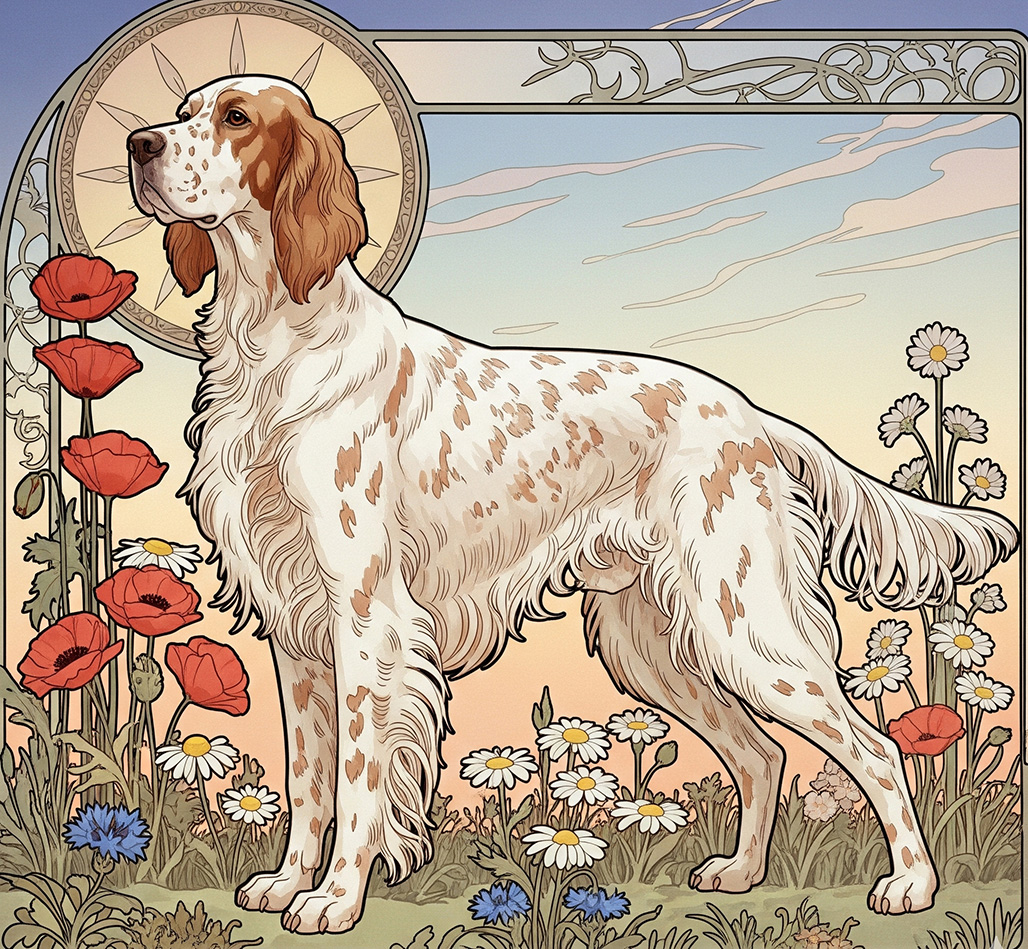
English Setter
The English Setter, an elegant and athletic gun dog, traces its origins to England in the 16th century. Developed primarily for hunting game birds, the breed emerged from crosses between Spanish Pointers, Water Spaniels, and other hunting dogs. Sir Edward Laverack, a pivotal figure in the breed’s history, began selectively breeding English Setters in the early 19th century, establishing the foundation for the modern breed. His work focused on refining their hunting instincts and graceful appearance. Later, R. Purcell Llewellin further developed the breed by emphasizing field performance, creating the Llewellin strain, known for its exceptional hunting prowess. These efforts solidified the English Setter as a distinct breed by the late 1800s, valued for both its beauty and utility.
Breed Standards
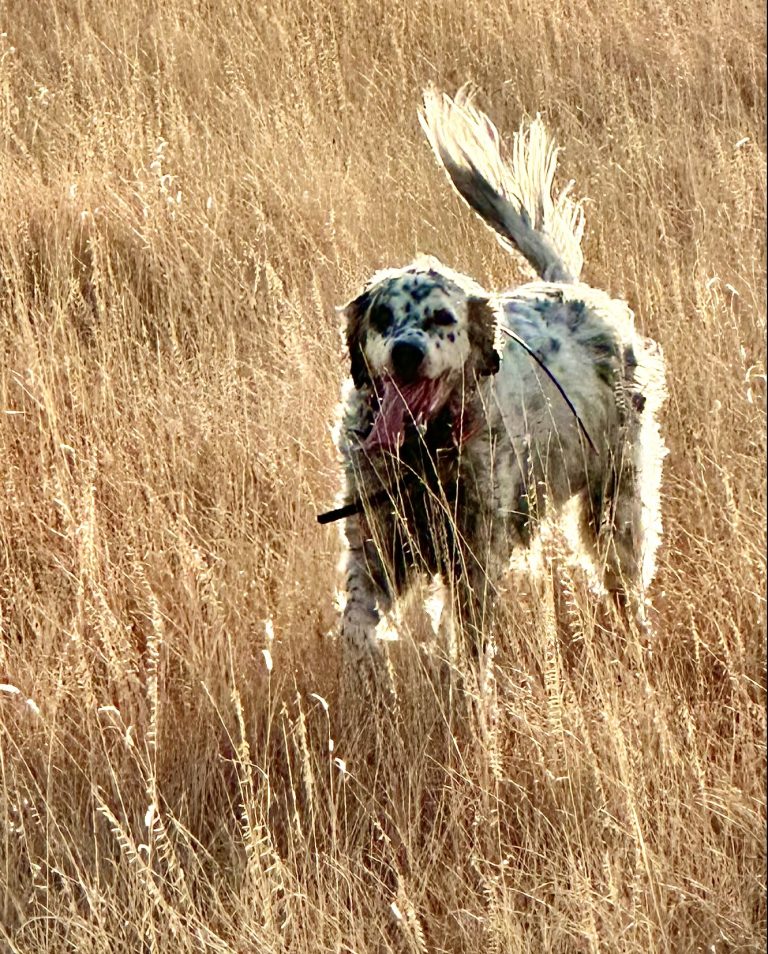
The American Kennel Club (AKC) outlines specific standards for the English Setter, emphasizing its elegance, athleticism, and functionality. The breed is medium-sized, with males standing 25–27 inches and females 23–25 inches at the shoulder, weighing between 45–80 pounds. The English Setter’s coat is flat, silky, and medium-length, typically featuring a white base with markings in colors like orange, lemon, blue, or tri-color patterns. The head is long and lean, with a well-defined stop and expressive, oval-shaped eyes. The breed’s movement is graceful yet powerful, reflecting its agility and endurance in the field. Temperamentally, English Setters are friendly, gentle, and energetic, with a keen hunting instinct. The AKC standard prioritizes balance, symmetry, and a natural pointing ability, ensuring the dog excels as both a companion and a working hunter.
History of Hunting in the United States
English Setters were among the first purebred dogs brought to the United States in the 19th century, quickly gaining popularity among hunters for their versatility in upland game bird hunting. Their keen sense of smell, stylish pointing, and tireless energy made them ideal for pursuing quail, pheasant, and grouse across varied American terrains, from the prairies of the Midwest to the forests of the Northeast. By the late 1800s, field trials became a prominent way to showcase the breed’s abilities, with English Setters dominating early competitions. The Llewellin strain, in particular, became a favorite for its relentless drive and stamina in the field. Today, English Setters remain cherished by hunters and field trial enthusiasts, though their popularity has also grown as loyal family companions due to their affectionate nature.
Conclusion
The English Setter’s journey from its English origins to its prominence in American hunting culture reflects its enduring appeal as a skilled and elegant breed. With a history rooted in selective breeding for performance and beauty, and a standard that balances form and function, the English Setter continues to captivate dog enthusiasts. Its legacy as a premier hunting dog in the United States underscores its adaptability and grace, making it a timeless symbol of canine excellence.
-
Why We Hunt With Dogs
This morning I took my lab Wyatt out for a weekend stomp on public ground. Yesterday while in the field at first light I saw several other trucks with hunters trying to hunt the same field which we beat them to that day. Needless to say, the public options close to population centers here in…
-
Rio Flufferbunny
It was fall when she came to us on a plane from New Mexico, all legs and ears and sharp puppy teeth. She pointed from the womb — butterflies, song birds, turtles, tufts of grass stirred by a breeze — nothing was safe from her glare. As our first setter, I was unsure of the…
-
Keeping Weight on Your Bird Dog
When we’re not in the field, my dogs get fed premium dog food twice a day. Normally I don’t even need a clock in the house because they start getting antsy when meal times near. I think this is why it’s so confounding that when we go hunting their interest in food is trumped…
-
The First Month with the New Puppy
Selective memory is a close ally to puppies. Recollection of puppy breath and cuddles gloss over the challenges of house training and toothy destruction. Adorable naps and puppy eyes erase the boundless energy and predawn bawling. It’s been six years since the last puppy, which has been plenty of time for revisionist history to mask…
-
The Fountain of Youth
The old boy doesn’t leap into the truck like he once could, but he still manages to lurch up the running boards and cross the center console. Instead of stowing him in the back for this road trip, I break the rules and let him ride shotgun. He acknowledges the exemption and quickly curls into…
-
The Lab Knows
Wyatt knows he’s black. He also knows this is the color of night. He’s been able to surmise that humans have terrible night vision. During daylight hours when we take breaks from hunting, he plots. He knows most mischief will not fly in the light of day. Raiding other camps, gnawing a nearby rotting deer…