Braque du Bourbonnais
The Braque du Bourbonnais, often affectionately called the “Bourbonnais Pointer,” is a versatile and ancient French gundog renowned for its pointing abilities, short tail, and ticked coat. Originating from the Bourbonnais province in central France, this breed embodies a rich heritage of hunting prowess combined with a gentle, family-oriented temperament. Though once on the brink of extinction, the Braque du Bourbonnais has experienced a revival, particularly in the United States, where it has become a favored companion for upland bird hunters. This essay explores the breed’s historical roots, official standards, and its evolving role in American hunting culture.
The history of the Braque du Bourbonnais traces back to the Renaissance era, making it one of the oldest pointing breeds in France. First documented in 1598 in Aldovrandi’s Natural History, the breed was described as a reliable hunting companion, prized for its stamina and keen scenting abilities. Its origins likely stem from ancient continental braques, though it diverged with unique traits like a naturally short or absent tail (anury) and a distinctive ticked coat in shades of liver, fawn, or white. By the 1800s, it was celebrated among French nobility and hunters as a “tailless pointer” adept at pursuing birds and small game in varied terrains. However, the breed faced severe decline in the early 20th century due to overly strict breeding standards that emphasized appearance over functionality, leading to reduced numbers. Between 1963 and 1973, no puppies were registered in France, pushing the breed to the edge of extinction. A dedicated revival effort began in the 1970s, spearheaded by French breeder Michel Comte, who broadened the gene pool while preserving the breed’s rustic charm and hunting instincts. By the 1980s, the breed’s success in field trials helped stabilize its population, transforming it from a regional rarity to an internationally recognized gundog.
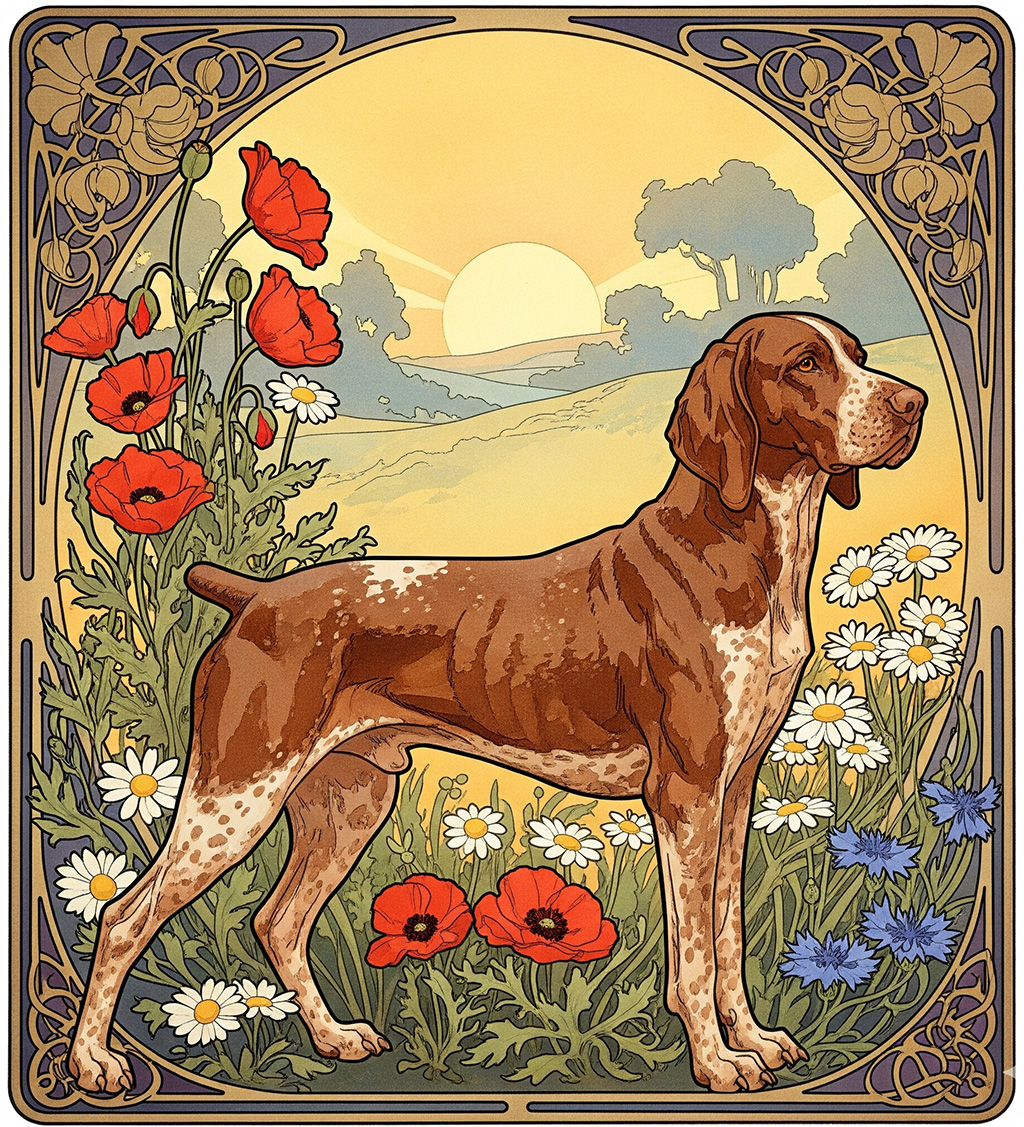
Breed standards for the Braque du Bourbonnais, as outlined by organizations like the Fédération Cynologique Internationale (FCI), the American Kennel Club (AKC), and the United Kennel Club (UKC), emphasize its functional build and distinctive appearance. Physically, males stand 20 to 22.5 inches at the withers, while females measure 19 to 21.5 inches, with a tolerance of half an inch either way. The coat is short, fine, and dense, slightly coarser on the back, with ticking in liver, fawn, black, or white on a white or brown base—ensuring camouflage in the field. The tail is a hallmark: naturally short (less than 6 inches) or absent, a trait that historically prevented injuries during hunts. Temperamentally, the breed is loyal, intelligent, and eager to please, making it highly trainable and affectionate with families. As a gundog, it must exhibit balance, athleticism, and a keen nose, with standards prioritizing hunting utility over show-ring aesthetics to avoid the pitfalls that nearly doomed the breed in the past.
The Braque du Bourbonnais’s hunting history in the United States is relatively recent but marked by rapid growth and enthusiasm among bird dog aficionados. The first imports arrived in 1988, introduced by enthusiasts who recognized its potential as a versatile pointer for American game birds like quail, pheasant, and grouse. Unlike more common breeds such as the English Pointer or German Shorthaired Pointer, the Bourbonnais offered a calmer demeanor in the home while maintaining fierce drive in the field, appealing to hunters seeking a dual-purpose dog. By the early 2000s, the breed gained traction through organizations like the North American Versatile Hunting Dog Association (NAVHDA) and the UKC, where it excelled in field trials and hunt tests. The AKC recognized it in the Foundation Stock Service in 2004 and fully in the Miscellaneous Class by 2011, further boosting its visibility. Today, the United States hosts the second-largest population of Braque du Bourbonnais after France, with breeders like those in South Dakota emphasizing its hardy, willing nature for pursuits in diverse terrains from prairies to forests. Its adaptability to American hunting styles—pointing, retrieving, and tracking—has solidified its niche, though it remains rare, with enthusiasts praising its rustic endurance and family-friendly traits.
In conclusion, the Braque du Bourbonnais stands as a testament to resilient breeding and the enduring appeal of functional gundogs. From its ancient French origins and near disappearance to its standardized form and burgeoning role in U.S. hunting, the breed continues to thrive as a loyal partner for modern outdoorsmen. With careful stewardship, this short-tailed pointer promises to hunt on for generations to come.
-
Rio Flufferbunny
It was fall when she came to us on a plane from New Mexico, all legs and ears and sharp puppy teeth. She pointed from the womb — butterflies, song birds, turtles, tufts of grass stirred by a breeze — nothing was safe from her glare. As our first setter, I was unsure of the…
-
Pavlov Didn’t Have Bird Dogs
I’m forced to sneak about my own property like a burglar, held captive by bird dogs trying to secure their place in the truck. Regardless whether the destination is a wild place or the tame grocery, they are not willing to wager their spot. A few short weeks ago I could announce my exit to…
-
Bird Dog Dealing with Lar Par
I’m not sure I can say “Laryngeal Paralysis” once correctly, let alone three times quickly — it’s a tongue twister. It has also been a vet stumper for a number of years. Until three weeks ago I had never heard of it. Let me break this diagnosis down in bird hunter terms which I’m certain…
-
A Labs First Day Afield
“No, I don’t think you understand, he has NO prior hunting experience…only obedience training.” I wrote to Brian, my new upland hunting buddy. The early morning email asking for my young lab and me to attend an upland hunt had caught me by surprise, putting a nice end to a long workweek. “Kali, it doesn’t…
-
The First Month with the New Puppy
Selective memory is a close ally to puppies. Recollection of puppy breath and cuddles gloss over the challenges of house training and toothy destruction. Adorable naps and puppy eyes erase the boundless energy and predawn bawling. It’s been six years since the last puppy, which has been plenty of time for revisionist history to mask…
-
The Lab Knows
Wyatt knows he’s black. He also knows this is the color of night. He’s been able to surmise that humans have terrible night vision. During daylight hours when we take breaks from hunting, he plots. He knows most mischief will not fly in the light of day. Raiding other camps, gnawing a nearby rotting deer…