Llewellin Setter
The Llewellin Setter, a distinguished strain of the English Setter, traces its origins to the mid-19th century in England, where it was developed by Richard Purcell Llewellin. Building on the foundation laid by Edward Laverack, who bred English Setters for beauty and elegance, Llewellin focused on enhancing field performance. By selectively crossing Laverack’s setters with other breeds, including dogs from the Duke-Rhoebe lineage, Llewellin created a strain optimized for hunting, known for its stamina, agility, and keen bird sense. These dogs, recognized by the Field Dog Stud Book (FDSB) since 1874, are considered a distinct line of English Setters, though debates persist about whether they constitute a separate breed. DNA testing by organizations like the UC Davis Veterinary Genetics Lab ensures the purity of Llewellin bloodlines, tracing back to Llewellin’s original dogs.
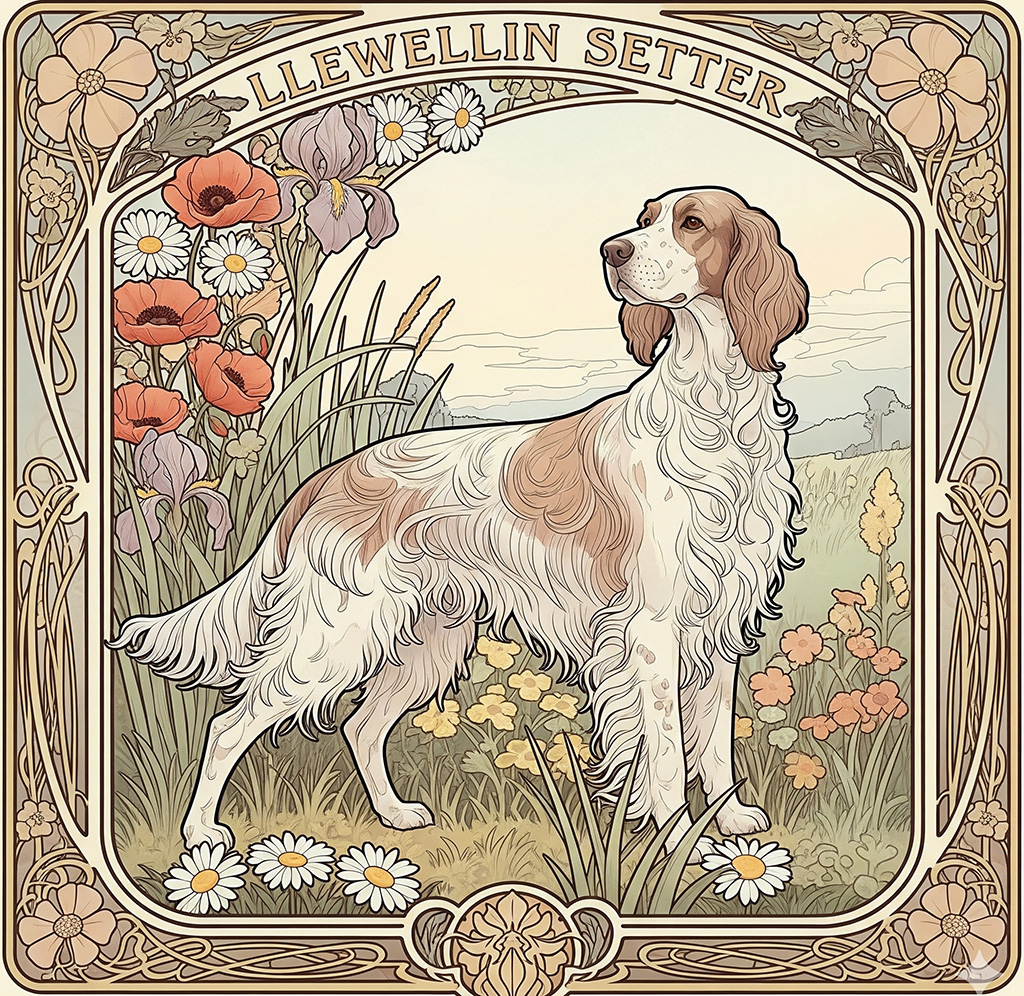
Llewellin Setters are medium-sized, athletic dogs, typically standing 20–24 inches at the shoulder and weighing 35–50 pounds, though some males may reach 60 pounds. Their silky, medium-length coats feature feathering on the ears, chest, legs, and tail, with colors including white with black, orange, lemon, liver, or tri-color belton patterns—speckled markings that develop as puppies mature. The United Kennel Club (UKC) emphasizes a flat, non-curly coat and prefers dogs with evenly distributed flecks rather than heavy patches. The breed’s graceful, efficient movement reflects its endurance and speed, tailored for covering vast terrain during hunts. Unlike show-type English Setters, Llewellins have a lighter build and shorter coat, prioritizing function over form.
In the United States, Llewellin Setters gained prominence in the late 19th century as upland bird dogs, particularly for quail and grouse hunting. Imported from England, they were favored for their close-ranging, methodical hunting style, staying within earshot of hunters and excelling in dense cover. Their intelligence and trainability—often described as a “100-hour dog” for their quick learning—made them ideal for foot hunters. Breeders like C.N. Myers of Blue Bar Kennels and the King family of King Llewellin Kennel furthered their development, preserving pure Dashing Bondhu lines. However, the breed faced challenges, including a decline in quail populations and competition from larger-running field trial dogs in the 20th century. Despite this, Llewellin Setters remain cherished for their versatility, hunting pheasant, woodcock, and chukar across diverse terrains from Alaska to Mississippi.
Today, Llewellin Setters are celebrated not only as premier gun dogs but also as affectionate family companions. Their gentle, human-centric nature requires regular socialization and 60–90 minutes of daily exercise to prevent boredom-driven mischief. Health concerns, such as hip dysplasia and progressive retinal atrophy, underscore the importance of responsible breeding. The National Llewellin Gun Dog Club and FDSB continue to promote the breed’s legacy, ensuring its enduring place in American hunting culture.
-
Why We Hunt With Dogs
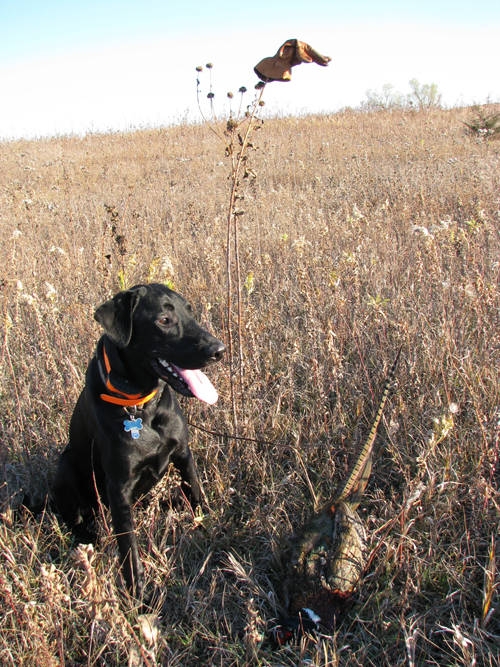
This morning I took my lab Wyatt out for a weekend stomp on public ground. Yesterday while in the field at first light I saw several other trucks with hunters trying to hunt the same field which we beat them to that day. Needless to say, the public options close to population centers here in…
-
Bird Dog Dealing with Lar Par
I’m not sure I can say “Laryngeal Paralysis” once correctly, let alone three times quickly — it’s a tongue twister. It has also been a vet stumper for a number of years. Until three weeks ago I had never heard of it. Let me break this diagnosis down in bird hunter terms which I’m certain…
-
A Labs First Day Afield
“No, I don’t think you understand, he has NO prior hunting experience…only obedience training.” I wrote to Brian, my new upland hunting buddy. The early morning email asking for my young lab and me to attend an upland hunt had caught me by surprise, putting a nice end to a long workweek. “Kali, it doesn’t…
-
The First Month with the New Puppy
Selective memory is a close ally to puppies. Recollection of puppy breath and cuddles gloss over the challenges of house training and toothy destruction. Adorable naps and puppy eyes erase the boundless energy and predawn bawling. It’s been six years since the last puppy, which has been plenty of time for revisionist history to mask…
-
The Lab Knows
Wyatt knows he’s black. He also knows this is the color of night. He’s been able to surmise that humans have terrible night vision. During daylight hours when we take breaks from hunting, he plots. He knows most mischief will not fly in the light of day. Raiding other camps, gnawing a nearby rotting deer…
-
Keeping Weight on Your Bird Dog
When we’re not in the field, my dogs get fed premium dog food twice a day. Normally I don’t even need a clock in the house because they start getting antsy when meal times near. I think this is why it’s so confounding that when we go hunting their interest in food is trumped…