it
Braque d’ Auvergne
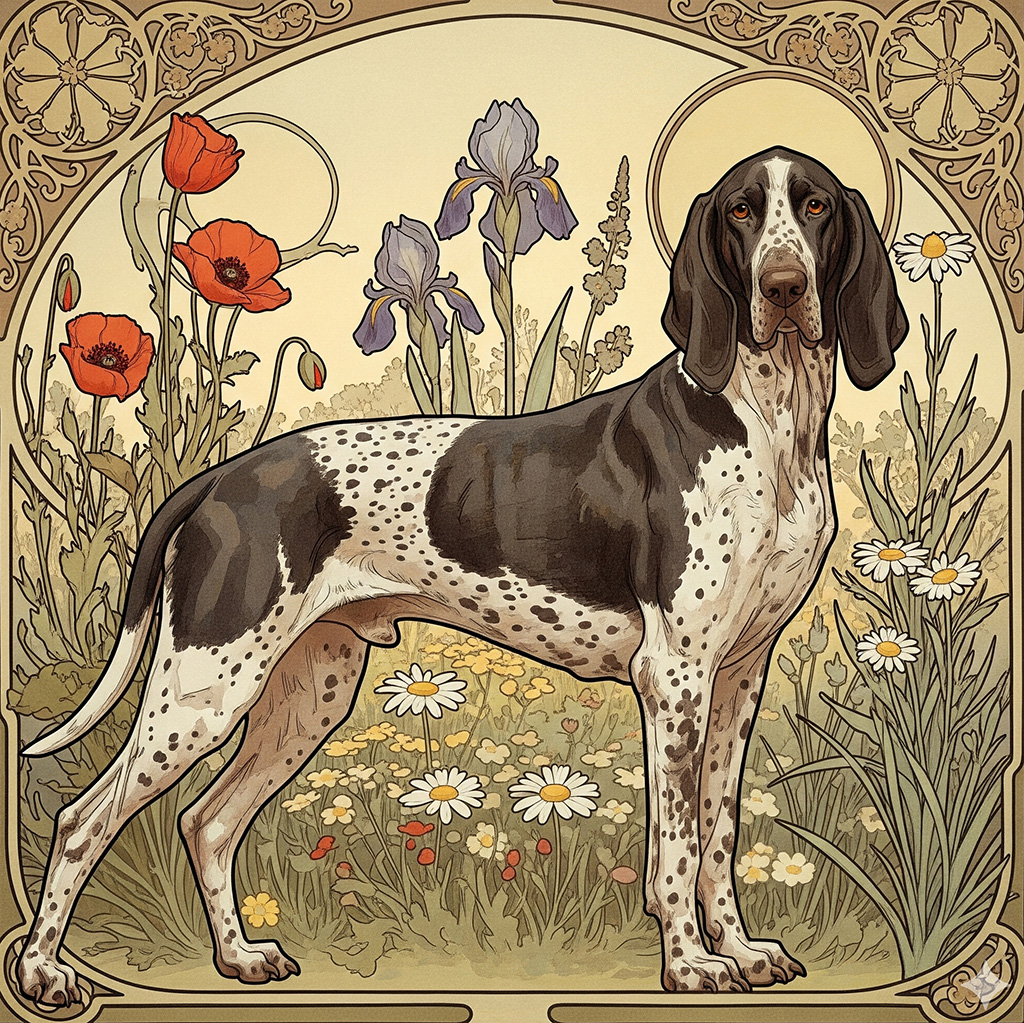
The Braque d’Auvergne, also known as the Auvergne Pointer, is a versatile and elegant French gundog renowned for its pointing abilities and endurance in the field. Originating from the mountainous Auvergne region in southern France, particularly the Cantal area, this breed has deep roots as a hunting companion, blending ancient heritage with modern utility. As one of the oldest pointing breeds, it exemplifies the classic French braque type—robust yet refined, with a history tied to regional hunting traditions.
Breed History
The Braque d’Auvergne traces its origins to ancient regional hunting dogs in France, with records indicating its presence in the Cantal region for over two centuries. Experts consider it one of the oldest pointer breeds, potentially dating back to the 1700s or earlier, descending from smooth-coated French pointers and possibly influenced by crosses like the Gascony Pointer and Pyrenean Braque. Some historians suggest ties to Maltese dogs brought by Knights of Malta or even broader Pyrenean influences, though it is widely viewed as a regional variant of the old French braque. By the 18th century, black-and-white pointing dogs were well-established in Auvergne for versatile game hunting. The breed nearly faced extinction during World War II due to wartime hardships, but dedicated enthusiasts revived it in the post-war era. It was only recently recognized as a distinct breed in France and gained international acknowledgment, such as by the Fédération Cynologique Internationale (FCI) under Standard No. 180 and the United Kennel Club (UKC) in 2006.
Breed Standards
According to FCI and UKC standards, the Braque d’Auvergne is a medium-sized, rectilinear dog of balanced proportions—robust and strongly boned without heaviness, embodying an elegant “braque type” with lightness in construction. Males typically stand 55–65 cm (22–26 inches) at the withers, with an ideal height of 60 cm, while females range from 51–61 cm (20–24 inches), ideally 56 cm. The body is square, with a deep chest, high withers, short straight back, and gently sloping croup. The head features a long muzzle, pendant ears set high, and expressive eyes. The short, glossy coat is black with white markings, often roan or ticked, and the tail is set high, carried horizontally, and may be docked to 15–20 cm or left natural to reach the hock. Temperamentally, the breed is gentle, affectionate, intelligent, and obedient, adapting well to family life while requiring experienced owners due to its high energy and need for vigorous exercise—over two hours daily. Health considerations include screening for hip dysplasia and eye issues like entropion or ectropion.
History of Hunting in the United States
The Braque d’Auvergne’s presence in the United States is relatively recent and niche, reflecting its rarity outside France. Introduced likely in the late 20th century through imports by hunting enthusiasts, the breed gained formal recognition by the UKC in 2006 and is acknowledged by the North American Versatile Hunting Dog Association (NAVHDA) as a versatile gundog. In the U.S., it is prized for upland bird hunting and waterfowl retrieval, excelling in rugged terrain with an all-day running gait and natural swimming ability when introduced early. Breeders, such as those in California, emphasize its hunting prowess alongside its family-friendly nature, producing dogs from champion lines for both field work and companionship. Though the population remains small, online communities and breeders facilitate puppy placements for hunters, highlighting its intensity, stamina, and eagerness to please in American fields.
In summary, the Braque d’Auvergne stands as a testament to France’s rich gundog legacy, combining historical resilience, precise standards, and adaptable hunting skills that have found a dedicated following in the U.S. Its blend of field excellence and affectionate demeanor makes it a cherished choice for serious hunters.
-
The Fountain of Youth
The old boy doesn’t leap into the truck like he once could, but he still manages to lurch up the running boards and cross the center console. Instead of stowing him in the back for this road trip, I break the rules and let him ride shotgun. He acknowledges the exemption and quickly curls into…
-
Picking THE Puppy, or are we just kidding ourselves
Last time I chose a puppy I was fresh out of school, only a dim view of the years ahead and a bank account teetering on empty. At the time it seemed like a great idea, introduce a young dog into chaos and hope for the best. I knew little about training, obedience, nutrition, genetics,…
-
Rio Flufferbunny
It was fall when she came to us on a plane from New Mexico, all legs and ears and sharp puppy teeth. She pointed from the womb — butterflies, song birds, turtles, tufts of grass stirred by a breeze — nothing was safe from her glare. As our first setter, I was unsure of the…
-
The Lab Knows
Wyatt knows he’s black. He also knows this is the color of night. He’s been able to surmise that humans have terrible night vision. During daylight hours when we take breaks from hunting, he plots. He knows most mischief will not fly in the light of day. Raiding other camps, gnawing a nearby rotting deer…
-
Meet Ida
I’ve always found the haphazard naming of dogs intriguing. I’ve wondered if a puppy grows into the name, filling the shape of some predetermined vessel? I like original names, probably because I have irrational hopes for my bird dogs to be uniquely exceptional. But then names different for different’s sake grind on me. People names…
-
The First Month with the New Puppy
Selective memory is a close ally to puppies. Recollection of puppy breath and cuddles gloss over the challenges of house training and toothy destruction. Adorable naps and puppy eyes erase the boundless energy and predawn bawling. It’s been six years since the last puppy, which has been plenty of time for revisionist history to mask…