Epagnuel Breton
Origins and Historical Development
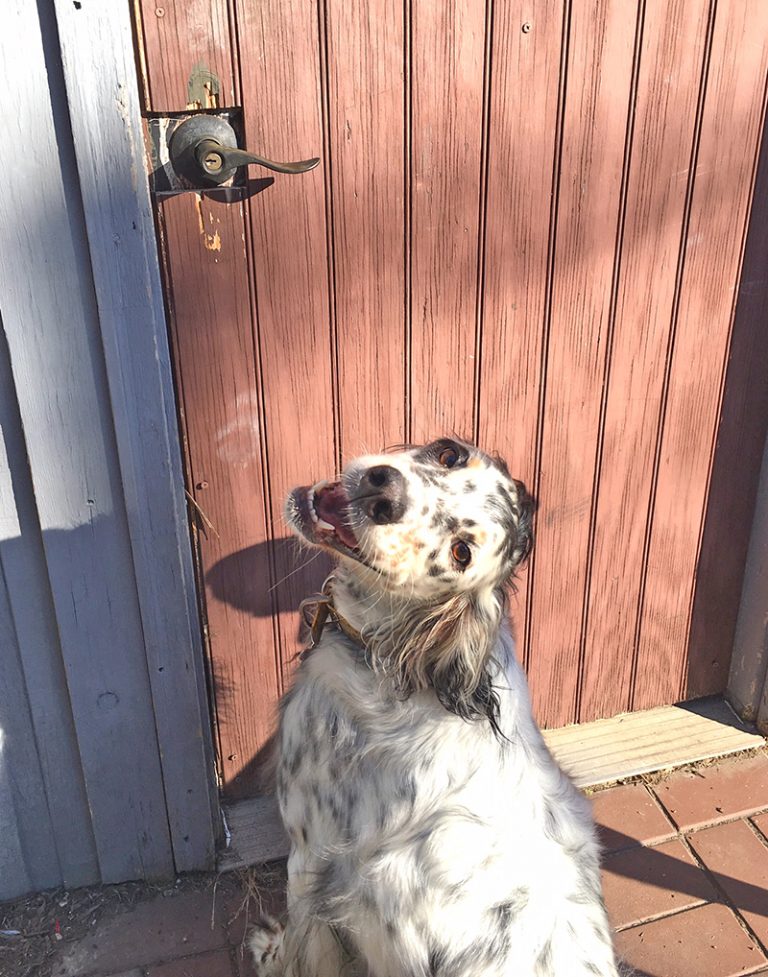
The Epagneul Breton, also known as the French Brittany, is a versatile and compact gun dog with roots tracing back to the Brittany region of northwestern France. Its history likely stretches to the Middle Ages, with evidence of Breton-type dogs appearing in 17th- and 18th-century paintings and tapestries depicting hunting scenes. The breed’s formal development began in the 19th century when local spaniels were crossed with British hunting dogs, such as Setters and Spaniels, brought by sportsmen. This crossbreeding resulted in a small, agile dog adept at pointing and retrieving game, particularly woodcock, in varied terrains. The breed was officially recognized in France in 1907, when the first breed standard was established by the Société Centrale Canine, cementing its identity as a distinct pointing breed.
The Epagneul Breton is considered one of the oldest spaniel-type dogs and is the smallest of the pointing breeds. Its development was refined in the early 20th century through selective breeding to enhance its hunting capabilities and standardize its compact, muscular frame. Described as “a maximum of qualities in a minimum of volume” by Gaston Pouchain, a former president of the Club de l’Epagneul Breton in France, the breed’s unique blend of agility, intelligence, and endurance made it a favorite among French hunters.
Breed Standards
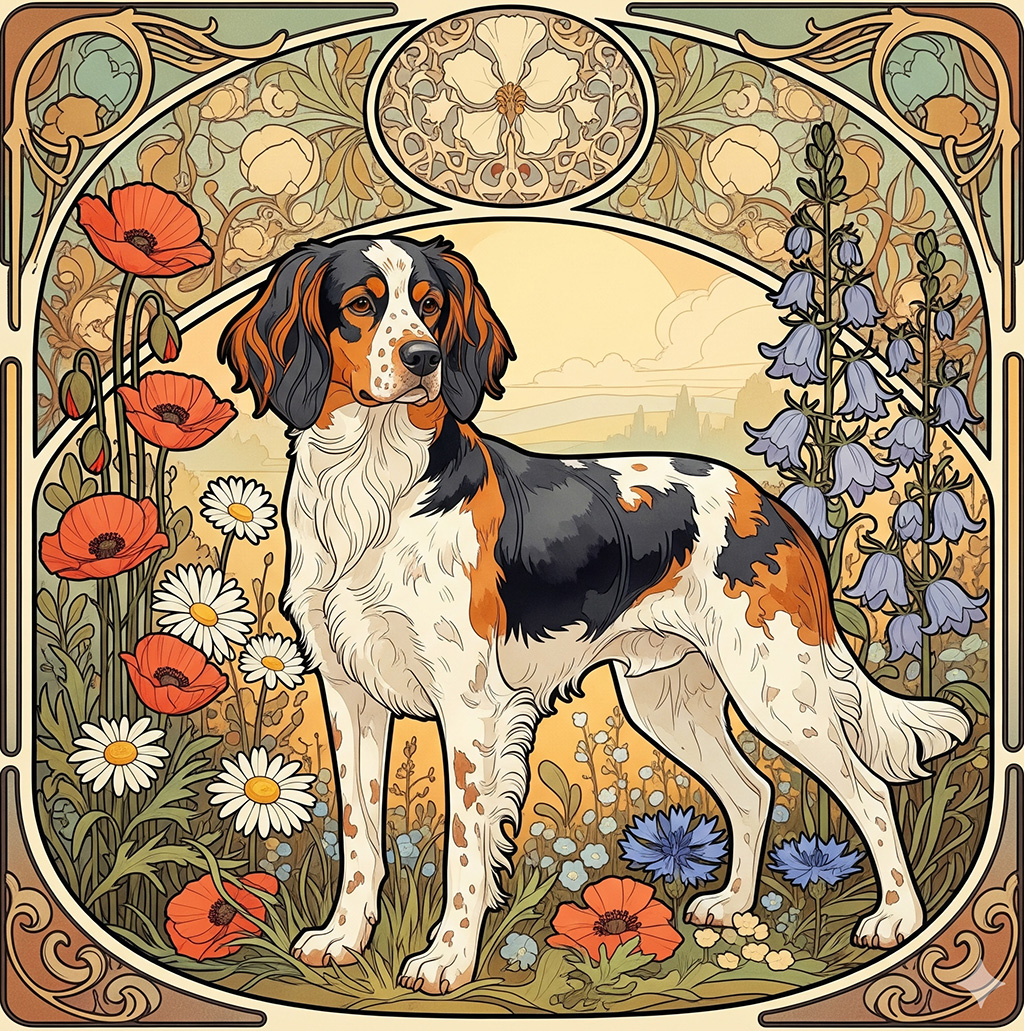
The Epagneul Breton’s breed standard, as outlined by the United Kennel Club (UKC) and aligned with the Fédération Cynologique Internationale (FCI), emphasizes its role as a functional hunting dog. The standard describes a “cobby” (compact and square) body, with the dog’s length from shoulder to buttocks equal to its height at the withers. The head is proportionate, featuring a slightly rounded skull, parallel toplines of the head and muzzle, and high-set, triangular drop ears that are relatively short and covered with wavy hair. The coat is slightly wavy with feathering on the legs, and acceptable colors include white and orange, white and black, white and liver, or tricolor. Unlike the American Brittany, black in the coat or nose is permissible.
The standard highlights the breed’s versatility, noting its ability to hunt any game on any terrain with remarkable scenting ability, steady pointing, and natural retrieving instincts. The Epagneul Breton is expected to display an intelligent, attentive expression and a balanced temperament, making it both a skilled hunter and a sociable companion. Faults include traits that hinder working ability, such as missing teeth beyond specified limits, unpigmented noses, or eye issues like entropion. The breed’s compact size—seldom exceeding 40 pounds and 20 inches in height—enhances its agility and endurance.
Hunting History in the United States
The Epagneul Breton was introduced to North America in the 1930s and 1940s, where it initially gained popularity among hunters for its close-working style and versatility in upland bird hunting. However, selective breeding in the U.S. led to the development of the taller, faster American Brittany, which diverged from the original French type by eliminating black coat coloration and emphasizing a longer-ranging hunting style. Recognizing these differences, the UKC officially separated the Epagneul Breton and American Brittany into distinct breeds in 2002, with the Epagneul Breton retaining its French characteristics and conformation.
In the U.S., the Epagneul Breton is celebrated for its ability to hunt a variety of upland game, including pheasant, quail, grouse, and woodcock. Its close-working style, typically quartering 50–100 yards from the handler, makes it ideal for foot hunters. The breed’s natural hunting instincts, intelligence, and ease of training have earned it a dedicated following, particularly among those who value its ability to work in dense cover and retrieve game in challenging conditions. The Club de l’Epagneul Breton of the United States (CEB-US), formed in 1997, promotes the breed through field trials and events like the Big Sky Cup, fostering its legacy as a skilled gun dog.
Conclusion
The Epagneul Breton’s rich history, from its origins in Brittany to its refined development in the 20th century, underscores its status as France’s premier pointing breed. Its breed standards emphasize a compact, functional form and a versatile hunting ability, while its history in the United States highlights its adaptation to diverse hunting environments and its enduring appeal as both a gun dog and a loyal companion. With organizations like CEB-US and dedicated breeders preserving its unique traits, the Epagneul Breton continues to thrive as a testament to its heritage and versatility.
-
The Fountain of Youth
The old boy doesn’t leap into the truck like he once could, but he still manages to lurch up the running boards and cross the center console. Instead of stowing him in the back for this road trip, I break the rules and let him ride shotgun. He acknowledges the exemption and quickly curls into…
-
Why We Hunt With Dogs
This morning I took my lab Wyatt out for a weekend stomp on public ground. Yesterday while in the field at first light I saw several other trucks with hunters trying to hunt the same field which we beat them to that day. Needless to say, the public options close to population centers here in…
-
Keeping Weight on Your Bird Dog
When we’re not in the field, my dogs get fed premium dog food twice a day. Normally I don’t even need a clock in the house because they start getting antsy when meal times near. I think this is why it’s so confounding that when we go hunting their interest in food is trumped…
-
Picking THE Puppy, or are we just kidding ourselves
Last time I chose a puppy I was fresh out of school, only a dim view of the years ahead and a bank account teetering on empty. At the time it seemed like a great idea, introduce a young dog into chaos and hope for the best. I knew little about training, obedience, nutrition, genetics,…
-
Meet Ida
I’ve always found the haphazard naming of dogs intriguing. I’ve wondered if a puppy grows into the name, filling the shape of some predetermined vessel? I like original names, probably because I have irrational hopes for my bird dogs to be uniquely exceptional. But then names different for different’s sake grind on me. People names…
-
Pavlov Didn’t Have Bird Dogs
I’m forced to sneak about my own property like a burglar, held captive by bird dogs trying to secure their place in the truck. Regardless whether the destination is a wild place or the tame grocery, they are not willing to wager their spot. A few short weeks ago I could announce my exit to…