Brittany
The Brittany, often simply called the “Brit,” is a spirited and athletic dog breed renowned for its prowess in the field and its affectionate nature at home. Originating from the rugged landscapes of France, this medium-sized pointing dog has evolved into a favorite among hunters and families alike. With a history steeped in European hunting traditions, the Brittany combines agility, intelligence, and endurance, making it a standout in the sporting group.
The breed’s origins trace back to the Brittany region in northwestern France, where it emerged as early as the 17th century. Local French sportsmen began crossing native spaniels with English setters around 1850 to create a superior hunting companion that excelled in pointing and retrieving game birds. These early dogs were prized for their versatility, working closely with hunters in dense cover to flush and retrieve woodcock and other upland birds. By the mid-19th century, the Brittany had become known as the “Breton peasant’s hunting dog,” particularly in isolated areas where its small size and quickness made it ideal for poachers evading authorities. The first formal recognition came in 1907 when an orange-and-white dog named “Boy” was registered as the inaugural Brittany Spaniel in France, leading to the formation of a breed club in Loudeac that drafted the initial standard. This standard emphasized the dog’s compact build and keen hunting instincts, drawing from a lineage of pointers, setters, and spaniels from Britain and France.
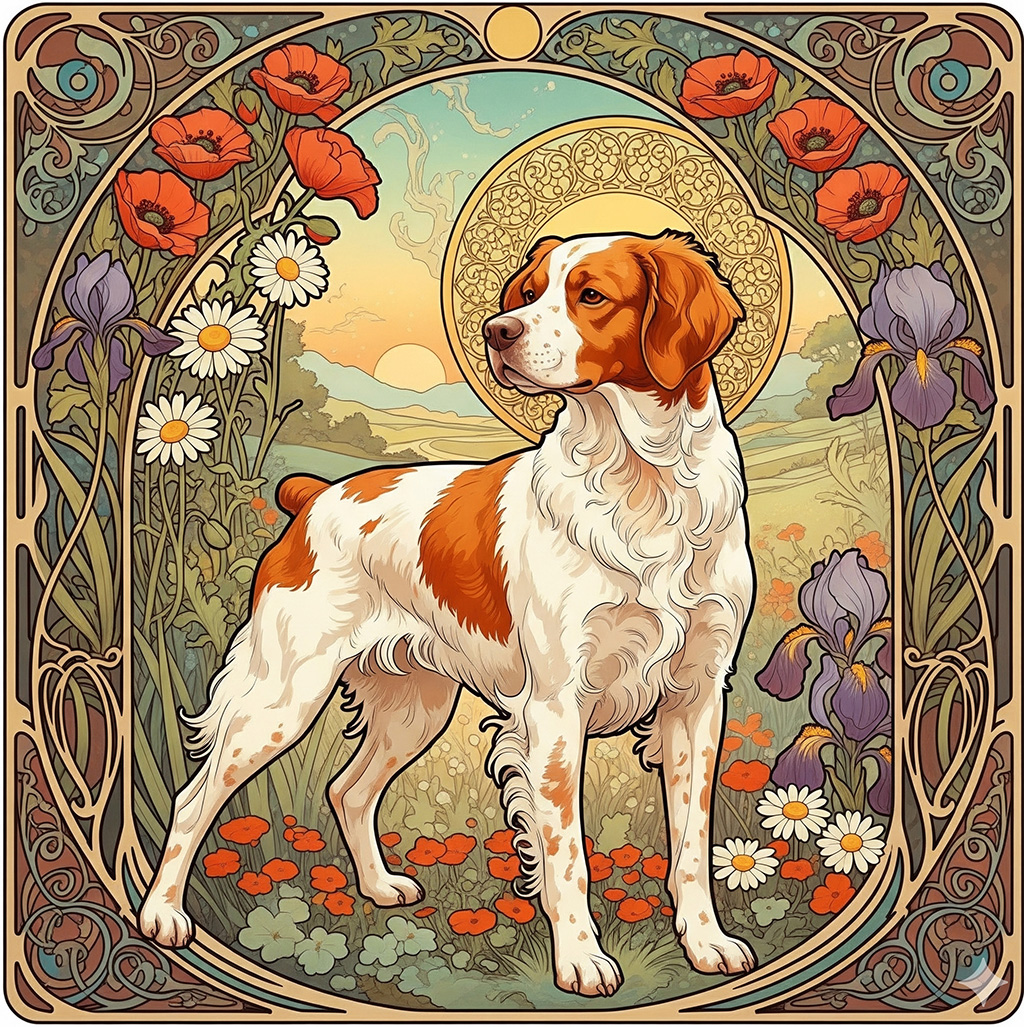
Breed standards, as defined by organizations like the American Kennel Club (AKC), highlight the Brittany’s functional design for fieldwork. According to the AKC, the ideal Brittany stands between 17.5 and 20.5 inches at the shoulder and weighs 30 to 40 pounds, creating a leggy yet compact frame that allows for effortless movement over varied terrain. The coat is dense and flat or wavy, typically in orange and white or liver and white combinations, with the American standard also permitting tri-color patterns of liver, white, and orange. Disqualifications in show competitions include heights outside the specified range, ensuring the breed retains its medium size for agility rather than bulk. Temperamentally, Brittanys are noted for being easy to train, sweet-natured, and sensitive to correction, thriving on positive reinforcement rather than harsh discipline. Their superb nose, strength, and high energy make them natural hunters, but they also excel as companions, bonding closely with their owners.
In the United States, the Brittany’s hunting legacy began in the early 20th century with importations in the 1910s and 1920s, but it truly took root after its introduction in 1931. The AKC registered the breed in 1934 as the “Brittany Spaniel,” reflecting its spaniel-like flushing abilities, though the name was shortened to “Brittany” in 1982 to distinguish it from true spaniels. Post-World War II, a notable split emerged between American and French lines: U.S. breeders favored larger, “big-running” dogs suited to vast open fields and competitive field trials, while French variants emphasized closer-working styles for wooded hunts. The breed’s popularity surged in the 1960s amid the field-trial circuit, where American kennels bred for speed and range, transforming the Brittany into a dominant force in upland bird hunting across the Midwest and Great Plains. Today, with over 700 dual champions (excelling in both show and field) celebrated by the American Brittany Club, the breed remains a top choice for hunters pursuing pheasants, quail, and grouse, thanks to its instinctive pointing and retrieving skills.
In summary, the Brittany’s journey from French farmlands to American hunting grounds exemplifies its adaptability and enduring appeal. Whether in the show ring or the field, this breed’s blend of history, standards, and hunting heritage continues to captivate dog enthusiasts worldwide.
-
Meet Ida
I’ve always found the haphazard naming of dogs intriguing. I’ve wondered if a puppy grows into the name, filling the shape of some predetermined vessel? I like original names, probably because I have irrational hopes for my bird dogs to be uniquely exceptional. But then names different for different’s sake grind on me. People names…
-
Keeping Weight on Your Bird Dog
When we’re not in the field, my dogs get fed premium dog food twice a day. Normally I don’t even need a clock in the house because they start getting antsy when meal times near. I think this is why it’s so confounding that when we go hunting their interest in food is trumped…
-
Why We Hunt With Dogs
This morning I took my lab Wyatt out for a weekend stomp on public ground. Yesterday while in the field at first light I saw several other trucks with hunters trying to hunt the same field which we beat them to that day. Needless to say, the public options close to population centers here in…
-
Bird Dog Dealing with Lar Par
I’m not sure I can say “Laryngeal Paralysis” once correctly, let alone three times quickly — it’s a tongue twister. It has also been a vet stumper for a number of years. Until three weeks ago I had never heard of it. Let me break this diagnosis down in bird hunter terms which I’m certain…
-
Picking THE Puppy, or are we just kidding ourselves
Last time I chose a puppy I was fresh out of school, only a dim view of the years ahead and a bank account teetering on empty. At the time it seemed like a great idea, introduce a young dog into chaos and hope for the best. I knew little about training, obedience, nutrition, genetics,…
-
A Labs First Day Afield
“No, I don’t think you understand, he has NO prior hunting experience…only obedience training.” I wrote to Brian, my new upland hunting buddy. The early morning email asking for my young lab and me to attend an upland hunt had caught me by surprise, putting a nice end to a long workweek. “Kali, it doesn’t…