Colorado Bird Hunting
Seasons Span September 1 – January 31, 2027

State Drought Monitor – Upland hunting conditions are often highly dependent upon moisture for both habitat production and bird survival.
Colorado Upland Game Bird Hunting Overview
State DNR & Licensing Information
Upland game bird hunting in Colorado is administered by Colorado Parks and Wildlife (CPW). CPW’s 2026 regulations have been adopted, although the agency’s public small-game page still says the updated 2026 brochure will be available in August. (Colorado Parks and Wildlife)
License Requirements & Fees
- Resident Annual Small Game License: $38.49
- Nonresident Annual Small Game License: $104.86
- Nonresident 5-Day Small Game License: $89.50
- Habitat Stamp: $12.76 for hunters ages 18–64
- Ptarmigan/Sage-Grouse/Sharp-tailed Grouse Permit: $5
- Band-tailed Pigeon Permit: $5
- HIP: Required for small-game and migratory-bird hunters. (Colorado Parks and Wildlife)
Season Dates & Bag Limits — 2026–2027
CPW has adopted the 2026 regulations, but its public brochure has not yet been updated as of August 10. Where the 2026 regulation establishes an annual date, I use that date below; I am not substituting third-party dates where CPW has not yet published the final 2026 table. (Colorado Parks and Wildlife)
Chukar Partridge
- Season: September 1 – November 30, 2026
- Daily Limit: 4
- Possession Limit: 12
Dusky (Blue) Grouse
- Season: September 1 – November 23, 2026
- Daily Limit: 3
- Possession Limit: 9
- Area: West of I-25
Greater Sage-Grouse
- Limited seasons: September 2026
- Daily Limit: 2
- Possession: Varies by hunt area
- Permit: $5 permit required
- Area: Designated GMUs only
Mountain Sharp-tailed Grouse
- Season: September 1 – September 21, 2026
- Daily Limit: 2
- Possession Limit: 4
- Permit: $5 permit required
- Area: Designated GMUs only
White-tailed Ptarmigan
- Season: September 13 – October 5, 2026, with a longer season in designated high-elevation units
- Daily Limit: 3
- Possession Limit: 6
- Permit: $5 permit required
Ring-Necked Pheasant
- East of I-25: November 8, 2026 – January 31, 2027
- West of I-25: November 8, 2026 – January 4, 2027
- Daily Limit: 3 roosters
- Possession Limit: 9
Bobwhite Quail
- Season: November 8, 2026 – January 31, 2027 in designated eastern/southern units; January 4, 2027 in other zones
- Daily Limit: 8
- Possession Limit: 24
- Note: Limits are combined with other quail species where specified.
Scaled Quail
- Season: November 8, 2026 – January 31, 2027 in the southern/eastern zone
- Daily Limit: 8
- Possession Limit: 24
Gambel’s Quail
- Season: November 8, 2026 – January 31, 2027 in designated southern/eastern areas
- Daily Limit: 8
- Possession Limit: 24
Greater Prairie-Chicken
- Season: October 1, 2026 – January 31, 2027
- Daily Limit: 2
- Season Limit: 6
- Permit: Special prairie-chicken permit required
- Area: Designated eastern-plains GMUs
Mourning & White-Winged Dove
- Season: September 1 – November 29, 2026
- Daily Limit: 15 combined
- Possession Limit: 45 combined
Weather Assessment & Bird Hunting Outlook
Survey Methodology
Colorado has useful species-specific monitoring through CPW, including pheasant/quail field evaluations, grouse research and sage-grouse monitoring. CPW also maintains dedicated research programs for greater and Gunnison sage-grouse, sharp-tailed grouse and northern bobwhite. (Colorado Parks and Wildlife)
For this forecast I weighted:
- CPW population and brood information;
- Previous winter severity and snowpack;
- Spring precipitation and temperature;
- Summer precipitation;
- NOAA/NCEI climate records;
- U.S. Drought Monitor;
- Habitat and CRP conditions.
Weather Impact & Habitat Conditions
- Winter 2025–26 — MIXED: Winter conditions were not uniformly severe enough to produce the kind of widespread winterkill seen during Colorado’s 2022–23 event.
- Spring 2026 — POOR: Colorado entered the nesting period with substantial moisture deficits.
- January–June 2026 — VERY POOR: Colorado experienced its 6th-driest January–June period since 1895, receiving 5.71 inches of precipitation—3.35 inches below normal. (Drought.gov)
- June 2026 — POOR: June ranked 17th driest on record, with only 0.82 inches of precipitation statewide. (Drought.gov)
- Current conditions — POOR: Drought remains widespread, with especially serious deficits across portions of the eastern plains and central mountains. (Drought.gov)
This is an important change from Colorado’s relatively favorable 2024–25 moisture conditions. The 2026 breeding season has been substantially drier.
2026–27 Population Outlook
Chukar Partridge — POOR–FAIR
Chukar are one of the species most exposed to Colorado’s dry spring conditions. Poor moisture reduces green forage and insect availability during brood-rearing.
The best opportunities should be in canyon country where springs, creeks and localized precipitation maintain vegetation.
Forecast: POOR–FAIR.
Dusky (Blue) Grouse — FAIR
Higher elevations provide some protection from the statewide drought. Mountain precipitation and persistent green vegetation will be more important than statewide averages.
The absence of an exceptionally severe winter is a positive, but the dry summer is a negative for brood production.
Forecast: FAIR.
Greater Sage-Grouse — FAIR–POOR
Colorado’s sage-grouse populations remain highly localized and are carefully managed. CPW identifies the species as a conservation priority and maintains extensive monitoring. (Colorado Parks and Wildlife)
The dry spring is a concern because sage-grouse chicks depend heavily on forbs and insects during early summer.
Forecast: FAIR–POOR.
Mountain Sharp-tailed Grouse — POOR–FAIR
Sharp-tails have benefited substantially from conservation programs and CRP habitat in Colorado, but the 2026 moisture deficit is unfavorable for nesting and brood-rearing.
Forecast: POOR–FAIR.
White-tailed Ptarmigan — FAIR
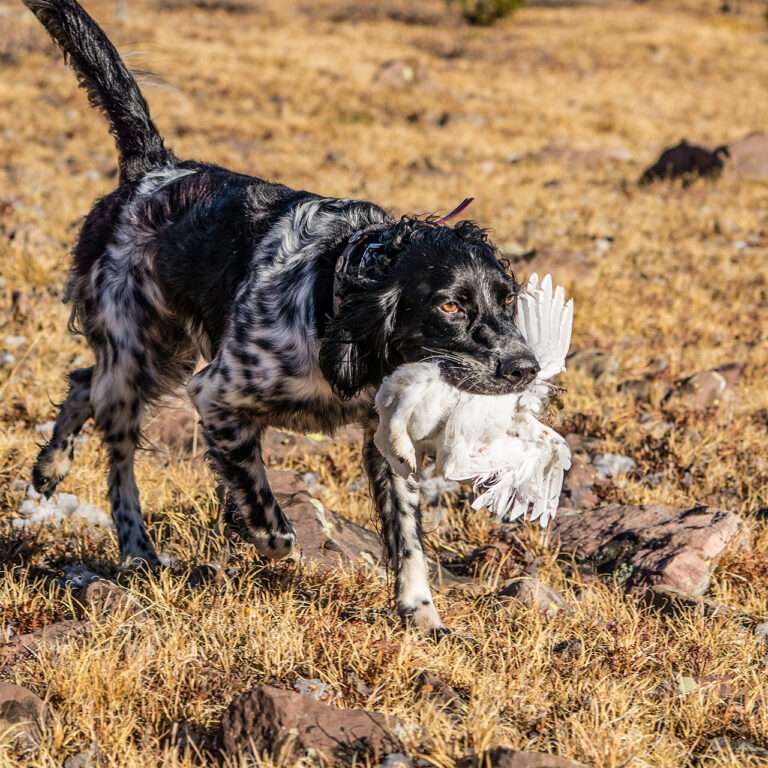
High elevation provides a substantial weather buffer, but reduced snowpack and an early transition to dry alpine conditions can reduce the quality and duration of summer brood habitat.
Forecast: FAIR.
Ring-Necked Pheasant — FAIR
This is a complicated year for Colorado pheasants.
The 2025 CPW forecast showed populations recovering from the devastating 2020–23 drought and 2022–23 winter, but harvest was still only the second-lowest on record in 2024–25. CPW also emphasized declining CRP and inadequate permanent brood cover as major constraints. (Colorado Parks and Wildlife)
The 2026 drought interrupts that recovery.
Forecast: FAIR, with major regional differences.
Bobwhite Quail — FAIR–POOR
Bobwhites are highly localized in Colorado. CPW identifies them as small, isolated populations with declining distribution. (Colorado Parks and Wildlife)
The dry 2026 breeding season is not favorable for a major population expansion.
Forecast: FAIR–POOR.
Scaled Quail — FAIR–POOR
Scaled quail had been slowly improving in southeastern Colorado, according to CPW’s most recent detailed forecast. But the 2026 precipitation deficit is a significant setback relative to the more favorable conditions reported in 2025. (Colorado Parks and Wildlife)
Forecast: FAIR–POOR.
Gambel’s Quail — FAIR–POOR
Colorado’s Gambel’s quail are restricted largely to the state’s extreme southwestern corner. Their limited range means localized rainfall matters much more than the statewide average.
Forecast: FAIR–POOR.
Greater Prairie-Chicken — FAIR–POOR
Prairie-chickens depend on intact grassland and adequate nesting/brood habitat. CPW maintains active monitoring and conservation work on Colorado’s eastern plains.
The drought is a negative, although localized thunderstorms can produce dramatically different conditions between areas.
Forecast: FAIR–POOR.
Mourning Dove — FAIR
Doves should be more resilient than resident upland species. Agricultural fields, sunflower production and reliable water can compensate for some of the drought.
Forecast: FAIR.
Wilson’s Snipe — POOR–FAIR
Dry conditions have reduced wetland and wet-meadow habitat across much of the state. Permanent wetlands and irrigated agricultural ground should remain the best options.
Forecast: POOR–FAIR.
Overall Colorado Outlook: FAIR–POOR
Colorado deserves a meaningful downward adjustment from the relatively optimistic picture coming out of the 2025 season.
The critical statistic is the 6th-driest January–June period in Colorado’s recorded history, with a 3.35-inch precipitation deficit. June was the 17th-driest on record. (Drought.gov)
That timing matters. The deficit occurred during the period when pheasants, quail, prairie grouse and sage-grouse were nesting and raising chicks.
The good news is that Colorado entered 2026 with some population recovery underway. CPW’s 2025 pheasant forecast reported meaningful improvement after the 2020–23 drought and 2022–23 winter, particularly in southeastern Colorado. (Colorado Parks and Wildlife)
But 2026 is not repeating those favorable conditions.
Best 2026 Bets
Dusky Grouse: Higher-elevation forests where summer moisture persists.
Pheasant: Irrigated agricultural areas and the best remaining CRP/grass-cover complexes on the eastern plains.
Scaled Quail: Southeastern Colorado locations that received localized summer rainfall.
Greater Prairie-Chicken: Eastern-plains grasslands with intact nesting cover.
Sage-Grouse: Designated hunt areas retaining healthy sagebrush and forb production.
Ptarmigan: High alpine areas with persistent moisture and late snow.
Chukar: Canyon country with springs, seeps and localized green vegetation.
Forecast Confidence: Moderate–High
The weather assessment is high-confidence. Colorado’s precipitation deficit is large, historically unusual and independently documented by NOAA/NCEI through Drought.gov. (Drought.gov)
The biological forecast is somewhat less certain because the full 2026 brood-survey results are not yet available.
Bottom line: Colorado looks like a FAIR–POOR upland bird year overall. The state was recovering from the brutal 2020–23 drought and 2022–23 winter, but 2026 has brought another major moisture deficit at exactly the wrong time. Pheasant and quail populations therefore may still be higher than their recent lows, but production this year is unlikely to match the improving trajectory seen in 2025. Higher-elevation grouse and ptarmigan have the best weather buffer, while eastern-plains pheasant, quail and prairie-grouse prospects will depend heavily on localized summer rainfall and remaining habitat. (Colorado Parks and Wildlife)
For the most up-to-date information, visit cpw.state.co.us or refer to the 2025 Small Game and Waterfowl Brochure.
-
To the Edge with Friends and Dogs
We all have limits. But that edge is never static. It’s a river that rages perilously close or meanders docile and aimless in the distance. Most people are perfectly comfortable keeping a healthy distance—there is absolutely nothing wrong with that. But there is something about that torrent that is captivating and revealing. What we see…
-
The Alaska Standoff
Alaska and I are at odds. I’m here to take her birds. She’s not giving them up easily. I’m to earn them one vertical foot at a time until she has determined that sufficient toll has been collected. She’s happy to show amazing places, jaw-dropping beauty, an abundance of nature viewing unrivaled anywhere else in…
-
Climbing Mountains for Elusive Birds
The wind is gusting at my back collapsing my empty game bag. It’s a chilly reminder, as if I needed one. In the distance I can still pickup Steve and the deft setter Winchester, navigating their way uphill beside the creek that tumbles the opposite direction in this cut. We’ve got them on elevation. The…
-
Way Upland
It’s the second day of the upland season and I am in a pre-dawn traffic jam. I’m following a string of crimson taillights up a dusty grade and poor excuse for a road. I’m unsure exactly how long the line extends at this point, but we are all crawling toward a pin on a map…
-
Believers
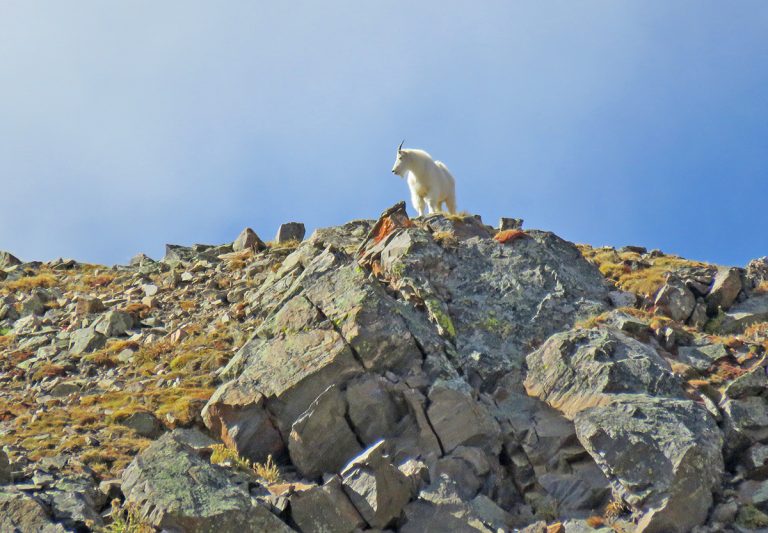
I can feel him in the distance looking down on us. The Deacon of this mountain is unimpressed with our pace and route. Yet this goat still watches as one worn little setter leads us up a chute 1,500 feet below the pulpit he’s chosen. Every now and then I glance skyward to see…
-
Life Lists
Jon and I have been here before—heavy legs and burning lungs. We’ve circled this peak, crossing boulder field after boulder field. It’s taken nearly four hours to complete the circuit around this 12,000-foot Uinta peak. I’m drained. Ida’s standard Lab trot has surrendered to a nearby amble. But then I see it—for most, it would…