
Golden Retriever
The Golden Retriever, renowned for its friendly demeanor and striking golden coat, is a breed that embodies both elegance and utility. Originating as a skilled hunting companion, it has evolved into one of the world’s most beloved family dogs while retaining its working roots. This essay explores the breed’s history, official standards, and its specific role in hunting within the United States.
The breed’s history traces back to the Scottish Highlands in the mid-19th century, where it was developed by Sir Dudley Marjoribanks, also known as Lord Tweedmouth, at his Guisachan estate. Seeking a superior retriever for waterfowl and upland game in the rugged terrain, he crossed a yellow Wavy-Coated Retriever named Nous with a Tweed Water Spaniel named Belle in 1868, laying the foundation for the breed. Subsequent crossings incorporated elements from Flat-Coated Retrievers, Irish Setters, and possibly Bloodhounds to enhance scenting abilities and endurance. By the late 1800s, these dogs excelled in retrieving shot game without damage, thanks to their soft mouths and love of water. The breed gained formal recognition in the United Kingdom in 1911 as “Retriever (Golden or Yellow)” and was standardized by The Kennel Club in 1913. All modern Golden Retrievers descend from this foundational line, emphasizing their purpose as reliable gundogs.
Breed standards, as defined by the American Kennel Club (AKC), prioritize balance, functionality, and a kindly expression to reflect the dog’s hunting heritage. In general appearance, the Golden Retriever is a symmetrical, powerful, and active dog, sound and well-proportioned, with an eager, alert, and self-confident personality. Size specifications call for males to stand 23 to 24 inches at the withers and weigh 65 to 75 pounds, while females measure 21.5 to 22.5 inches and weigh 55 to 65 pounds; deviations beyond one inch result in disqualification. The head is broad with a well-defined stop, friendly dark brown eyes set well apart, and short ears falling close to the cheeks. The neck is medium-long and muscular, leading to a level topline and a deep, well-sprung chest. Forequarters and hindquarters are muscular for free movement, with straight legs and compact, round feet. The coat is dense and water-repellent, with a firm outer layer that may be straight or wavy, accompanied by moderate feathering. Color must be a rich, lustrous golden in various shades, excluding extremely pale or dark tones. Gait is free, smooth, and powerful, covering ground efficiently. Temperament is paramount: friendly, reliable, and trustworthy, without nervousness or hostility, making the breed ideal for both work and companionship.
In the United States, the Golden Retriever’s hunting history began in the early 20th century, with the first imports arriving around the 1920s, though some accounts suggest introductions as early as the late 1800s. The breed was officially recognized by the AKC in 1925, quickly gaining popularity among American sportsmen for its versatility in retrieving waterfowl and upland birds. World War II temporarily reduced breeding efforts, but post-war enthusiasm surged, with Goldens excelling in field trials and hunts across wetlands and fields. Their soft mouths, strong swimming ability, and keen scenting made them indispensable for duck hunting in regions like the Mississippi Flyway and pheasant pursuits in the Midwest. Organizations like Ducks Unlimited highlight the breed’s enduring role in conservation-focused hunting, where Goldens retrieve downed game efficiently, minimizing waste. Today, while many serve as pets, competitive events such as AKC hunt tests continue to showcase their innate abilities, preserving the breed’s sporting legacy in the U.S.
In summary, the Golden Retriever’s journey from Scottish estates to American fields underscores its adaptability and enduring appeal. Balancing historical purpose with modern standards, it remains a testament to thoughtful breeding for both function and affection.
-
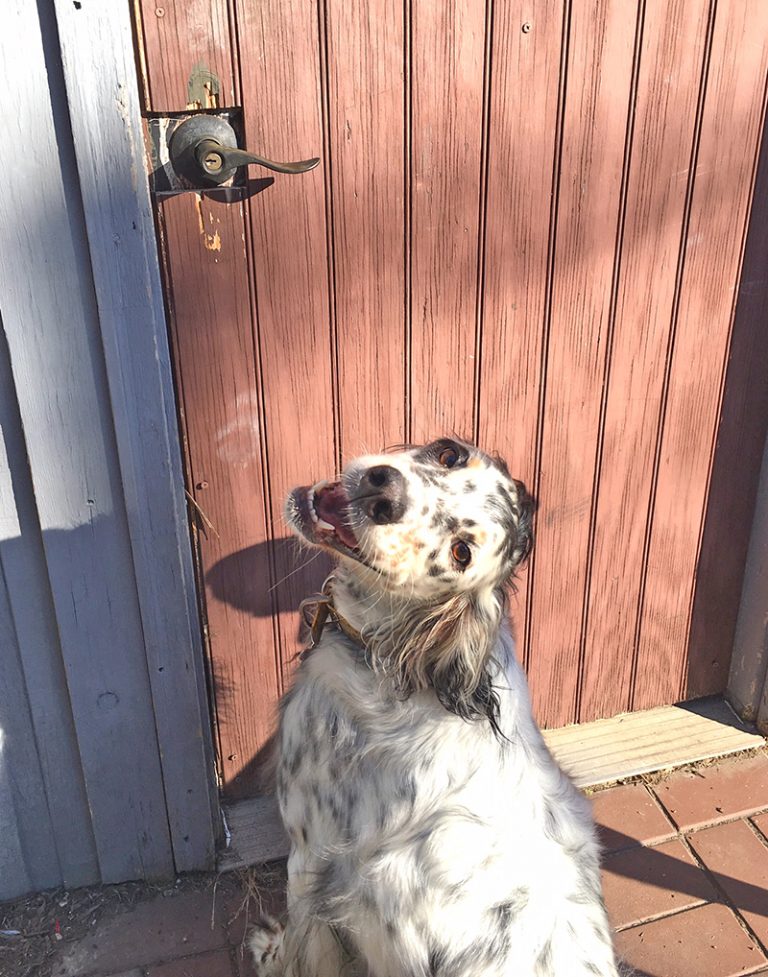
Pavlov Didn’t Have Bird Dogs
I’m forced to sneak about my own property like a burglar, held captive by bird dogs trying to secure their place in the truck. Regardless whether the destination is a wild place or the tame grocery, they are not willing to wager their spot. A few short weeks ago I could announce my exit to…
-
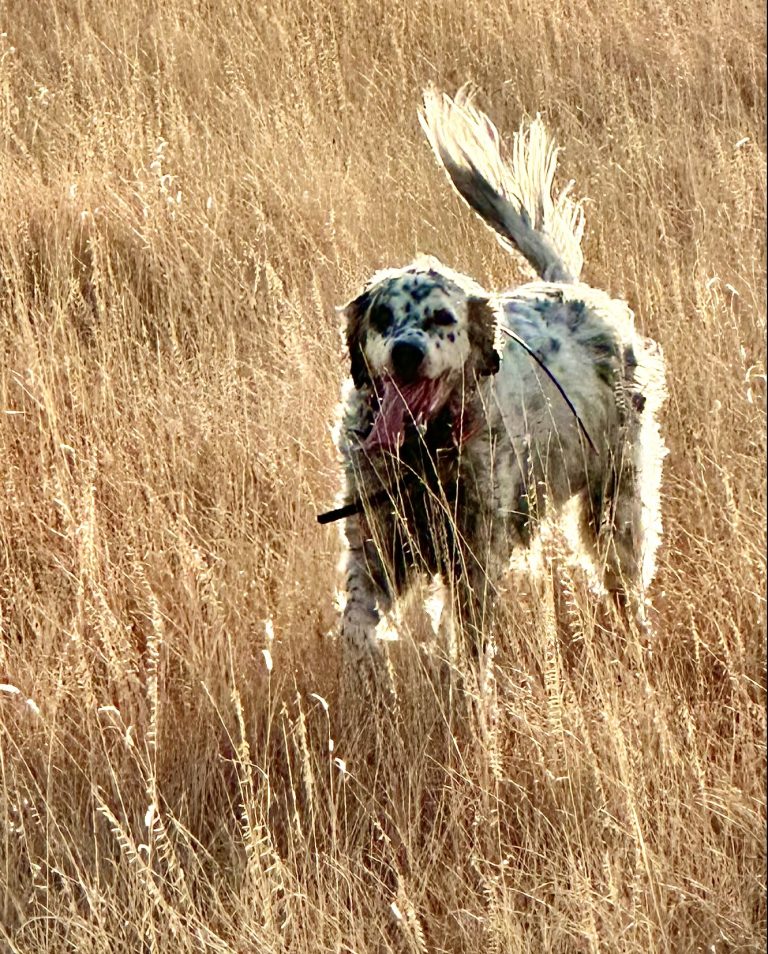
Rio Flufferbunny
It was fall when she came to us on a plane from New Mexico, all legs and ears and sharp puppy teeth. She pointed from the womb — butterflies, song birds, turtles, tufts of grass stirred by a breeze — nothing was safe from her glare. As our first setter, I was unsure of the…
-
The First Month with the New Puppy
Selective memory is a close ally to puppies. Recollection of puppy breath and cuddles gloss over the challenges of house training and toothy destruction. Adorable naps and puppy eyes erase the boundless energy and predawn bawling. It’s been six years since the last puppy, which has been plenty of time for revisionist history to mask…
-
Why We Hunt With Dogs
This morning I took my lab Wyatt out for a weekend stomp on public ground. Yesterday while in the field at first light I saw several other trucks with hunters trying to hunt the same field which we beat them to that day. Needless to say, the public options close to population centers here in…
-
Nowhere to Look
Dropped Wyatt off at the vet this morning for an exploratory procedure. I am now trying to do anything, accomplish something, will myself to the positive. I’m over-caffeinated and staged nearby awaiting the vet’s call. I can talk about the details, the minutia of his afflictions. I’ve gnashed over the could be and mights, in…
-
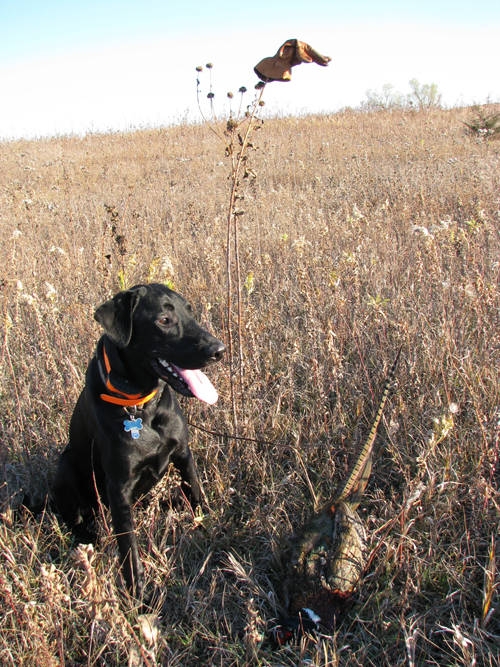
A Labs First Day Afield
“No, I don’t think you understand, he has NO prior hunting experience…only obedience training.” I wrote to Brian, my new upland hunting buddy. The early morning email asking for my young lab and me to attend an upland hunt had caught me by surprise, putting a nice end to a long workweek. “Kali, it doesn’t…